

Beer is a popular drink. However, many people drink it without knowing the difference between the different types. Do you know what the difference between 10 and 12 actually is? Some people believe that there is less alcohol in a 10. Is that true? Or what does the label actually mean? And what do abbreviations from the world of beer mean?
What is IBU
An abbreviation for International Bitterness Units. It’s a scale for measuring the bitterness of beer. IBUs measure the number of ppm of isohumulone from hops in beer. The hops are what give this delicious drink its bitterness. The IBU scale ranges from 0 to 120. It must be said, however, that at 120 the tongue can no longer perceive any bitterness. The scale was invented in order to quantify beer and distinguish between the different types.
Although the numbers are clear, the perceived bitterness can vary. It is not uncommon to see a beer with a high IBU that is not actually that bitter. This is because the malt character can offset the bitterness. For example, an amber beer with a high IBU may be sweet and conversely a pilsner beer may have a low IBU and taste bitter.
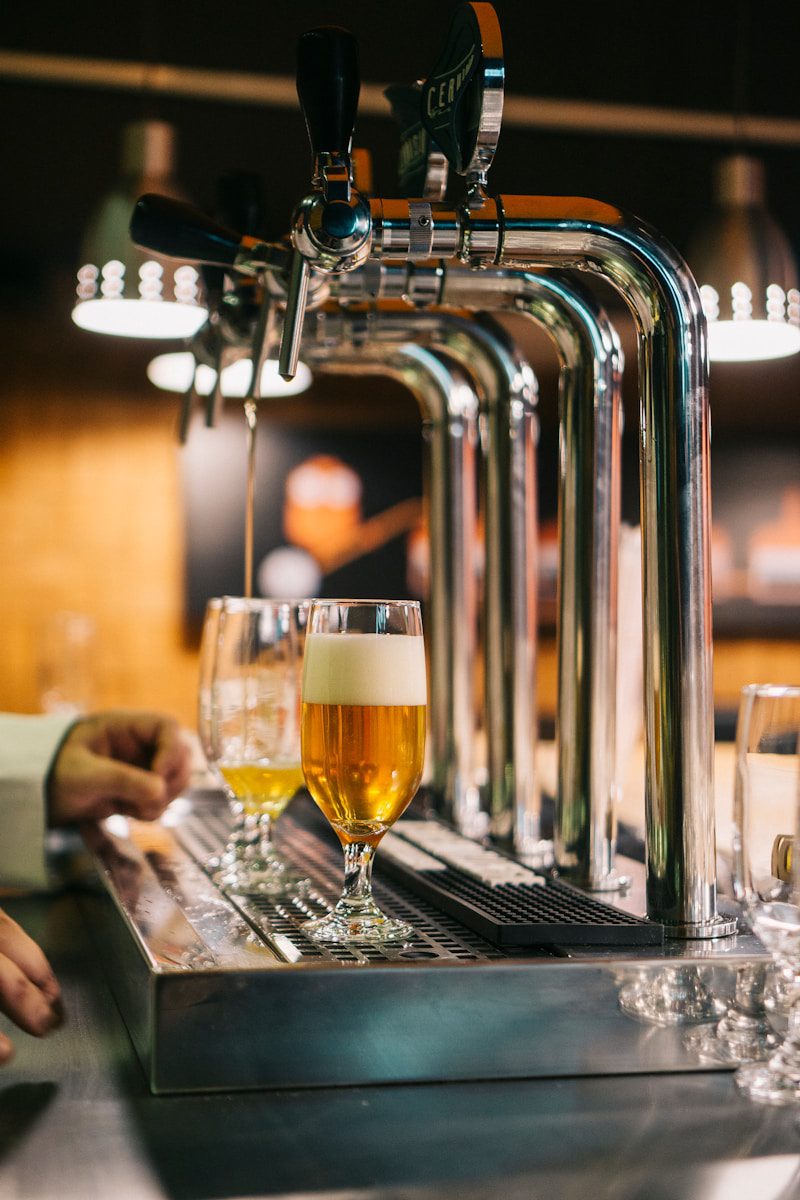 ━━
( Source: Fábio Alves / Unsplash+ )
Balling scale
There is also a Balling scale. This measures the concentration of dissolved solids in the wort, mainly sugars. It is the concentration of sugars in the wort that is an indicator of the potential alcohol content. Obviously, the yeast ferments the sugars into alcohol. Why the Balling scale? It’s simple. The scale was invented by the German chemist Karl Balling.
Back in 1843, he compiled a set of tables. However, the Balling scale has now largely been replaced by the Brix and Plato scales. In essence, all three scales are the same. It should be added that these scales are not only used for beer, but are also used extensively in the wine industry. In fact, they are rarely used in commercial brewing.
EMP beer
Have you ever heard the term EMP? It’s another term related to beer and its grades. In the beer world, EMP stands for extract of the original wort. The term specifically refers to the amount of dissolved sugars and other substances in the wort. That is, before the beer is fermented. It is the amount of dissolved sugars in the wort that is used to measure the degree of beer. The amount of dissolved sugar affects the degrees and also the density of the liquid.
Simply put, EMP is the ratio of what makes beer beer, to water. For example, a 10 has 10% of the extractables found in wort before fermentation. The other 90% is the aforementioned water. On the face of it, water is just an additive. However, it is also important. It also gives the beer its flavour. What does this imply? Good water, quality hops and malt are important for beer production. One without the other wouldn’t work.


 Šárka Cvrkalová




 O. Müller

 A. Urban