

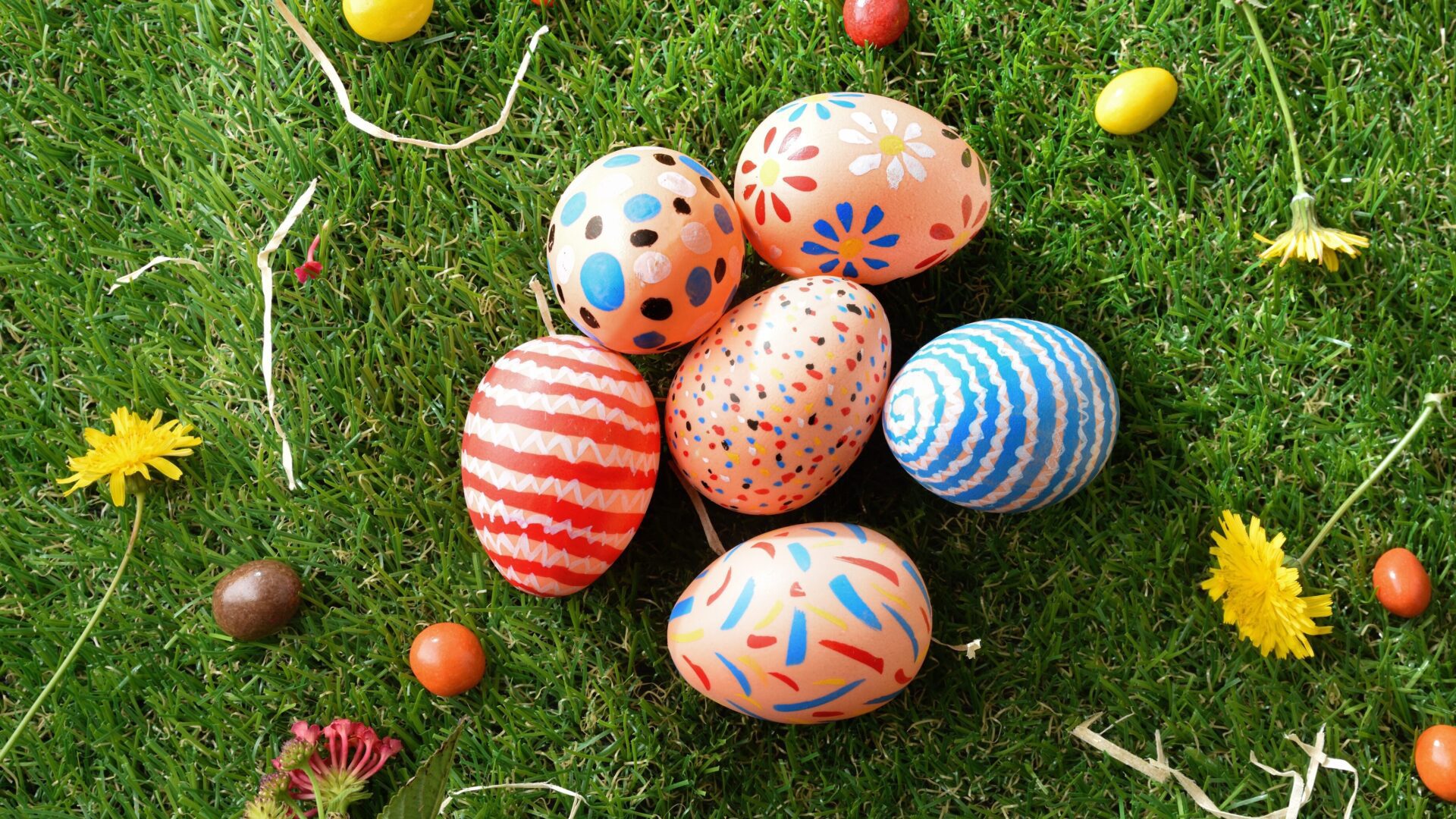
Spring is beginning to turn beautiful colours and heralds the coming of Easter. The same colour palette and joy is symbolised by Easter eggs, the dyeing of which goes back further than you might have thought. When did this tradition begin and what is its significance?
If I had to name one thing I love most about Easter, it would definitely be decorating eggs. However, this custom is not just about applying colours or different pigments, it gives the opportunity to express oneself creatively, but most importantly it carries a deep symbolism that has been around for centuries. Although the exact origins of the creation have been lost throughout history, eggs have been part of Easter celebrations for several centuries. Come and learn about the history of this springtime custom.
The egg as a symbol of life
The egg is one of the most typical symbols of Easter. But why is it so? Already in ancient times it was seen as a symbol of life, fertility, birth and renewal. For this reason, it is associated with spring, and it actually makes sense, as it is during spring that nature awakens and animals give birth to their young. And isn’t that actually what everyone needs in spring? A reboot, regeneration and the feeling that something new is beginning.
Long before the birth of Christ, there were already the first efforts to dye eggs. But back then, this activity had no Christian symbolism. It was often linked to events in nature and celebrations. In pagan times, eggs were part of the celebration of the vernal equinox and served as an offering to the gods. By dyeing them, people warded off evil and attracted good luck.
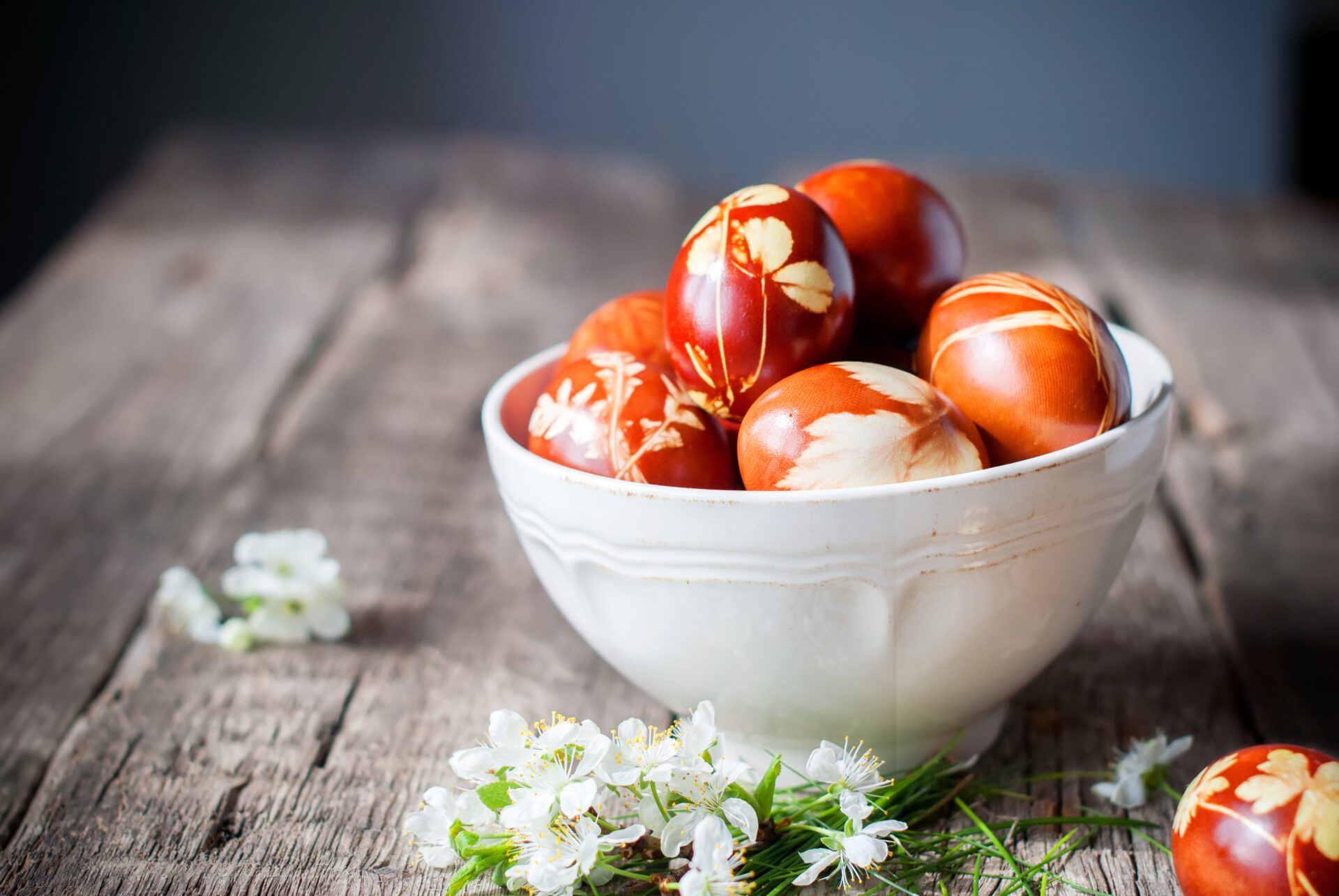 ━━ Eggs were and still are dyed in onion skins.
( Source: Olga Pink / Shutterstock )
After the spread of Christianity, however, egg dyeing took on a whole new dimension. Eggs became associated with Easter because they symbolized new life, including the resurrection of Jesus Christ. In those days, it was mainly the red-coloured eggs that were spoken of, which are closely related to this event. As the story goes, Mary Magdalene went to visit Jesus’ tomb and when she found it empty, the eggs turned bright red. They symbolize the blood that Jesus shed when he was nailed to the cross.
Even if you’re not a believer, you see this motif of new beginnings and the endless cycle of death and rebirth everywhere. Maybe that’s why Easter appeals to people regardless of religion.
Over the centuries, different decorating techniques began to emerge. The most popular and beautiful was the tradition of drawing on eggs with wax and dye. This technique gradually became an art, and families passed on the secrets of the various decorating methods for generations. However, it was not until the 19th century that egg dyeing became a popular family pastime at Easter and a delicacy. This custom has since evolved into its modern form.
The smell of onion skins
When I think back to my childhood and Easter, the smell of onion skins comes to mind. In my family it was customary to dye eggs exclusively in onion skins. To this day, I still prefer natural dyeing to using chemical dyes. After all, I see a certain magic and connection with nature. It’s a kind of cycle. What nature has given, I give back to her.
If you want to achieve really beautifully coloured eggs, I have a tip that has been passed down in my family for generations. I always prepare my onion skins a few days ahead. The more you have, the richer the color will be. I add two to three handfuls of peels, a tablespoon of vinegar and then let it simmer for 15 to 20 minutes. I prepare the eggs and various grasses and plants to decorate. Parsley, clover and whatever you can find in the garden. I attach the leaves as desired and then wrap the eggs with a bandage or put them in a stocking. The result is beautifully naturally coloured eggs. And one little tip at the end. If you want to give them a more “luxurious” look, brush them with oil.


 Šárka Cvrkalová

 L. Novak



 O. Müller
