

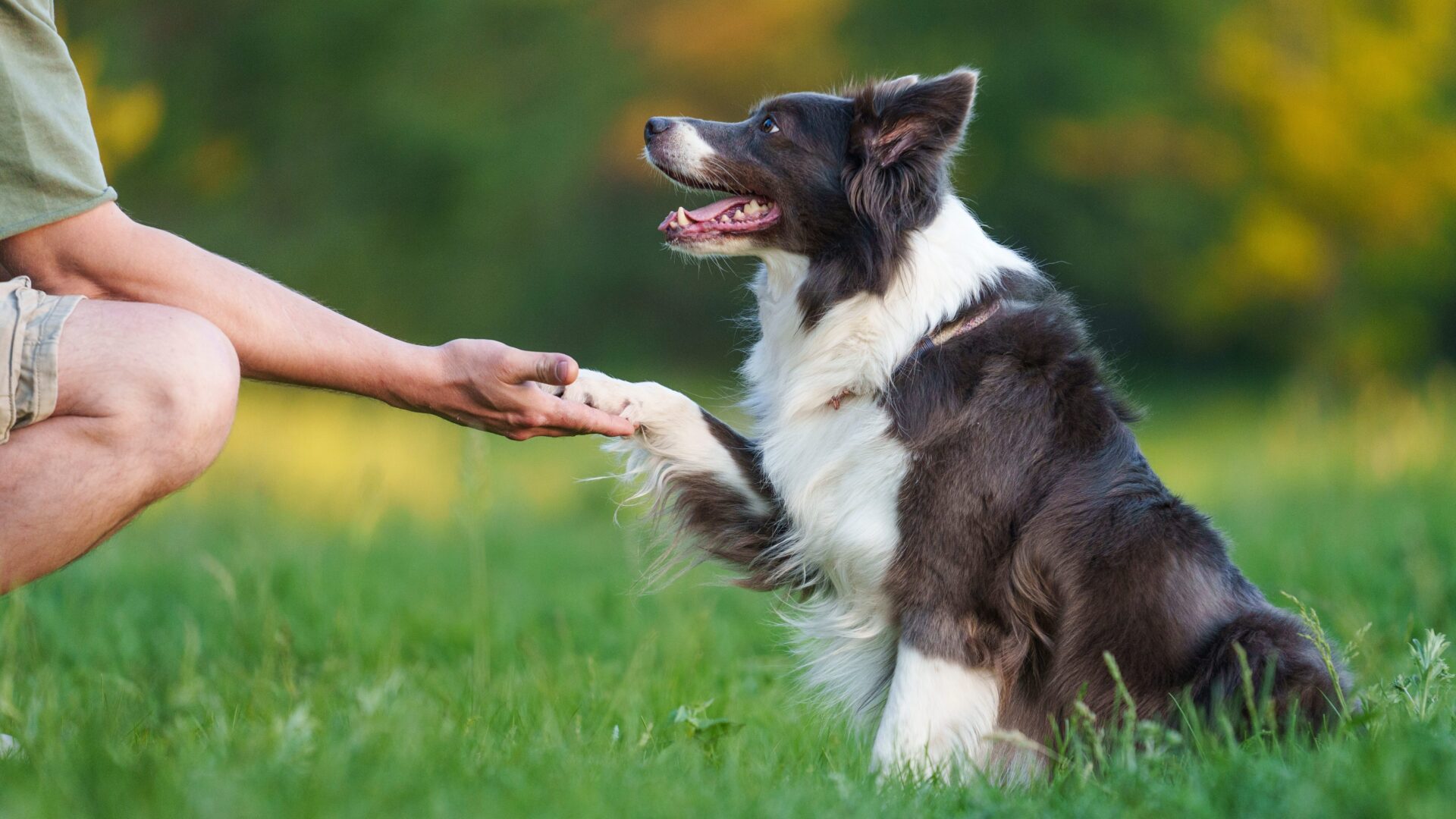
Dogs use different ways and gestures to communicate with you. One of these is the paw cues that can give you a clue as to what your four-legged partner is asking for. The meaning may be more complicated than you think. The dog uses this communication tool to express his feelings, needs and desires, so it is essential to interpret them well. How should you respond appropriately, according to the experts?
Dogs have been using their paws since puppyhood. They use them to interact with their mother or siblings, and this way of communicating survives into adulthood, when they pass it on to humans. Unlike humans, who communicate through speech, dogs must rely on body language and physical contact. Paws thus serve as a quick means of getting attention and expressing their needs.
Learned and instinctive behaviour
The use of paws can be divided into two groups. Experts point to instinctive and learned aspects. If a dog reacts instinctively, it is an innate gesture. On the other hand, in moments when it detects that a paw movement will trigger a reaction, e.g. a cuddle, a treat, it learns this strategy and uses it when it wants to achieve something.
Desire for attention
The most common reason a dog offers its paw is to attract attention. Dogs don’t thrive on solitude as they are social creatures that need to be near their owner. If he often lays his paw on you, it means that you are not paying enough attention to him and he is trying to draw attention to his presence. It is a learned gesture that is sure to get your attention.
Emotional and physical needs
Dogs are dumb faces that, like humans, have emotional states. They use their paws to express stress, insecurity, sadness, joy or need for comfort. If they feel insecure, physical contact helps them find peace and a sense of security. Sometimes they just want reassurance that you still love them. By giving you a paw, they are expressing their deep affection for you. During these moments, chemical reactions are triggered that release serotonin, oxytocin and dopamine, causing pleasurable feelings.
The expression of physical needs plays an equally important role. He also uses his paw to indicate that he is thirsty, hungry, wants a walk or to go for a walk.
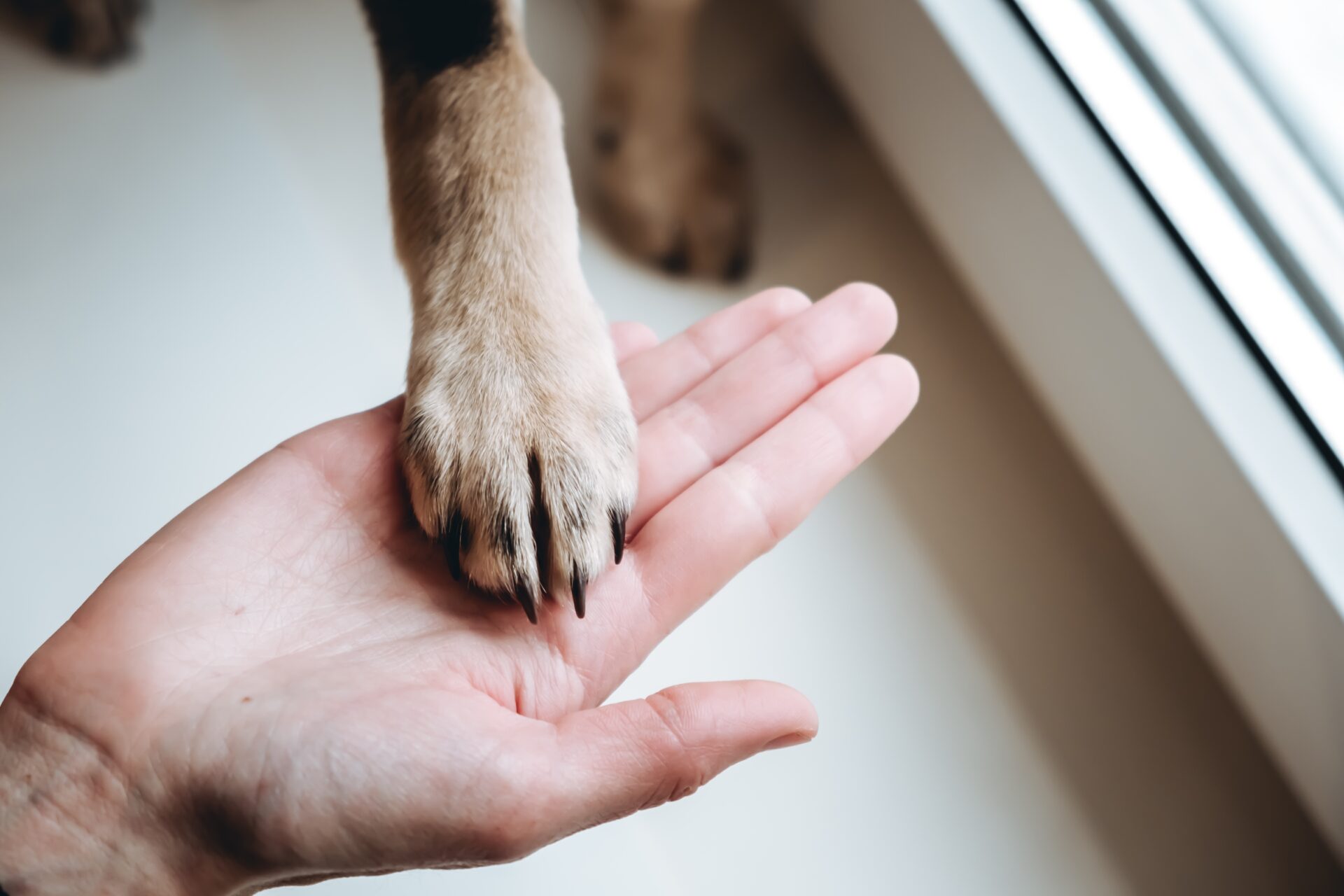 ━━ When a dog gives you a paw, it can indicate well-being, but also health problems.
( Source: Hanna Taniukevich / Shutterstock )
Interpretation of body language
The paw cue acts as a general gesture of communication, so other body language signals should always be considered. Note the posture, tail position, ear movement or facial expressions. At the same time, consider the circumstances during which the gesture is made. When a dog gives you a paw during petting, or vice versa during feeding, the interpretation varies.
In some cases, however, the gesture may indicate health problems. If he uses it in combination with unusual behaviour, it may mean that he is in pain or uncomfortable.
Recognising stress signals
The most common reason for unusually frequent paw feeding is stress and anxiety. They are manifested by frequent contact seeking, which is the dog’s way of trying to make sure that he finds comfort with you. Symptoms include pinned ears and tail, trembling, restlessness and increased licking. Be aware of the situations in which these behaviours occur so that you are able to prevent stressful situations.
It is important to remember that every dog has a different personality and expresses itself differently. Your subsequent and correct response should then be based on a consideration of all aspects. However, if your dog has been exhibiting unusual behaviour for a long time, you should consider visiting a vet to rule out health problems.


 Šárka Cvrkalová

 L. Novak



 O. Müller
