

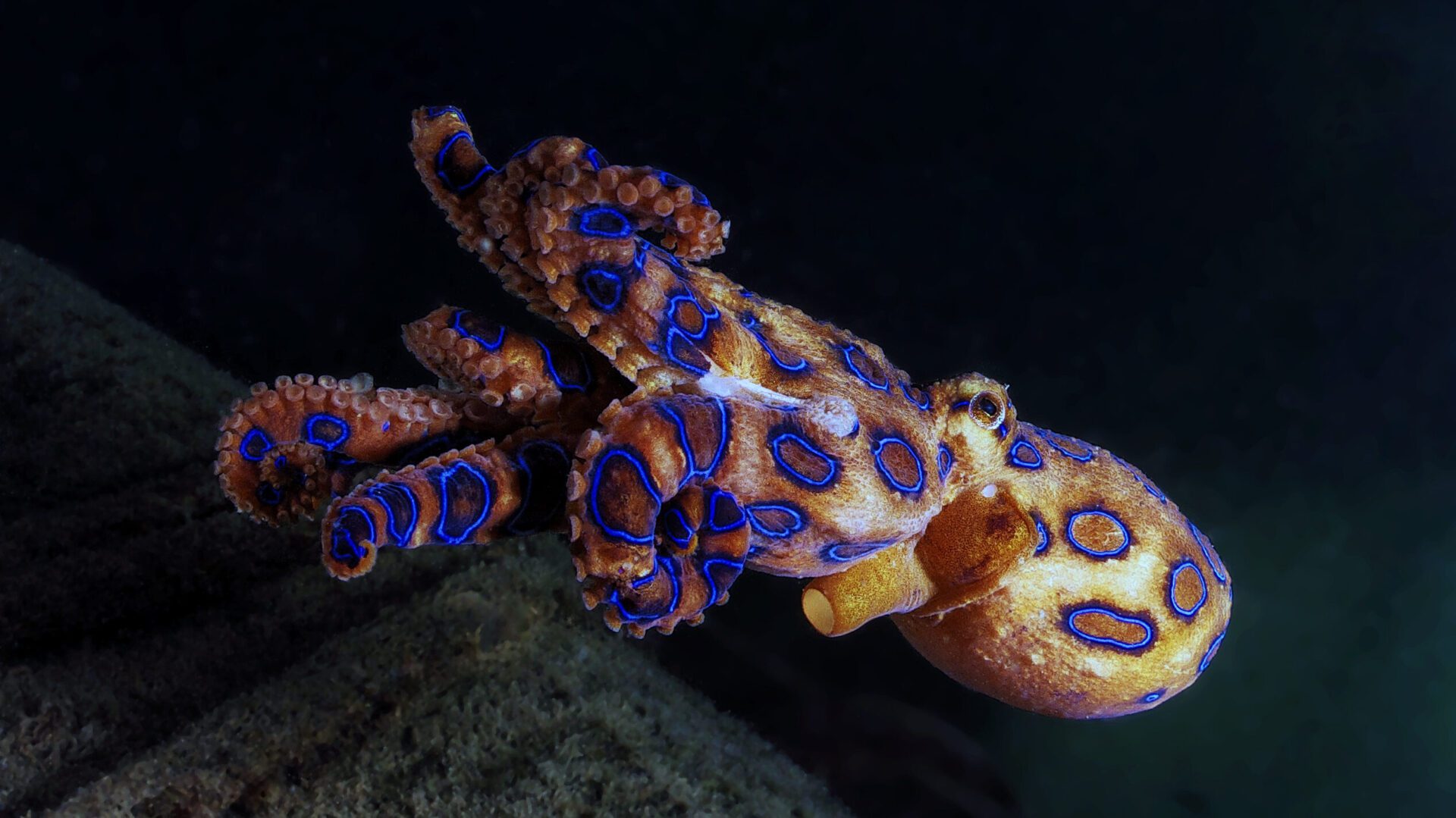
Beauty is often the most dangerous. This is especially true in the case of one animal. It will catch your eye with its interesting colouring, but if you come into contact with it, this could be the last time you see it. Who is it and why is it so dangerous?
The oceans harbour many beautiful and terrifying creatures. Some may not attract attention, quite the opposite, but they are very interesting in their anatomy. Others, on the other hand, have nice physical features but can be dangerous to humans. One species of cephalopod belongs to this group.
Beauty hides danger
We’re talking about the ringed octopus, sometimes known as the blue-ringed octopus, which is absolutely fascinating. It will captivate you with its beautiful blue rings that cover its entire body. It also has a really small stature. To give you an idea, it could easily fit in the palm of your hand.
This species was discovered in the Pacific and Indian Oceans. Commonly living on coral reefs or the seabed. It is particularly active at night, as it comes out to hunt for food. The existence of blue rings refers to aposematism. This means that it uses bright colours to serve as a warning to predators. When they feel threatened, they become strongly pronounced. However, its beautiful appearance is deceiving, as it is one of the most toxic animals in the ocean.
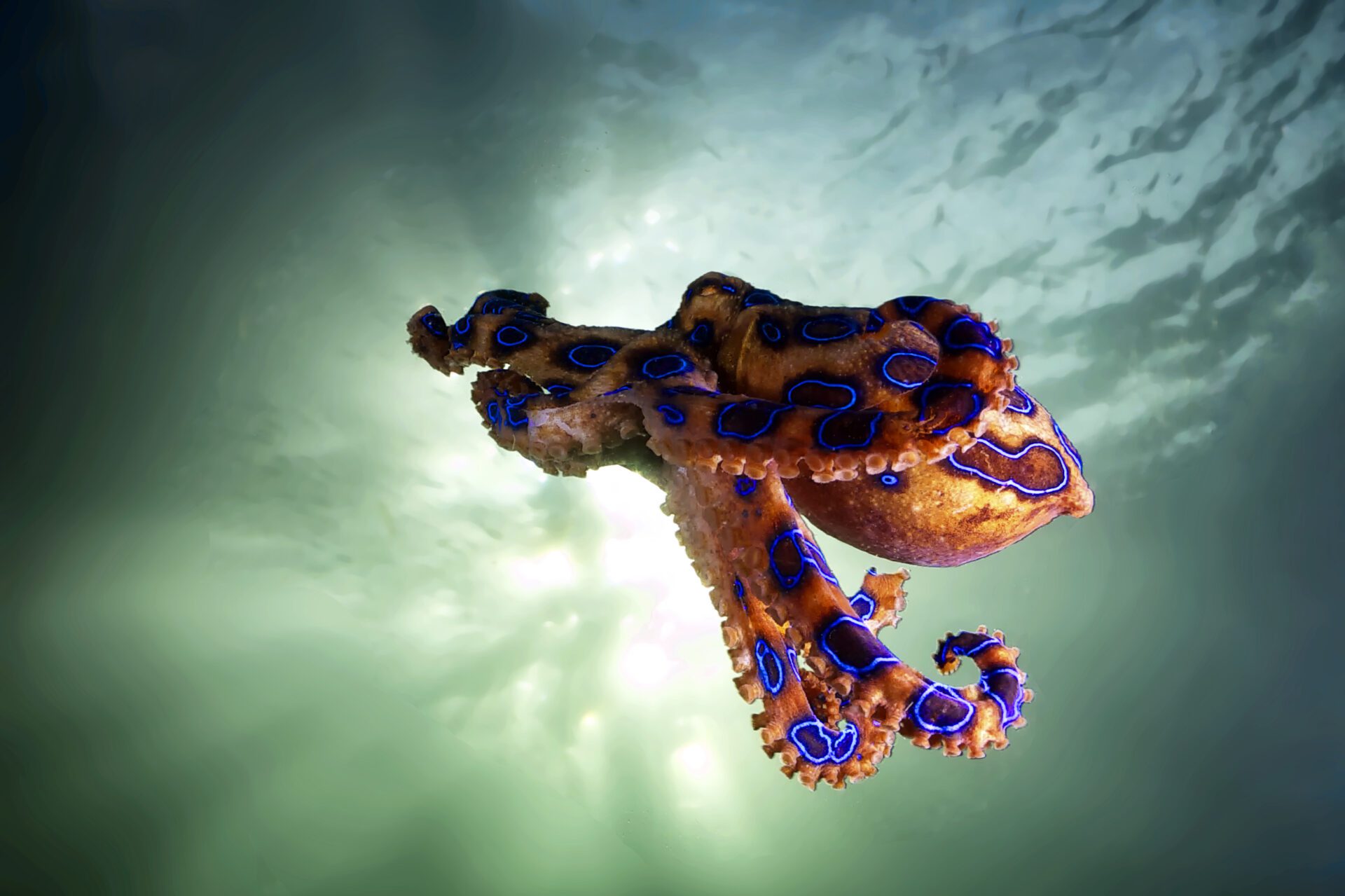 ━━ The ringed octopus is a very small species.
( Source: Subaqueosshutterbug / iStockphoto )
Contains a harmful substance
It’s not just for show. If you come into contact with it, you could find yourself in danger of your life. Her salivary glands contain bacteria that produce a substance called tetrodotoxin. It’s highly neurotoxic because it blocks nerve signals to the muscles. The result is weakened muscles or complete paralysis. Very often, the muscles of the airways are restricted and breathing can stop.
However, exposure to tetrodotoxin may not be immediately apparent. It has been reported that symptoms may begin to appear after 20 minutes, but also after 24 hours. Muscle weakness is often accompanied by other side effects such as vomiting and dizziness. Many studies report that this substance is at least 1000 times more toxic than cyanide. It is found in all its tissues, so a single touch is all it takes.
Is it something to worry about?
However, there is no antidote or cure that can be used. As a rule, the affected individual is attached to a breathing apparatus to prevent respiratory arrest. If prompt action is taken, it is possible to be out of life-threatening danger within a few hours.
Although highly toxic, this octopus has reportedly caused so many deaths that you could count them on the fingers of one hand. In addition, it is usually found in deep waters or places in the ocean where you probably wouldn’t normally go. So there’s no need to worry about running into this deadly beauty.


 Šárka Cvrkalová

 L. Novak



 O. Müller
