

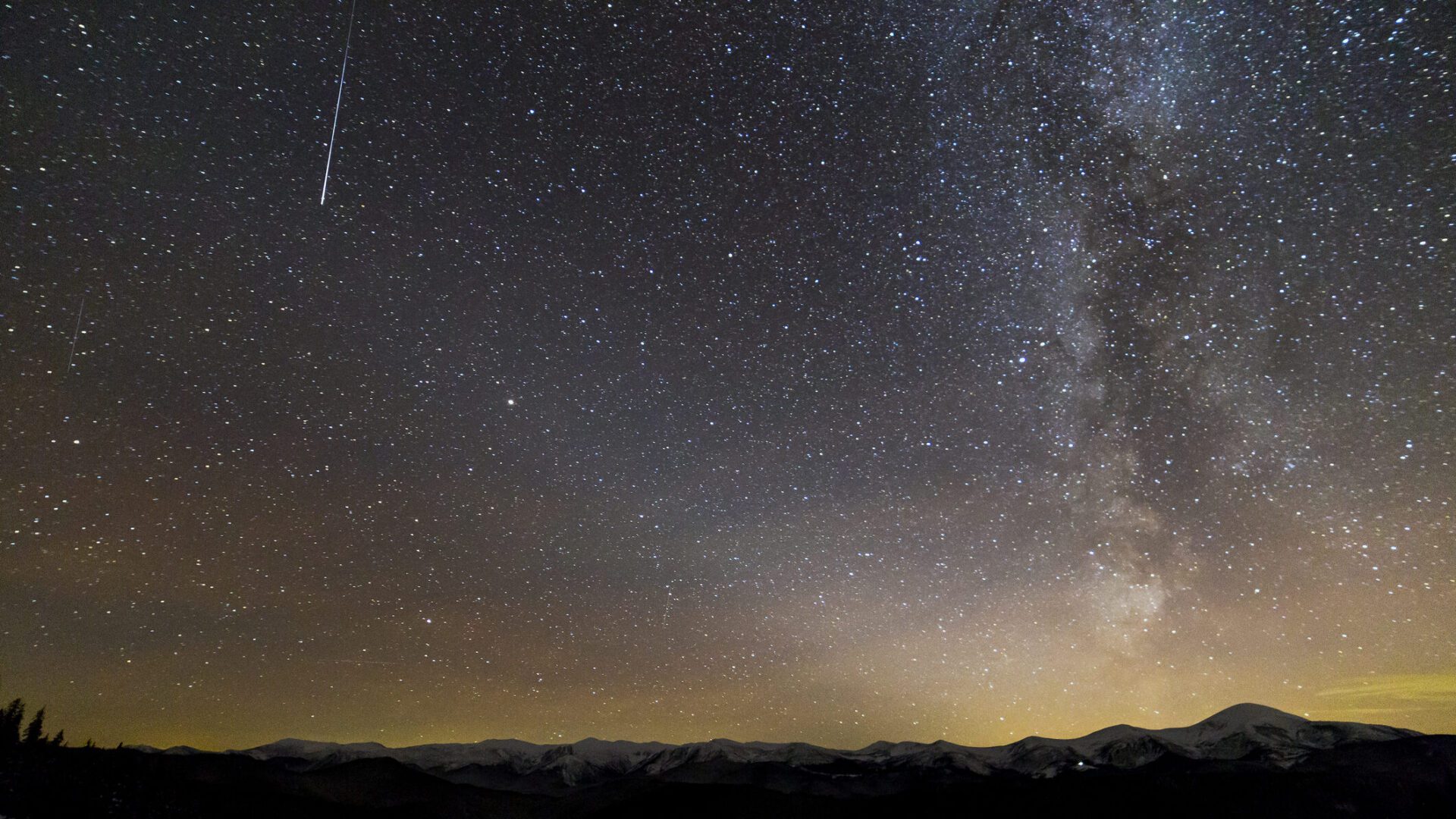
In December, falling meteors light up the sky twice. On 22 December, the Ursid meteor shower will reach its peak, but it will be much fainter than its predecessors. However, this is the most poetic shower, as it arrives just before Christmas and adds a magical atmosphere to the sky.
What is the Ursid meteor shower?
Ursid meteors are formed from the fragments of ice and dust left behind by Comet 8P/Tuttle as it orbits the Sun every 13.5 years. This comet was discovered in 1790 and is approximately 4.5 kilometres across. The Earth then passes through these particles. As they enter the Earth’s atmosphere at high speed, they heat up and disintegrate in flashes of light. The radiant of the Ursid meteor shower lies between the stars Kochab and Pherkad, which form the rear edge of the Little Chariot. It is part of the constellation of the Little Bear, after which the swarm takes its name (Ursa Minor in Latin).
When and how to observe the Ursids
This inconspicuous meteor shower peaks on the night of December 22-23, the day after the winter solstice. However, they appear in the sky between December 17 and 26. Although it is relatively weak, it is steadily active and appears each year at a similar intensity. It is reported that about ten meteors per hour can be observed. Ursids are slower than most meteors, possess a yellow-orange coloration, and leave a distinctive trail behind them.
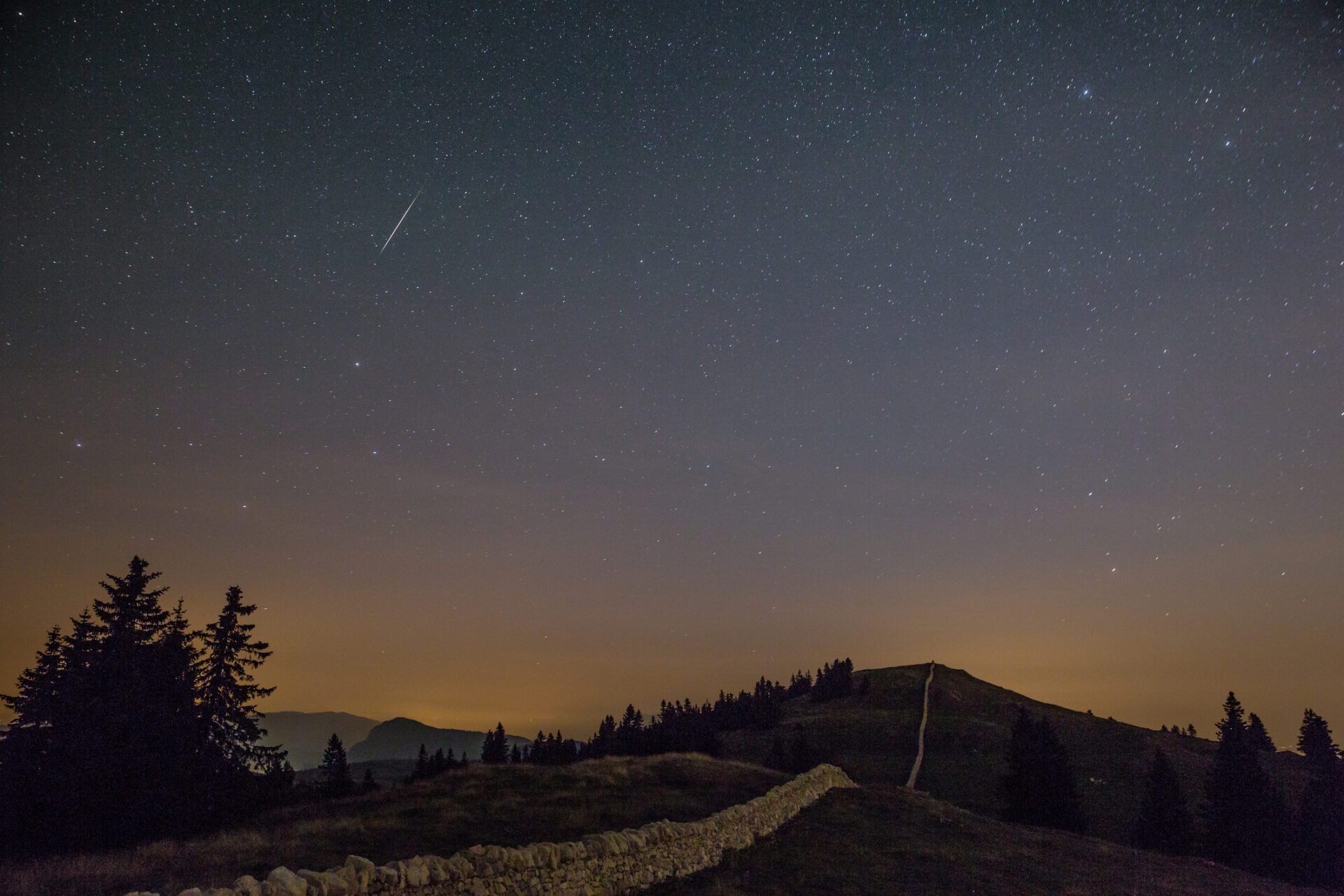 ━━ The Ursid meteor shower peaks just before Christmas.
( Source: Angelina Cecchetto / iStockphoto )
A swarm that was discovered by complete accident
This is a young swarm, as it is one of the most recently identified meteor showers. It was first recorded around 1910. It was noticed by observers when unusual activity was noted in the sky. The swarm was therefore discovered by chance.
Meteorsenter the atmosphere at about 33 km/s. This is slow compared to other meteors such as the Leonids at 72 km/s or the Perseids at 59 km/s.
Best viewing in the northern hemisphere
Since the radiant is located more to the north, the shower is best observed in the northern hemisphere. It is so difficult to spot in the south, you may not even see a single meteor. When observing it is important not to be near artificial light, a secluded spot in nature is ideal. In addition, the time before Christmas, together with the cooler weather, creates a fairy-tale atmosphere.


 Šárka Cvrkalová

 L. Novak



 O. Müller
