

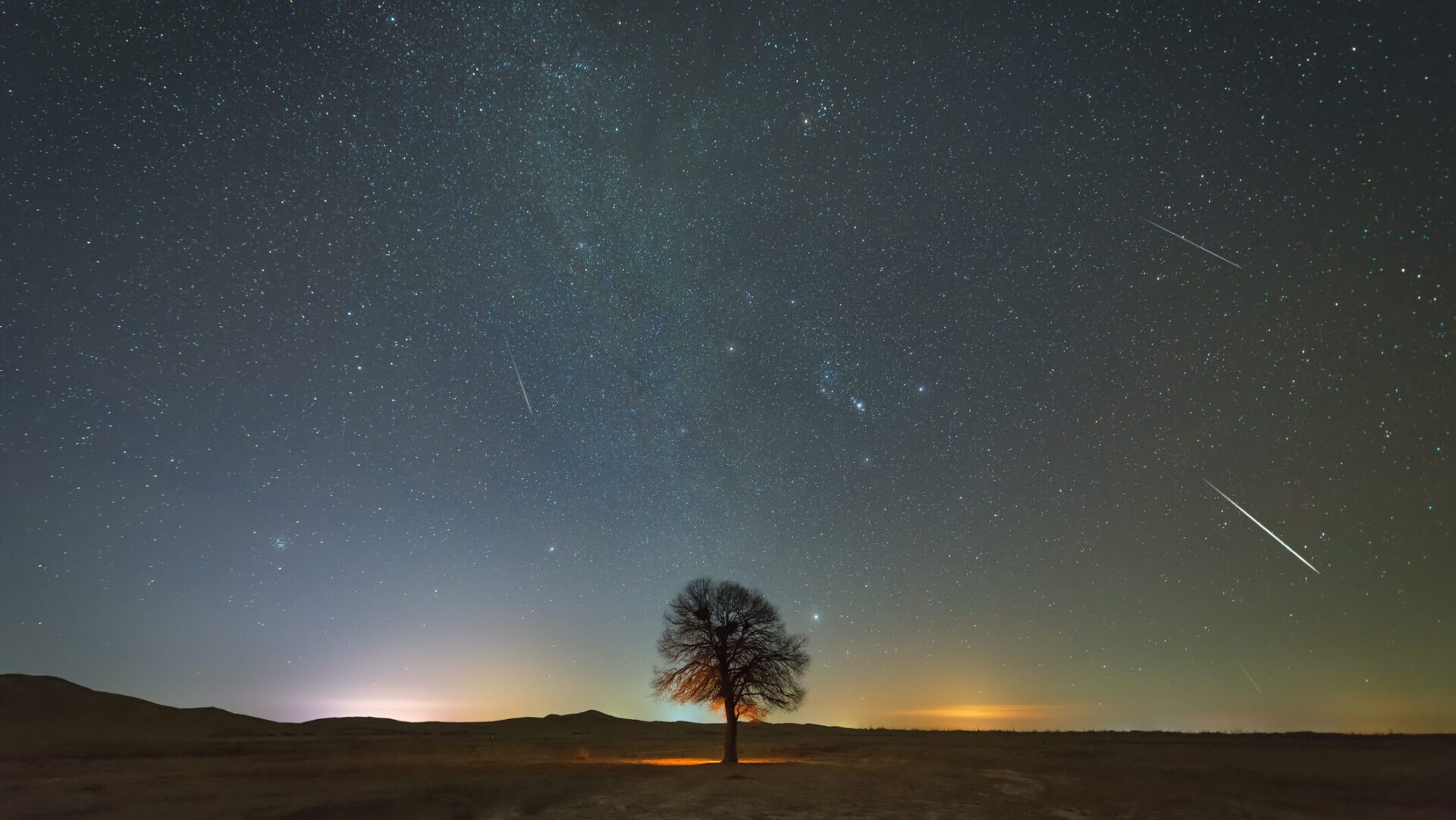
The most beautiful time of the year has arrived in the night sky. The magical atmosphere before Christmas will be intensified by the Geminid meteor shower, which will bring bright and colourful falling meteors. Tonight, December 13, the shower reaches its peak.
The sky will be lit up with winter shooting stars
Among the most beautiful celestial phenomena that can be seen in the sky during the year, the Geminid meteor shower stands out. It appears every year from about 4 December to 17 December, reaching its peak on the night of 13 December.
What are the Geminids?
Meteor showers usually occur when the Earth passes through debris left behind by comets. This debris, made up of dust and ice, burns up as it enters our atmosphere, giving the impression of a bright shooting star. Geminids are similarly formed, but their source is not a comet but the asteroid 3200 Phaethon, which leaves behind rocky debris.
“This material is larger on average and survives deeper in our atmosphere and tends to produce brighter meteors, ” said Rubert Lunsford, editor of the Journal of the American Meteor Society. He added that Phaethon fragments contain much more metal. “As these metals heat up during their passage through our atmosphere, they produce colors associated with each type of metal,” he said. This means that calcium and silicon produce orange, iron and sodium produce yellow, magnesium produces blue and nickel produces green.
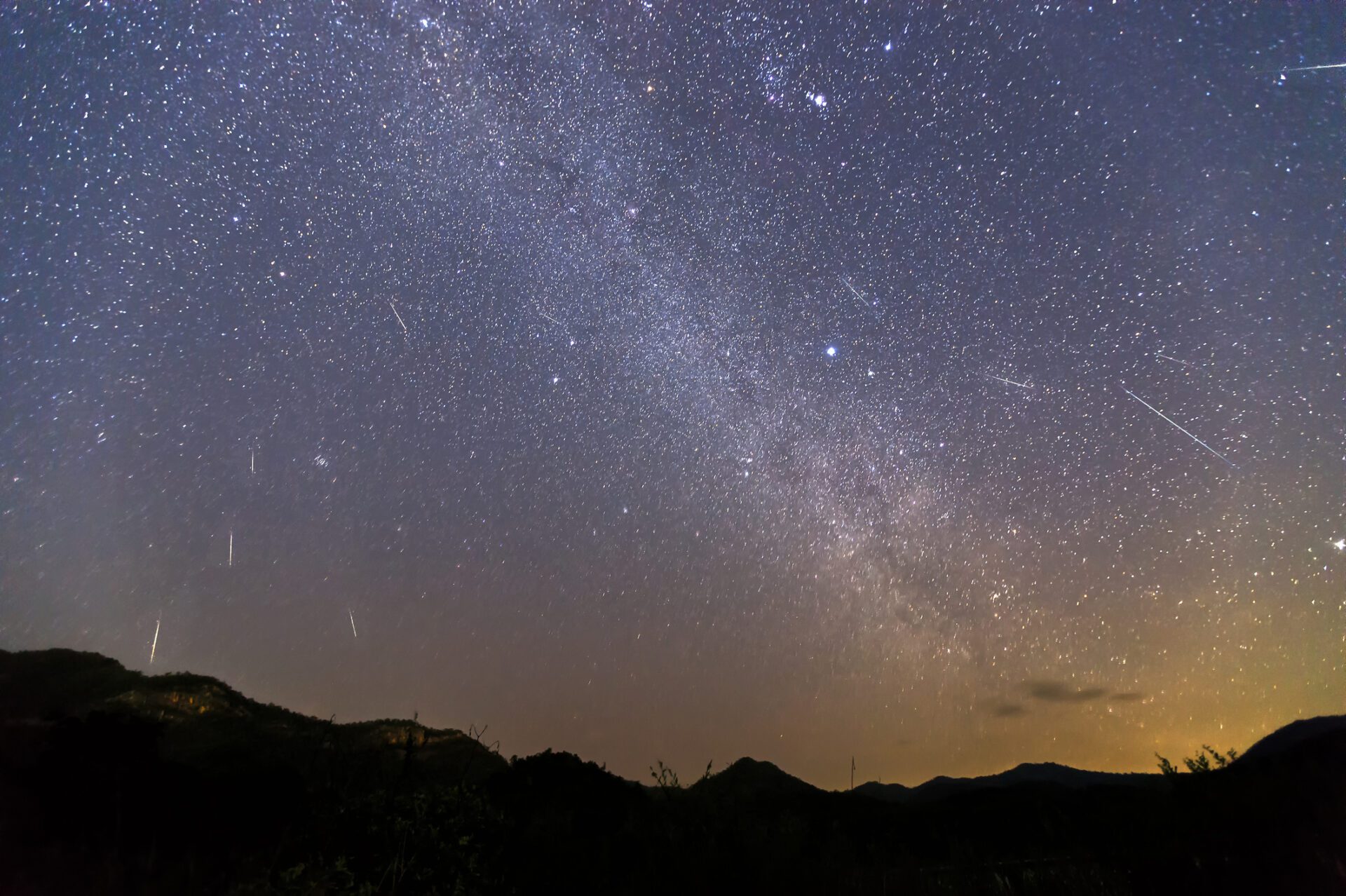 ━━ Geminids are sometimes referred to as "winter stars".
( Source: Skarie20 / iStockphoto )
What is the Phaethon 3200?
Phaethon 3200 is about 6 km across and passes very close to the Sun, near which it appears brighter and forms a tail. Scientists say that because of its rocky structure, this asteroid should not have a tail. This is because the tail is composed of sodium gas, not dust like comets.
An exceptionally beautiful swarm
The radiant, the apparent point from which meteors fly out, is the constellation Gemini. The falling meteors, called Geminids, will be visible as dusk approaches. Under favourable conditions, you can see 120-150 Geminids per hour in the night sky, but they fly more slowly than other meteors. They enter the atmosphere at 35 km/s. By comparison, the Perseids fly at 57 km/s, the Orionids at 101 km/s and the Leonids at 113 km/s. If you want to enjoy a beautiful view, choose a spot in the countryside where artificial light cannot reach and which offers an unobstructed view of the sky.
The Geminids are a beautiful phenomenon that lights up the winter sky. Their uniqueness lies in their high activity. Other meteor showers tend to be variable and erratic, but the Geminid shower is a constant and one of the brightest meteors that can offer a great experience.


 Šárka Cvrkalová

 L. Novak



 O. Müller
