

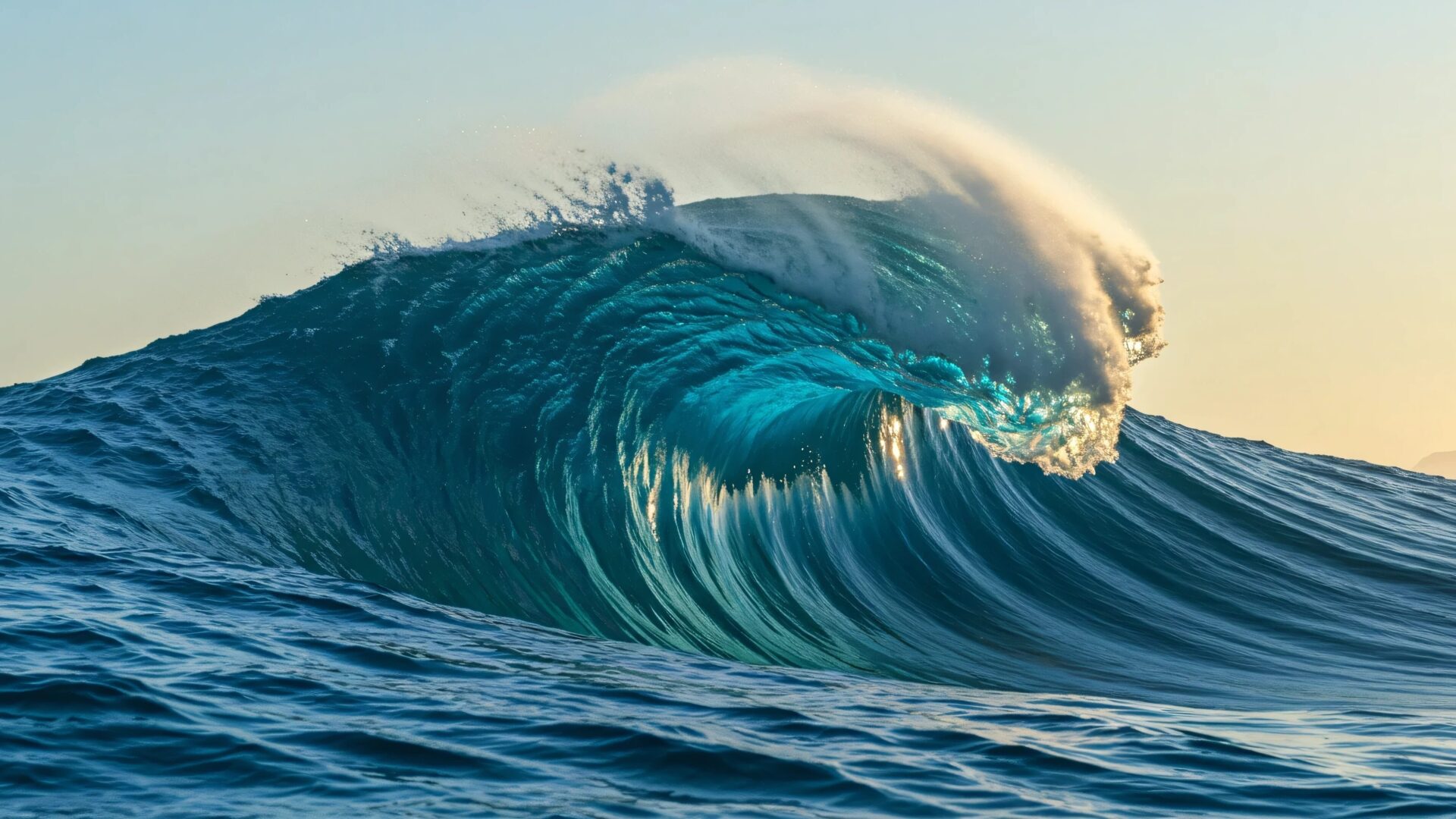
The waves of the sea are beautiful, but at the same time scary and unpredictable. Their power can be devastating in the form of a tsunami and there is no escape. It is generally thought to originate in the open sea, but research confirms that its origin is often close to the coast.
Tsunamis commonly originate after an earthquake on a fault line. A wall of water barely perceptible cutting across the open ocean, it reaches heights of several tens of metres near land and sweeps away everything in its path. At least that’s what everyone thinks. However, as analyses of dozens of events in which tsunamis have hit the coast show, in some cases the point of origin was much closer. This may be due to unstable slopes that collapse into the sea, and the subsequent waves are then many times higher than those generated in the open sea.
Record tsunami wave heights
Tsunamis triggered by landslides account for about 10% of all recorded events, and in extreme cases have caused waves up to hundreds of metres high. Research into this type has collected data from 317 landslides that caused 297 tsunamis worldwide. About a third occurred along open coastlines, 41% in bays or fjords and a quarter on lakes or rivers. In these places, the energy cannot dissipate towards the open ocean, so it is directed landwards.
An example is the 1958 rockslide in Lituya Bay, Alaska, which caused a 525-metre-high wave. In 1963, on the other hand, there was a disaster in the Vajont reservoir in Italy, which caused a wave 260 metres high.
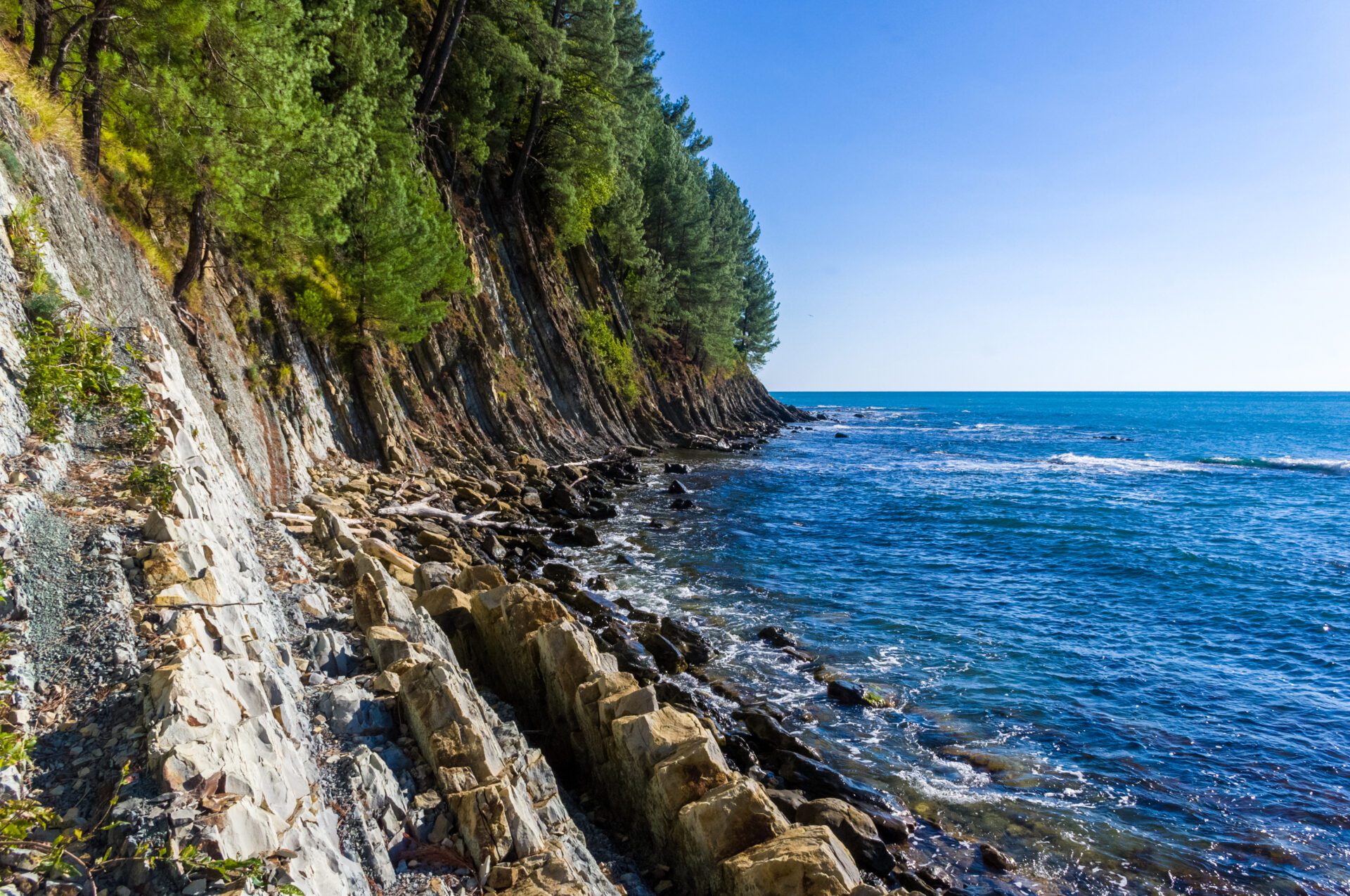 ━━ One of the causes of tsunamis is landslides.
( Source: Greens and Blues / Shutterstock )
Influence of climatic conditions
The study also looked at changing climatic conditions that could have an impact on the tsunami. As glaciers melt, frozen rock formations lose their support and collapse. An example is Karrat Fjord in Greenland, where approximately 45 million cubic metres of rock collapsed in 2017. The landslide triggered a tsunami about 90 metres high. In 2023, a tsunami of 200 metres was generated in Dickson Fjord.
Sirens don’t stand a chance
The problem with tsunamis created by landslides is time. With waves propagating from the open sea, it is possible to issue a warning in time, but with a landslide it is a very fast chain reaction. Thus, a wave can occur within minutes. For example, in Indonesia’s Palu Bay in 2018, where earthquake-induced underwater landslides contributed to major damage, it took about 100 seconds for a wave to hit the coast.
Can landslides be prevented?
According to the researchers, landslides are partly predictable. First of all, we need to know where these unstable places are. Many sites are already monitored using sensors, cameras and other instruments. Tsunamis of this origin are not among the most common types, but often reach much more extreme heights. When a landslide occurs, it is only a matter of seconds or minutes before the destructive wave hits the coast.


 Šárka Cvrkalová

 L. Novak



 O. Müller
