

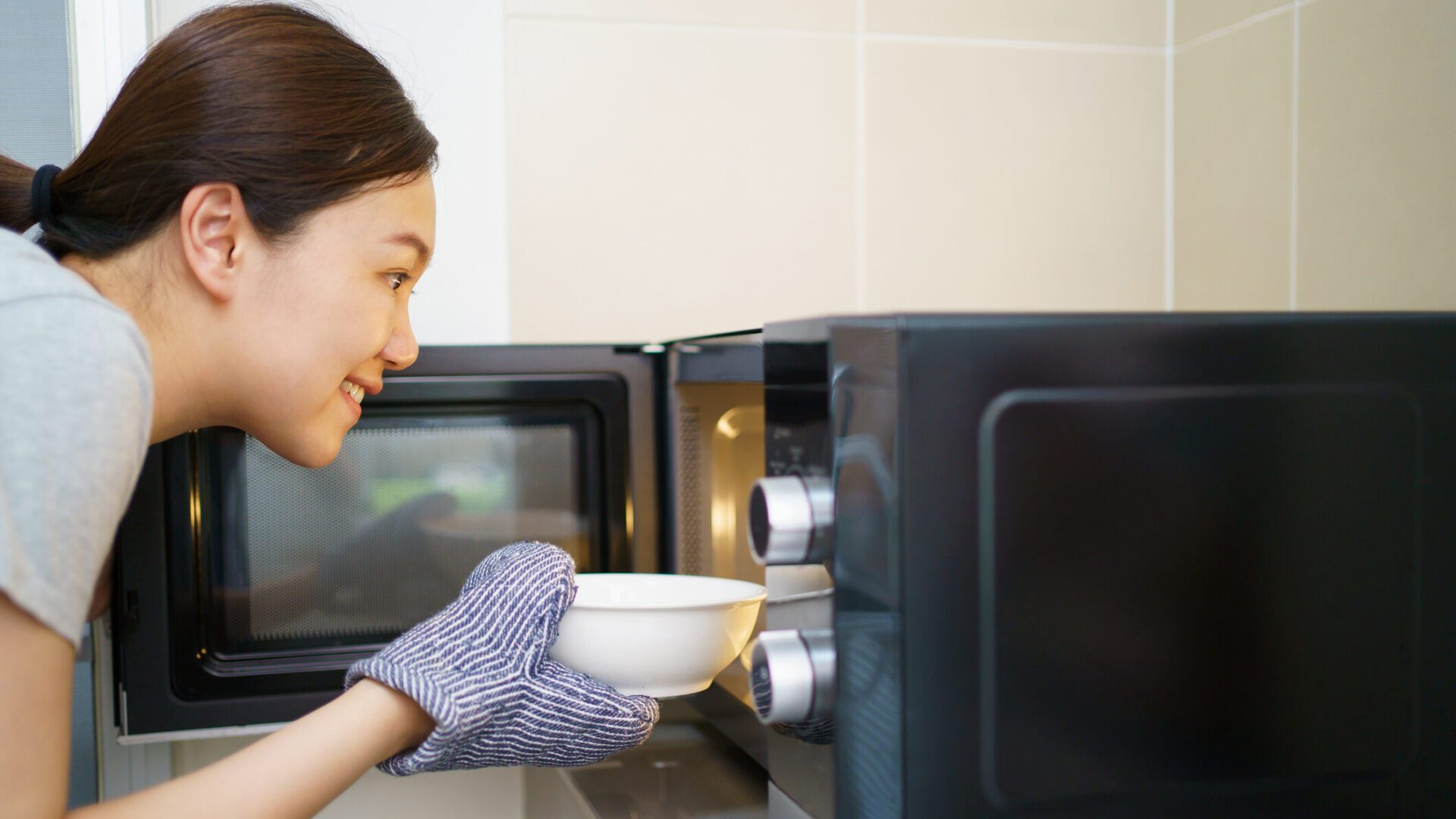
How is it that when heated properly, you put a plate of cold soup in the microwave and it takes out the hot soup and the cold plate? Or also the other way around if he makes a mistake? How does the microwave actually know what to heat?
Did it come about by accident
Did you know that the microwave oven actually came about by accident? Percy Spencer was working on military radar parts when a chocolate bar melted in his pocket. Trivial, isn’t it. But he started thinking about it, and that’s how the microwave oven came about. Warm bodies are different from cold bodies because the molecules move faster. And the faster they move, the higher the temperature of the body.
Clearly, there are other types of radiation that transfer energy. So why don’t we shine ultraviolet light instead of microwaves? It’s simple. Water absorbs certain frequencies much better than others. The 2.45 GHz frequency is an example that belongs to microwave radiation. If we put such waves in water, resonance occurs. The radiation generated in a microwave oven should only be absorbed by water molecules. It should bounce off other materials or pass through them.
Why does the plate sometimes heat up?
At first glance, it’s quite simple. If your microwave heats up the plate instead of the food, then that plate is probably not suitable for the microwave. The food will then remain cold due to the plate absorbing all the microwaves into itself. How is that possible if the microwaves are supposed to heat the water molecules? The microwave energy should be primarily absorbed by the food. But there are materials, such as ceramics, that can also absorb heat. The reason is simple. It is due to the water content or mineral composition.
And it’s certainly not that the ceramics are of poor quality. Even in high-quality ceramics, a small amount of water can be trapped in the material. When heated, the moisture can then absorb energy. This is what causes the plate to heat up and the food to stay cold. It must be said, however, that heating ceramics that are suitable for the microwave is not dangerous. However, it is clear that there is some risk of burns when removing hot dishes from the microwave. Also beware of thermal shocks. It is not advisable to take hot ceramics from the microwave into a cold environment.
It doesn’t have to be a plate
While sometimes the wrong cookware is to blame, other times it’s where you place the plate in the microwave. You may never have thought of it, but the problem is that the microwave plate doesn’t belong in the middle of the glass plate. In fact, it’s much better to place the food on the edge of it. It’s not nonsense, it’s actually information backed up by food scientists.
Makenzie Bryson Jackson, a food scientist, claims that most modern microwave ovens are designed to rotate the inner plate. This allows the waves to bounce off it evenly. Placing the food on the edge ensures that it heats as evenly as possible. Right. The improvement probably won’t be dramatic because it’s only a few centimetres, but you’ll notice the difference. What else can you do? Try stirring the food halfway through heating.
The marshmallows trick
And how can you tell where your microwave is heating the most? It’s simple. Just try the marshmallows trick. Layer them on a plate and heat them up for 50 seconds. The ones that get fluffy show the hot spots of your microwave. So those are the areas that will heat up the fastest. Try it. It may reduce the time you have to wait for your food to heat up.


 Šárka Cvrkalová




 O. Müller

 A. Urban