

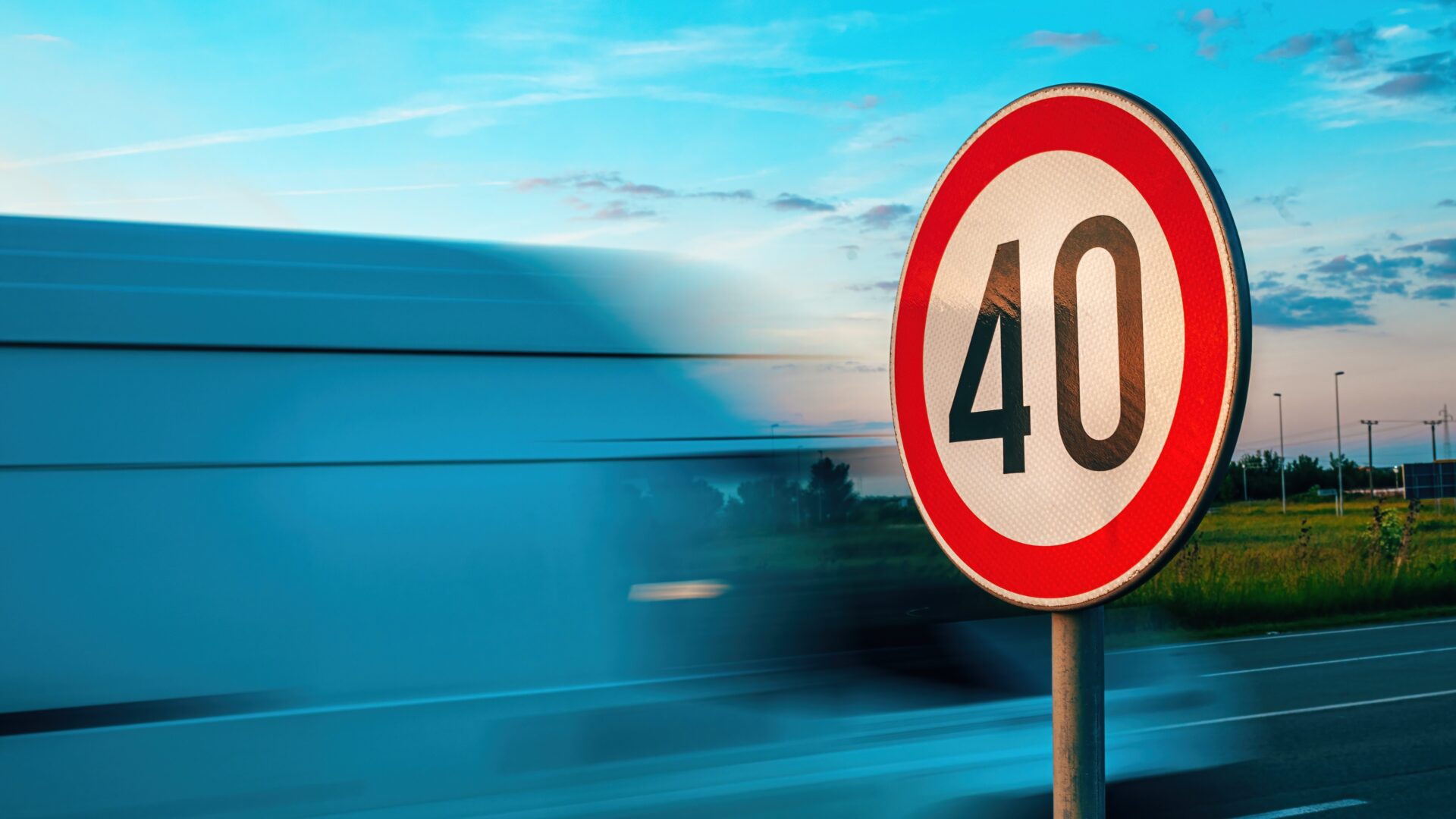
Drivers in the Czech Republic have a lot of problems with speed limits. It is not uncommon for them to drive several tens of kilometres faster than the legal limit. They are counting on the fact that there will be no police officers on the spot and they will not get a fine. The Poles and Germans are more cautious. They know that men of the law in their country punish offences severely.
Speed limits
Signs showing the maximum speed you can drive have a really important function in road traffic. However, some drivers believe that speed limits have only one purpose. To slow them down and make them angry. This is definitely not the case. Traffic experts carefully consider what speed they will allow on a particular stretch of road. The safety of all road users is paramount.
When to start braking
The law is clear. After passing a traffic sign, we should respect it. So it is not enough to start braking with the sign, but well in advance. So if we are travelling at 90 kilometres per hour and there is a village sign ahead, we should react in time and gradually reduce our speed to 50 kilometres per hour, even by engine braking. With the sign, we have to drive at the prescribed speed.
However, the reality in the Czech Republic is often different. Many drivers here drive in a so-called brake-gas mode. They drive at the maximum speed limit, which they often exceed, and only start braking when the sign is displayed. They reach the recommended speed several tens of metres behind the traffic sign. Neither the Germans nor the Poles would dare to do this. They know that the penalty for breaking the rules would be too high.
After all, it is similar with speeding. According to the rules, drivers should drive at the speed limit up to the point marked by the sign. You cannot start accelerating before that. After all, there are people living at the end of the village. Or it could be a dangerous stretch. Speed reduction always makes sense right where it is.
 ━━
( Source: Grahame Jenkins / Unsplash+ )
How about a fine
Police officers who don’t have a speed camera will have a hard time guessing that you were or were not speeding at the exact sign. However, cameras can be set up so accurately that officers will have proof of your speed to within a metre. Sure, cops don’t measure all the time, but relying on not getting caught is really irresponsible.
Reasons for speed limits
The limits weren’t invented by someone walking by and saying, well, I’m going to piss off the drivers here and put a 50 here. On the contrary. They are set after careful consideration of several critical factors relating to road safety and efficiency. The police, who enforce the rules , do not play a key role in setting traffic limits. Engineers are the most important in this respect. They analyse a range of factors including road design, traffic volumes, surrounding land use and accident history.
From 50 to 30
Previously, driving at 50 was allowed in many places in most cities. Today, there is often a move to reduce the speed limit to 30. This can be frustrating for some drivers. Yes, it ‘s like the car is pacing. But the reasons for introducing lower speed limits are clear. It was even addressed in a study that concluded that as urbanisation and motorisation increases, a 30 km/h speed limit should be the standard in all areas where cars, pedestrians and cyclists meet.


 Šárka Cvrkalová




 O. Müller

 A. Urban