


Tartar (professionally referred to as dental calculus) is a common, yet often overlooked oral hygiene problem. It occurs when soft plaque on the teeth is not removed in time and gradually mineralises. According to experts, plaque can become calculus in just about 72 hours. After that, professional care is often needed to remove it. But what can we do for our teeth at home?
Traditionally, the removal of tartar is associated with a visit to a dental hygienist, who will use an ultrasound machine to put our teeth in order. Yet there is a growing interest in ways to make it easier to control or minimise it without the need for this intervention alone. What can be done without ultrasound, what procedures are supported by research and what are their limits?
What is happening in the oral cavity?
Plaque is a soft, sticky biofilm made up of bacteria, food debris and saliva that forms on the teeth. If it is not mechanically removed regularly with a toothbrush and interdental appliances, it becomes mineralised. Phosphates and calcium salts are deposited on the teeth and hard calculus is formed.
The calculus then acts as a trap for further plaque, as its rough surface facilitates bacterial growth and impairs effective cleaning. Once tartar is involved, you cannot effectively remove it by brushing alone. Therefore, the key is to remove the plaque early, before it mineralises.
What can be done about the problem?
Home oral hygiene is the mainstay. It is recommended that you brush your teeth at least twice a day, ideally using a fluoride toothpaste, and clean your interdental spaces once a day. Studies show that routine brushing can remove a significant amount of plaque; if you take care of your teeth this way, you are at much less risk of complications.
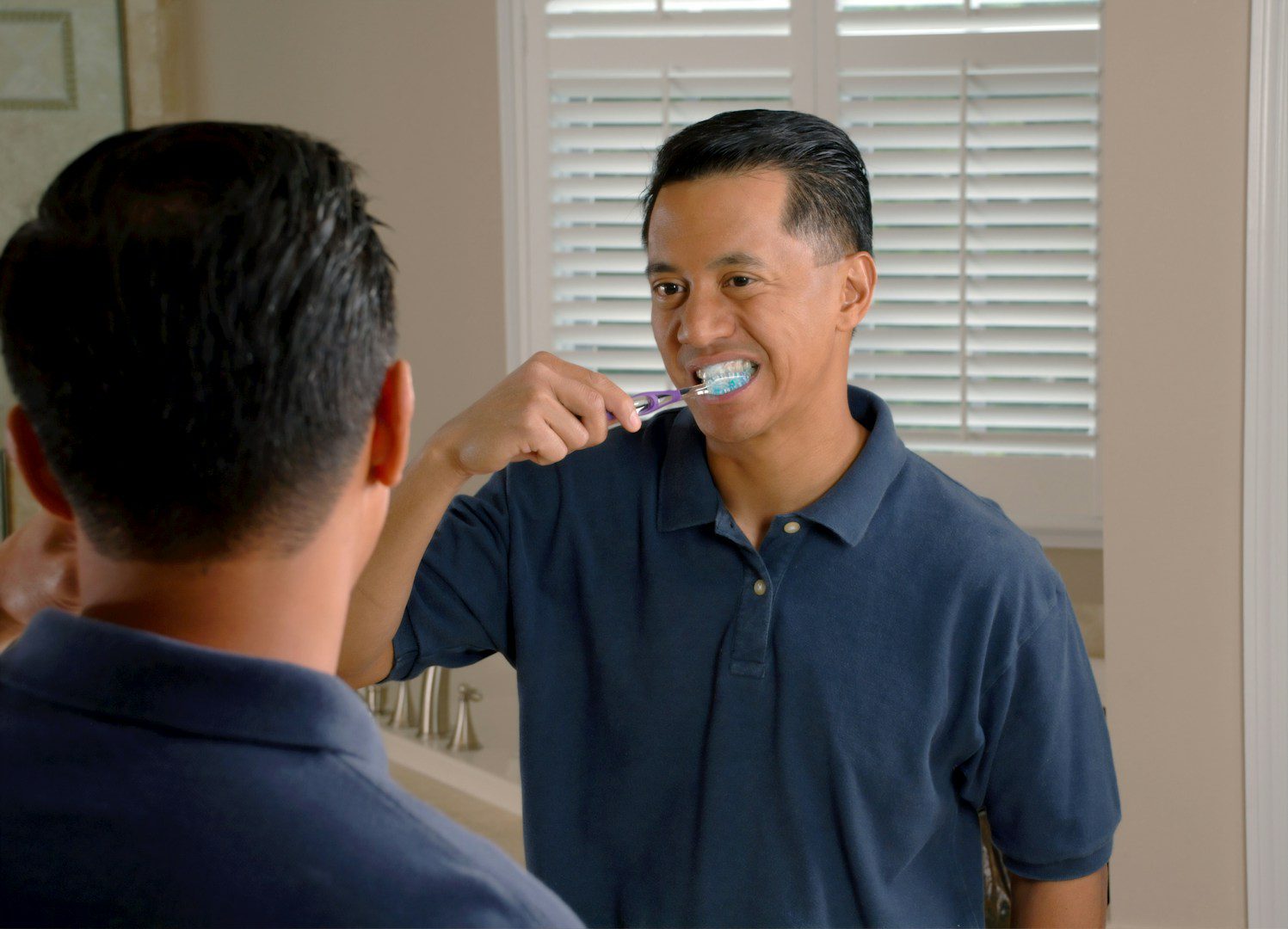 ━━ Brushing your teeth is essential, and you can get rid of tartar thanks to regular dental care, among other things.
( Source: National Cancer Institute / Unsplash+ )
In addition, pastes with so-called anticalcifying ingredients (e.g. pyrophosphates, zinc) can be used, which slow down plaque mineralisation. However, it should be borne in mind that home care can primarily prevent the formation of larger deposits or slow down their formation, but it is not possible to remove the tartar that has already formed by conventional brushing.
How to remove tartar without ultrasound?
In addition to the ultrasound machine, there are manual tools such as various scrapers, as well as methods of cleaning the teeth with special pastes. Then there are lasers or other modern tools, which, although they have potential, are clearly not superior to conventional ultrasound or manual cleaning.
Interestingly, research with enzymatic paste has already shown in a pilot study that the use of this paste for four weeks led to a reduction in calculus. This shows that there are potentially complementary home remedies that can slow down the complications. However, even this research does not say that home care can completely replace professional removal.



 L. Novak



 O. Müller

 A. Urban