

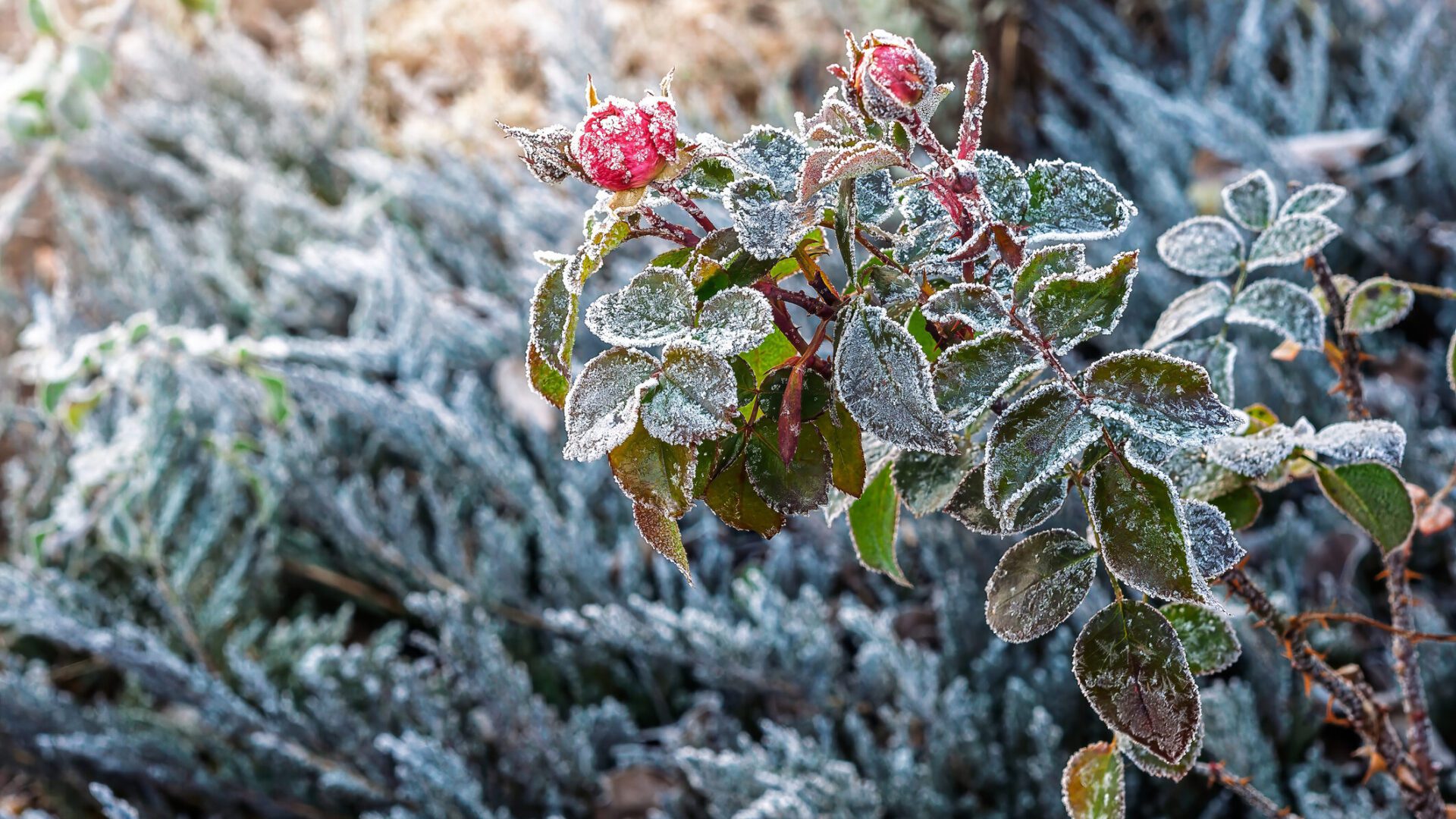
When the first frosts arrive, your garden is at risk. Although most plants are hardy, you should give them a little help to prepare for the long winter. Roses, in particular, are the pride of the ornamental garden. So you should take some steps to make them stronger and more beautiful in spring. Here is some advice on how to proceed.
Roses are hardier than they look
Once the first frosts hit the garden, there can be considerable concern. Anyone who is a lover of flowers and takes pride in them naturally worries about their survival. However, bear in mind that although roses can look scary, the situation may not be all that serious. The first frosts are around -1 to -4 °C and affect the soft parts of roses, i.e. leaves, shoots and buds. As a rule, they lose their elasticity, turn black, soften and generally take on an unhealthy appearance.
Wait for the weather to warm up
When temperatures rise above freezing again, the condition of the roses will immediately improve. So hold off on further treatment until they warm up. Then check the roses visually at that point. If you feel that part of the plant is dead, check its condition by cutting a branch. Green and light yellow foliage indicates that the rose is still thriving healthily; if it is black or brown, it is damaged. Remove only the dead parts, leaving any major pruning for next season once the worst of the frost has passed.
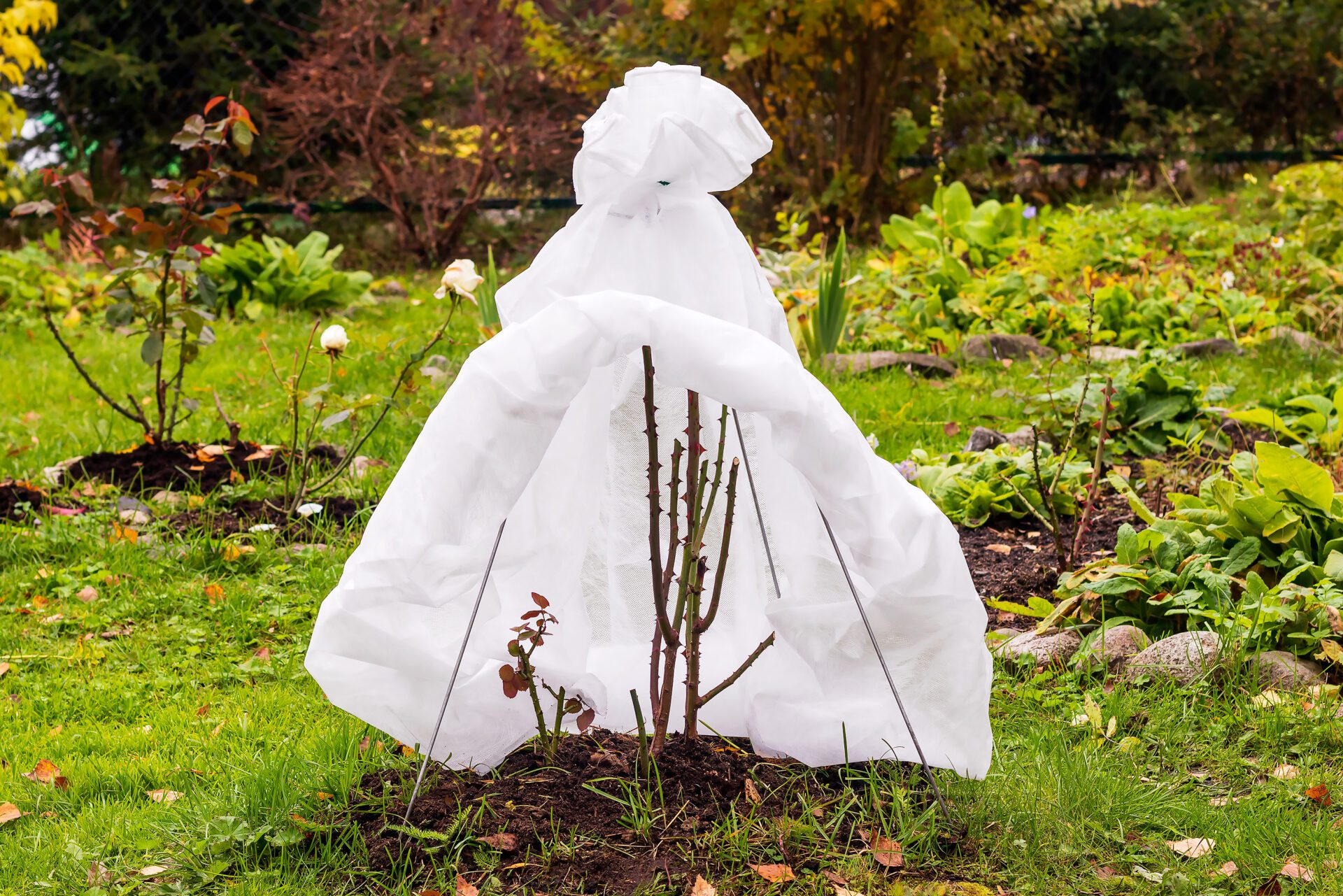 ━━ It is wise to tie up climbing roses and cover them with breathable fabric.
( Source: Ludmila Kapustkina / iStockphoto )
Mulch the roots
One of the most important steps is mulching the roots, which are crucial for the survival of the rose. The soil is not yet frozen, so you can still protect the plant. Pile at least 20 to 30 cm of mulch where the rose is growing out of the ground; you can use bark, straw or compost in addition to conventional garden substrate. A layer of clean, dry leaves can also be added for extra insulation on days when the cold weather is severe.
Also protect the shoots
Protecting the root section is essential, and you should also winter the above-ground part of the roses. Ideally, wrap them with breathable material, or tie them up and cover them with twigs. Igelite should be avoided, as it can cause harm.
Watering and fertilising: do’s and don’ts
If, in good faith, you would like to make a final fertilisation, do not do it. Do not fertilise with nitrogen during this period, as new shoots could grow and be destroyed by frost. On the other hand, give the roses one last generous watering. Moist soil holds heat better and prevents damage during the winter. As a rule of thumb, only water the roots.
When to remove winter protection
As winter begins to draw to a close and the weather begins to warm above freezing, gradually remove mulch or fabric. This will allow the roses to breathe better and prepare for the growth of new shoots.


 Šárka Cvrkalová

 L. Novak



 O. Müller
