

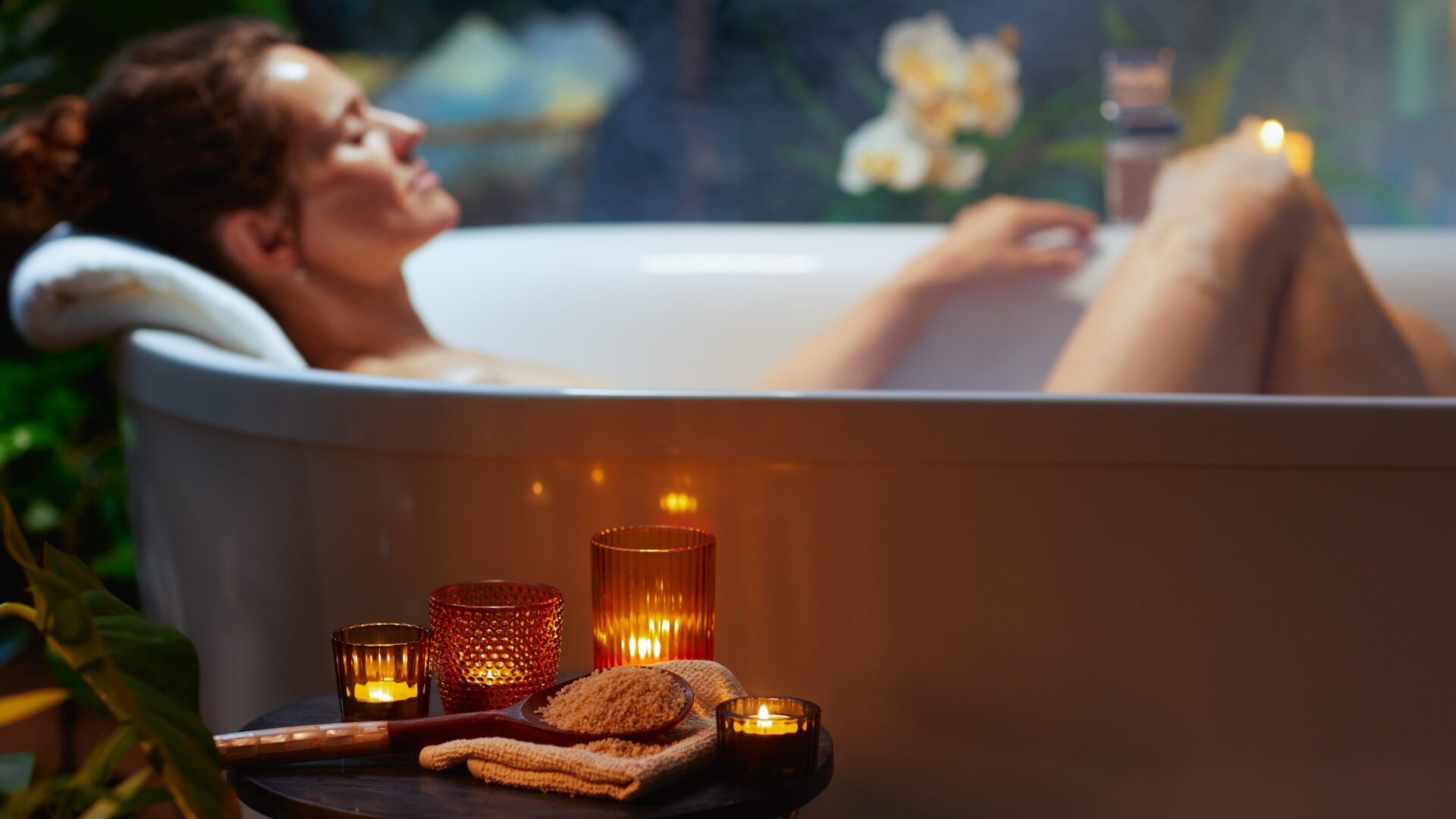
After a long day, you look forward to a warm, fragrant bath in which you can relax. And there’s nothing more pleasant and soothing than the darkness and flickering candles. While this idea sounds like an ideal evening out, experts warn that there may be potential risks.
Lighting candles in the bathroom naturally evokes a romantic and relaxing atmosphere. The beautiful scent, the feeling of warmth, peace and security can release endorphins and serotonin, the feel-good hormones in your body. Although candles look like beautiful decorations, you should avoid using them during bath time. Experts point to adverse health effects. Some types of candles can cause breathing problems. Bathrooms tend to be smaller and the space is poorly ventilated, so the pollutants released concentrate more quickly.
Harmful compounds
Fire has been part of everyday life for as long as mankind has existed. So it’s no wonder you love candles and place them in your home. However, when they burn, they release certain compounds that can be harmful to the human body. Candles made from paraffin, a by-product of petroleum , can be particularly toxic. They release substances such as benzene, toluene and styrene into the air. These particles are released in trace amounts and can settle on the lungs if inhaled. Toluene is classified as a neurotoxin that causes dizziness and headaches. Benzene, on the other hand, is a known carcinogen that can irritate the respiratory tract and, in worse cases, can even promote leukaemia.
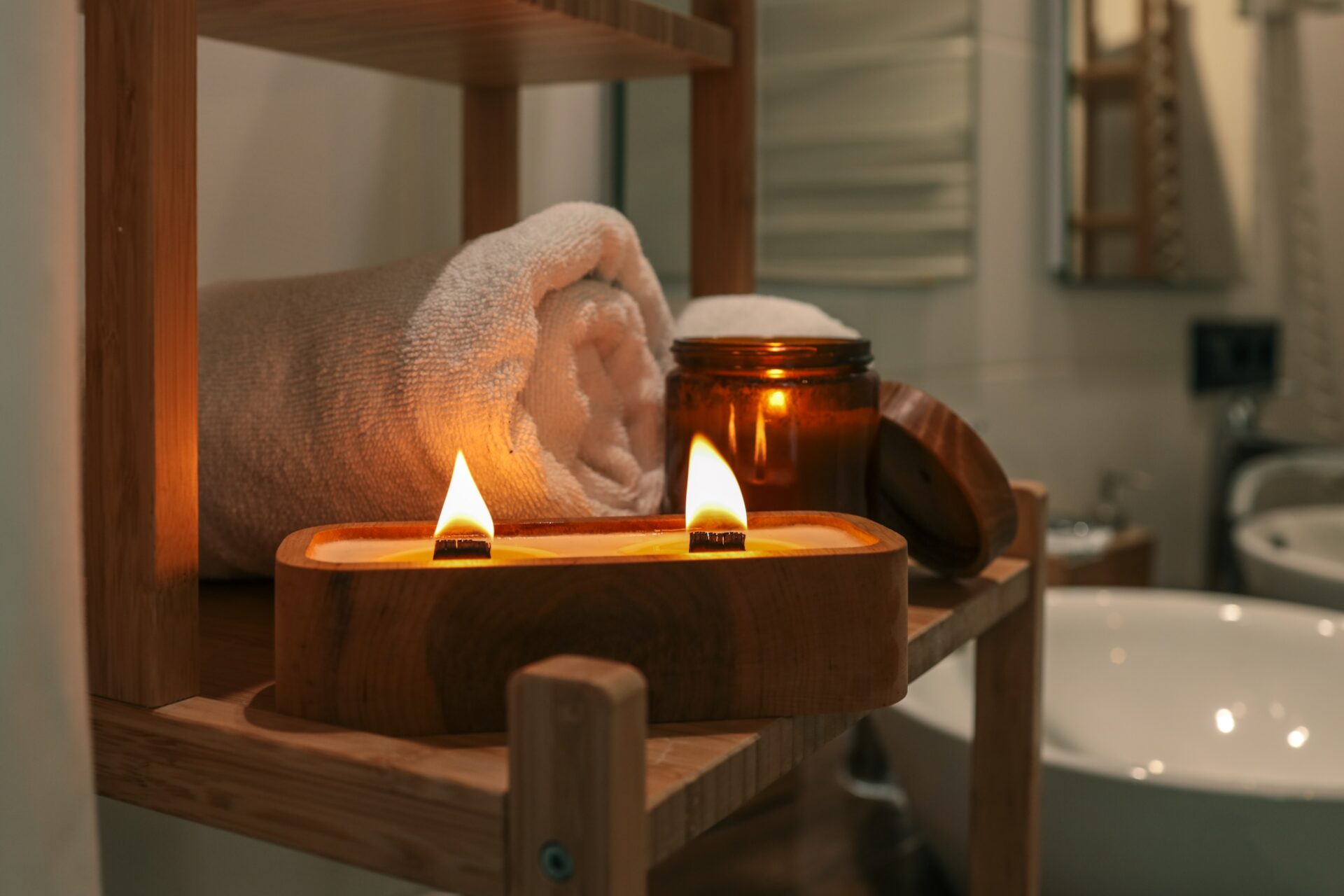 ━━ Candles can release toxic substances.
( Source: shine.graphics / Shutterstock )
Synthetic fragrances, dyes and wicks
You choose candles not only for their appearance, but above all for their scent. Synthetic fragrances are often used in the manufacture of candles, which contain volatile organic compounds and can therefore be toxic. In particular, they contain phthalates, which affect hormone levels. You should therefore opt for candles that contain natural essential oils. The unventilated and humid space that prevails in the bathroom, combined with toxic substances, could cause more serious respiratory problems.
You should also avoid artificial dyes and wicks containing zinc and lead, as they release particles that also irritate the lungs. Choose wicks that are made of 100% cotton.
Choose natural ingredients
There are a number of natural materials that are much healthier. The type of wax plays the most important role. Choose candles made from soy, coconut or beeswax. They offer a longer burn time and release a more distinct scent. Coconut wax is the cleanest option as it releases minimal soot and pollutants when lit.
“The word ‘non-toxic’ is not well defined in the candle industry and there is a lot of concern that candles in general are dangerous. The most widely accepted answer to the question of whether they are non-toxic is that they are candles made from natural waxes instead of paraffin and phthalate-free fragrance oils,,” explains Kristen Pumphrey, a candle specialist.
Diffusers instead of candles
If you don’t want to give up candlelight bathing, try finding an alternative. Ideally, you can use aroma lamps, which melt scented waxes, or aroma diffusers, which use 100% essential oils mixed with water.


 Šárka Cvrkalová

 L. Novak



 O. Müller
