

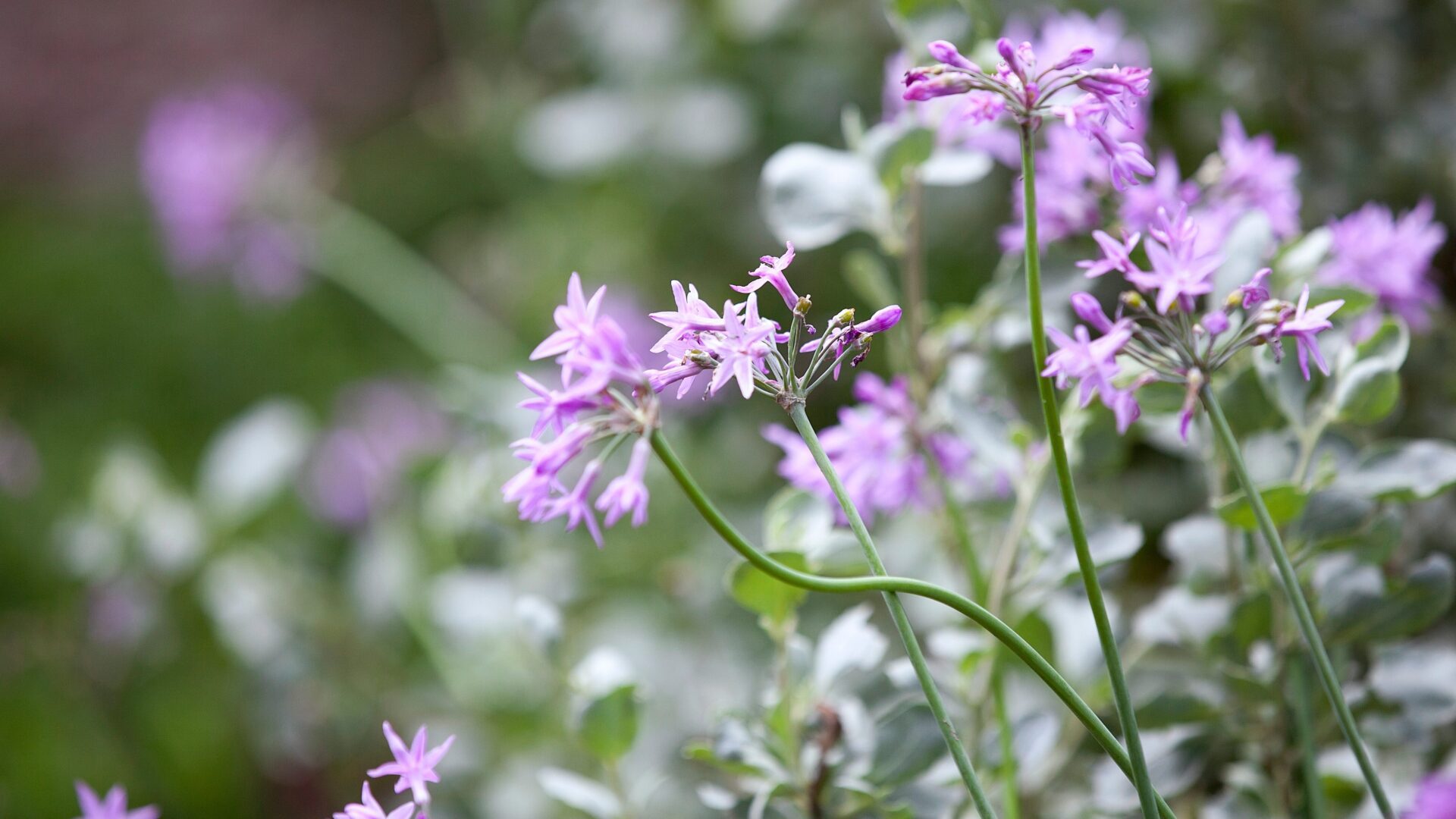
Every spring, I struggle in the garden with the question of what plants to plant that will not only please the eye, but also help with the problems that arise during the year. One of the biggest woes are the uninvited guests who like to destroy crops and ornamental flowers. So I am looking for a solution that is friendly to nature and the pests themselves. I have discovered a plant that combines beauty with unexpected functionality.
I treat my garden as an ecosystem with its own life and rules. Even as I cultivate it, I devote time and effort to it, while respecting the animals that live in the soil and on the surface. But let’s face it. When uninvited visitors come to destroy crops or ornamental flowers, my first thoughts are to get rid of them. However, I’m not a proponent of drastic solutions that lead to their demise. I always look for a natural way that is not harmful to life and allows these visitors to come and go unscathed.
Decoration and protection
I have found the best and most gentle way in planting plants that act as natural repellents. They not only have the advantage of repellent properties, but also have an ornamental function. I have found the purple tulbagia particularly attractive with its beautiful purple coloured flowers. This plant also goes by the name of garlic grass, African garlic or room garlic, which it has acquired because of its garlic aroma.
Its ornamental flowers make it suitable as an ornamental plant that adds a pleasant look to the garden. However, it also offers a purely practical function, as its intense garlic scent repels moles and voles. It is also said to repel snakes, but there is no direct evidence for this claim. In its native habitat in Africa it can grow up to 180 cm in height, but on average it can reach a height of 30-70 cm. It is a perennial, so it does not need to be replanted and it performs its function for many seasons.
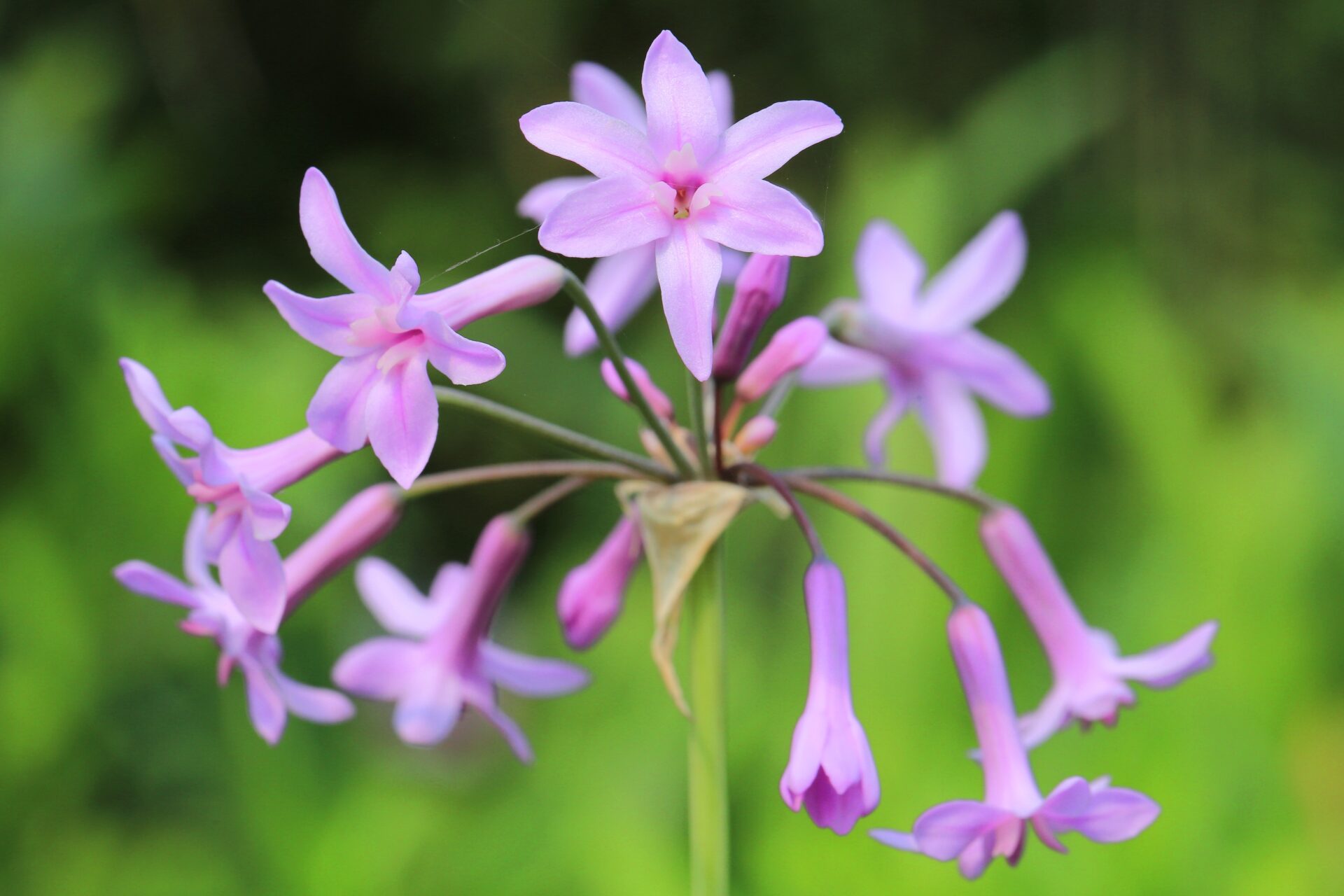 ━━ Tulbagia has beautiful purple flowers.
( Source: Traveller70 / Shutterstock )
How to grow Tulbagia?
Growing tulbagia is easy and simple, it tolerates drought and temperature fluctuations very well. Choose a sunny and slightly shaded location. It is best to plant the bulbs during April. During planting, keep the plant spacing to 15 cm between each plant, which should be inserted to a depth of approximately 5 cm. Young plants need regular watering to establish themselves. However, older plants do not require abundant and frequent watering during the growing season. In order to keep them flowering beautifully, I remove the dead flowers and separate some of the bulbs each year. I plant Tulbagia in pots, along sidewalks and in beds.
It is considered a semi-hardy plant in our climate. It is advisable to protect it for the winter with mulch, a cover or, if growing in pots, to place it in a warmer room.
What Tulbagia gave me…
When I planted the tulbagia, I soon discovered that it is really undemanding and doesn’t require too much care. I placed it where I could see the most mole and vole activity underground. I have no idea if the weather, the soil or the plant itself had an effect, but over the course of the season the molehills disappeared significantly from these spots and appeared elsewhere where I hadn’t planted any plants or flowers. Incidentally, my aim was not to drive the intruders out completely, I just wanted to protect some plants that might be prone to death or damage. Tulbagia is proof to me that it is possible to fight patiently and non-violently.
But to be honest, during the first few weeks I suspected that this plant was kind of playing a joke on me. The new mole plant appeared right between the two new plants. I suspected the mole was trying to mess with me and get on my nerves. Well, I thought I had fallen for a horticultural illusion, but time has shown that it is the best solution to every problem. The garden may seem like a battlefield, but in reality there is an imaginary negotiation behind everything. A message to the mole and other visitors: I will prevent you from stepping on part of the territory, but you can venture a little further.
Tip: Many other plants create a kind of scent barrier that these visitors do not like. So I have enriched my garden with calendula, mint and lavender.


 Šárka Cvrkalová

 L. Novak



 O. Müller
