

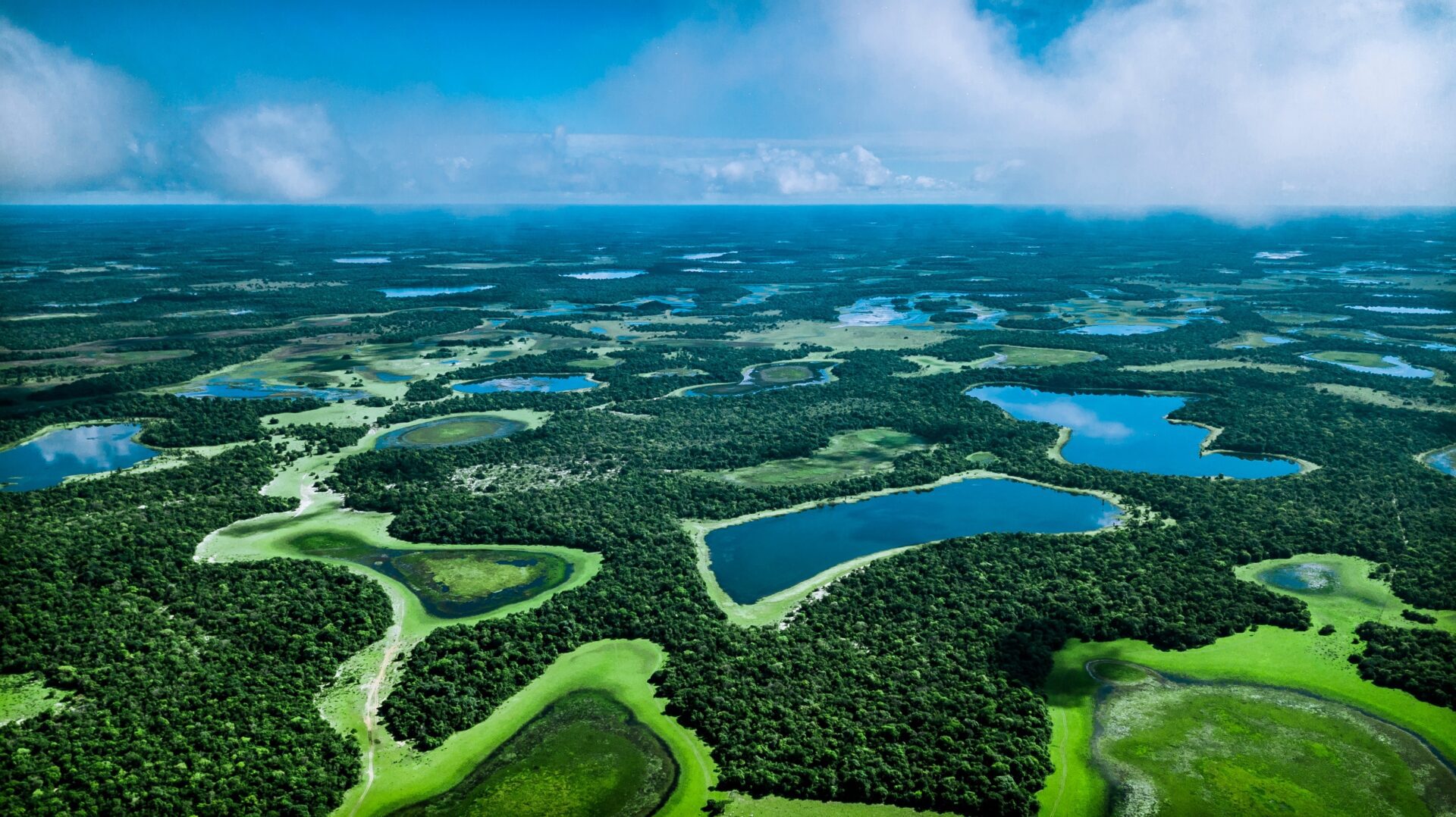
Every year on 12 November, the importance of the Pantanal is commemorated, which is mainly located in Brazil. It is one of the largest freshwater wetland ecosystems in the world. This day seeks to highlight its importance while also highlighting the threats it faces.
The world’s largest wetland
The entire Pantanal region covers more than 150,000 km², with 80% of it located in Brazil, followed by Bolivia and Paraguay. It is therefore 20 times larger than the American Everglades. The name comes from the Spanish ‘pantano‘, meaning swamp or marsh. This unique area has an extraordinary biodiversity, with more than 4 700 species of wildlife and plants. These inhabitants include jaguars, otters, anteaters, piranhas, wrens, capuchin monkeys, green anacondas and many other unique creatures.
It is made up of lakes, rivers, lagoons and swamps, with most of the area flooded during the rainy season. This abundance of water resources is why the Pantanal is known as the water heart of South America. The wetlands play a major role in climate regulation and act as a reservoir of fresh water, which they naturally purify. In addition, they hold large quantities of carbon dioxide. The Pantanal is located in the Paraguay River basin and several other rivers, making it a key factor in spreading nutrients during floods and also in sustaining fish populations. While the Amazon rainforest is made up of dense jungle, the Pantanal offers endless, open and beautiful views of wetlands.
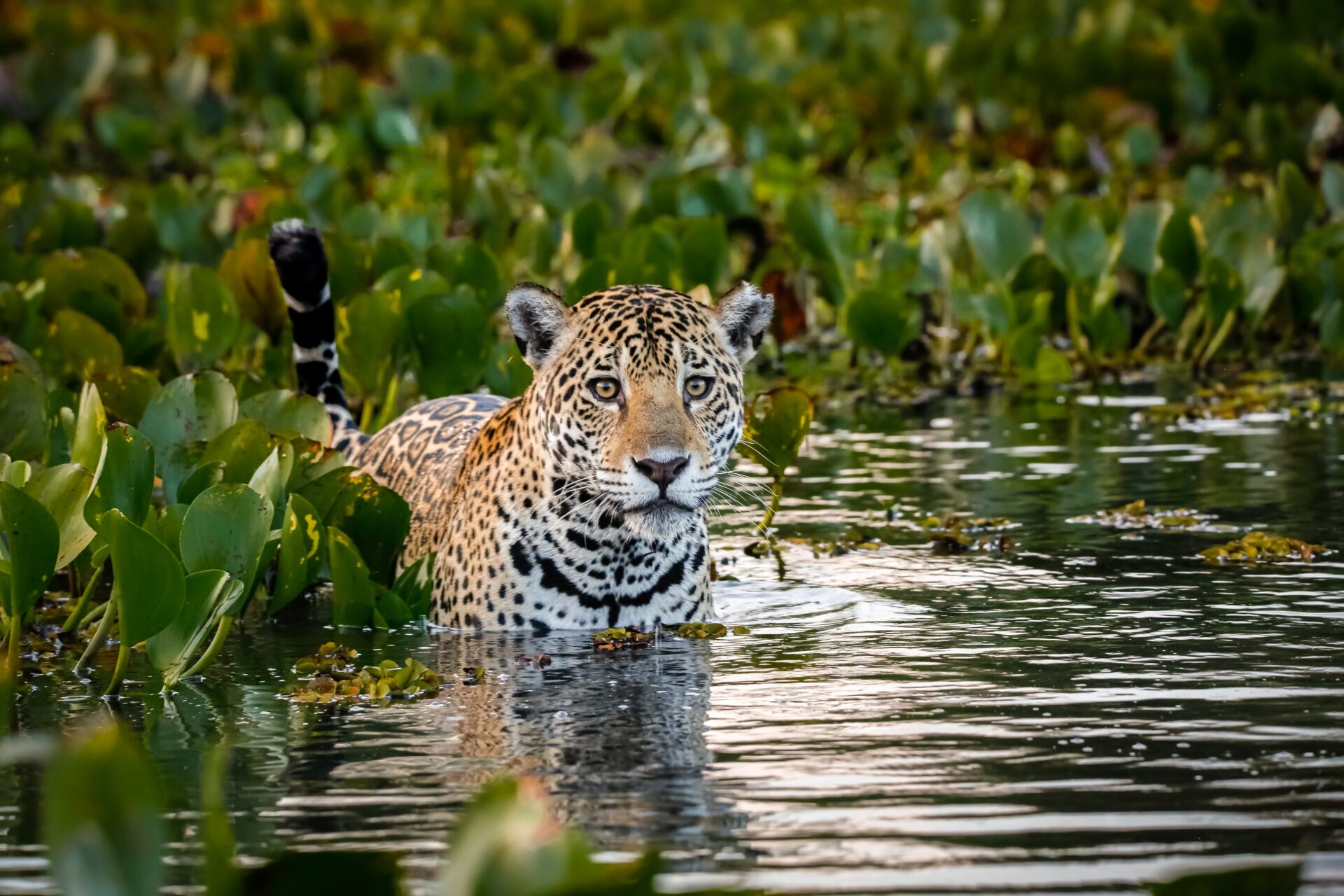 ━━ The Pantanal is home to countless species of animals, including jaguars.
( Source: Uwe-Bergwitz / iStockphoto )
Problems and threats
Although most of the area remains unaffected by human intervention, it faces many threats. Its strategic location makes it vulnerable to large-scale agricultural and livestock development, water pollution and dam construction. It is also progressively affected by land encroachment, illegal mining and hydroelectric power plant construction.
Human influence is becoming increasingly noticeable. However, only 4.6% is currently protected, with the remainder in private ownership, making efforts to keep the Pantanal intact difficult. There is increasing pressure for agricultural conversion, also in recent years there has been a loss of about 30% of water volume due to overexploitation. Climate change and fluctuations in rainfall are other issues contributing to its vulnerability. Drying out not only affects the landscape, but also the lives of wildlife. This has led to frequent fires, which have destroyed more than 30 % of the entire area, some 45 000 km².
Pantanal Day
Many conservation efforts are currently underway to protect the Pantanal. For this reason, Pantanal Day was created to honour the Brazilian naturalist Francisco Anselmo de Barros, who dedicated most of his life to the protection of the area. Following his death in 2005, efforts were made to establish a day to highlight the threats facing the Pantanal and the need to protect it. In that year, it was also inscribed on the UNESCO World Heritage List and the Biosphere Reserve List. This day is thus a reminder of the need to protect natural resources, which are not inexhaustible.


 Šárka Cvrkalová

 L. Novak



 O. Müller
