

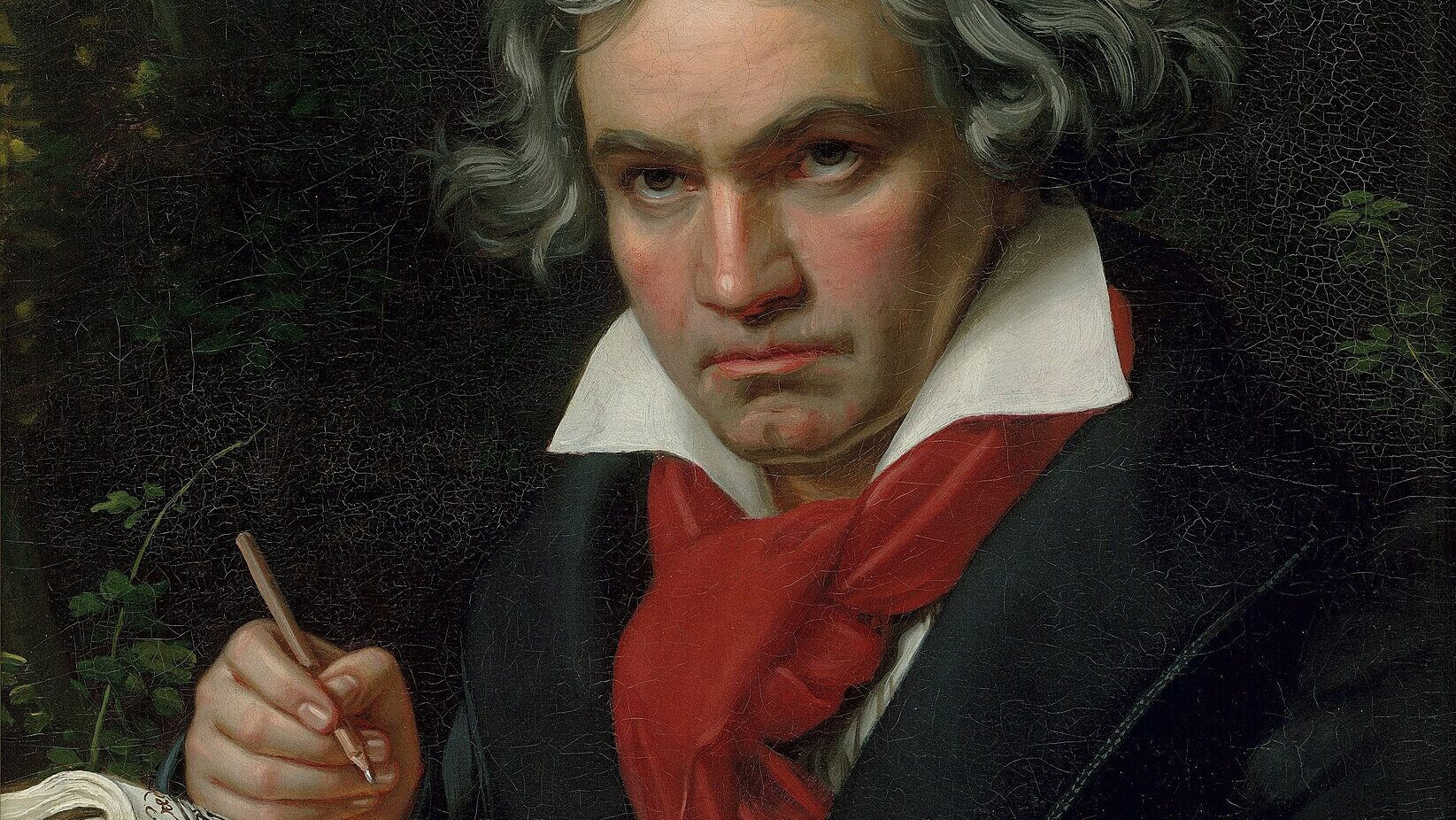
The name of one of the greatest composers of all time, Ludwig van Beethoven, has not lost its power and respect even after centuries. His contribution to music is invaluable and he is rightly considered a legend. His birth is an occasion to commemorate his talent and legacy.
Early life and first achievements
Ludwig van Beethoven was born on 16 December 1770 in Bonn into a musical family. His father was a vigorous and strict tenor and teacher who wanted to make him the next figure after Mozart. His childhood was not an idyllic one, as it was filled with the forced drudgery of playing the piano and violin. However, Beethoven’s skill was not earned, and it was obvious that he had an absolutely exceptional talent, which was noticed by his father. He pushed him all the harder, forcing him to perform almost superhuman feats. Although he experienced mental pressure, the drill and the development of his abilities bore fruit. Already during his adolescence he composed music and worked as a virtuoso.
No sooner had he reached the age of seventeen than his steps led him to the centre of European music: Vienna. Living in the centre of culture and opportunity brought him important acquaintances. He met Mozart himself and became a student of Joseph Haydn. And it was here that most of the turning points of his life took place.
The journey from classical to romantic
The influence of Haydn and Mozart on his work was obvious. It was characterised by elegant melodies, lightness and harmony. Gradually, however, he began to discover new possibilities and ways of composing. The classical style in his music began to acquire elements of romanticism, so the compositions were more dramatic, more restless, full of deep intense emotion and noticeable power. He is thus described as a musician who combined classicism with romanticism. In particular, the 3rd Symphony “Eroica” caused a stir, which completely shocked the public as it broke all the rules of symphonic music.
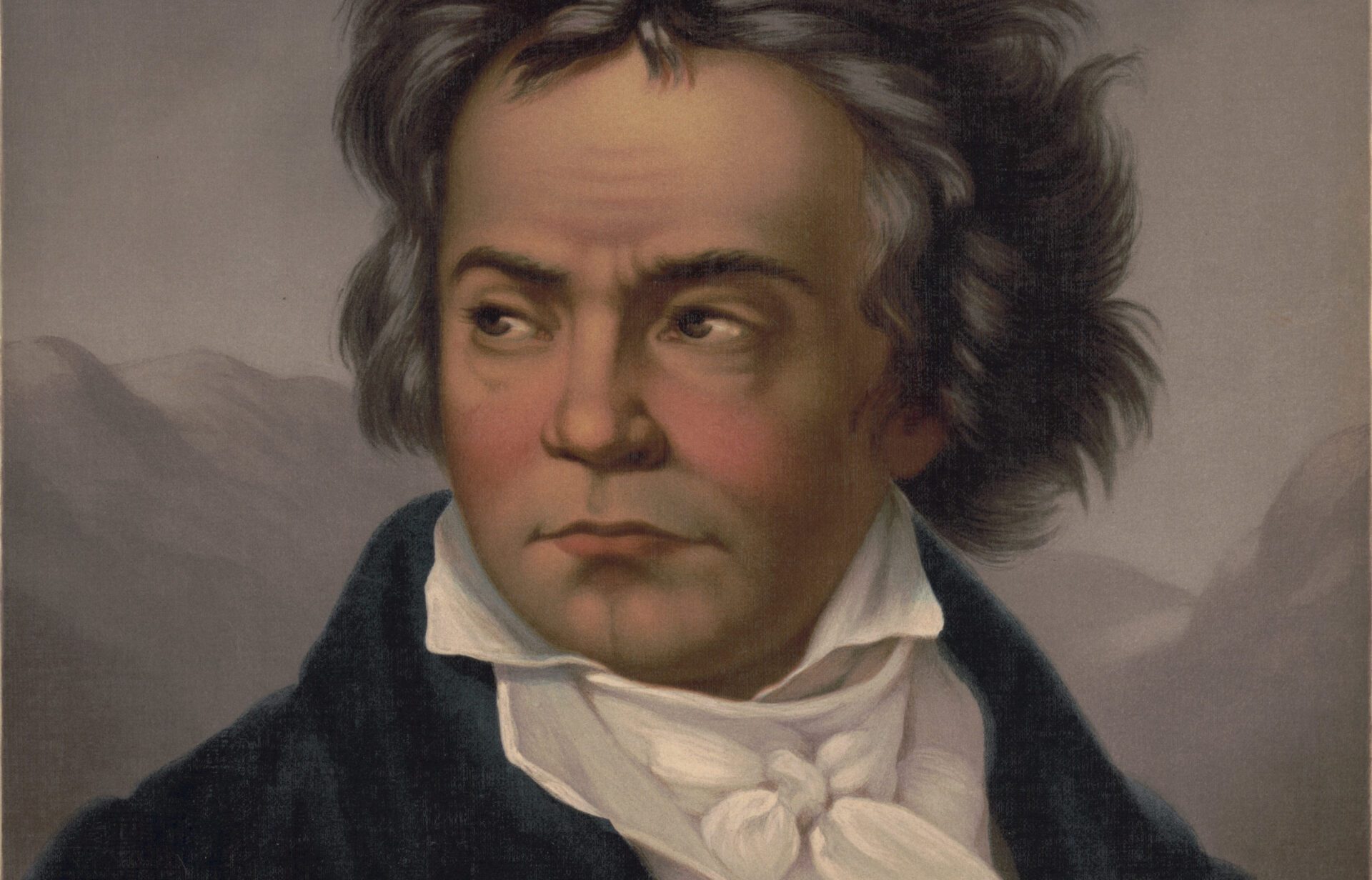 ━━ Ludwig van Beethoven was a genius composer.
( Source: Ferdinand Schimon / Wikimedia commons )
Fighting deafness
However, his talents were crippled by his deteriorating health. His work outstripped his much older predecessors, but he had to deal with poor hearing all the sooner. It was the toll of his almost unearthly talent. Around the age of 28, he began to notice that his hearing was not what it should be. It was literally a nightmare for him as he was losing what he loved most and what had become his essence. He saw many doctors, but none of them were able to help him. He pleaded to hide his handicap from the public, believing that he would lose everything: prestige, patronage and status.
He proved, however, that he was a true musical genius. Although he lost his hearing completely over time, he composed works that became famous and are now among the highlights of his oeuvre. These include the immortal Symphony No. 9, an ode to joy and freedom.
The most famous works
Beethoven’s repertoire was very rich and varied. Other important and best-known compositions include Symphony No. 5 in C minor, the so-called “Fate”, as well as the Moonlight Sonata, For Elise, Fidelio, Symphony No. 7, Appassionata and Miss solemnis.
A legacy that endures
Beethoven is a symbol of genius, of finding one’s own way, of courage, of the strength to overcome very difficult obstacles, but also of the stubbornness with which he pursued music even though he had never heard a note. He became a composer who went beyond the impossible. Even after more than two centuries, his music still resonates throughout society. Every year, on 16 December, we should commemorate his birth.


 Šárka Cvrkalová

 L. Novak



 O. Müller
