

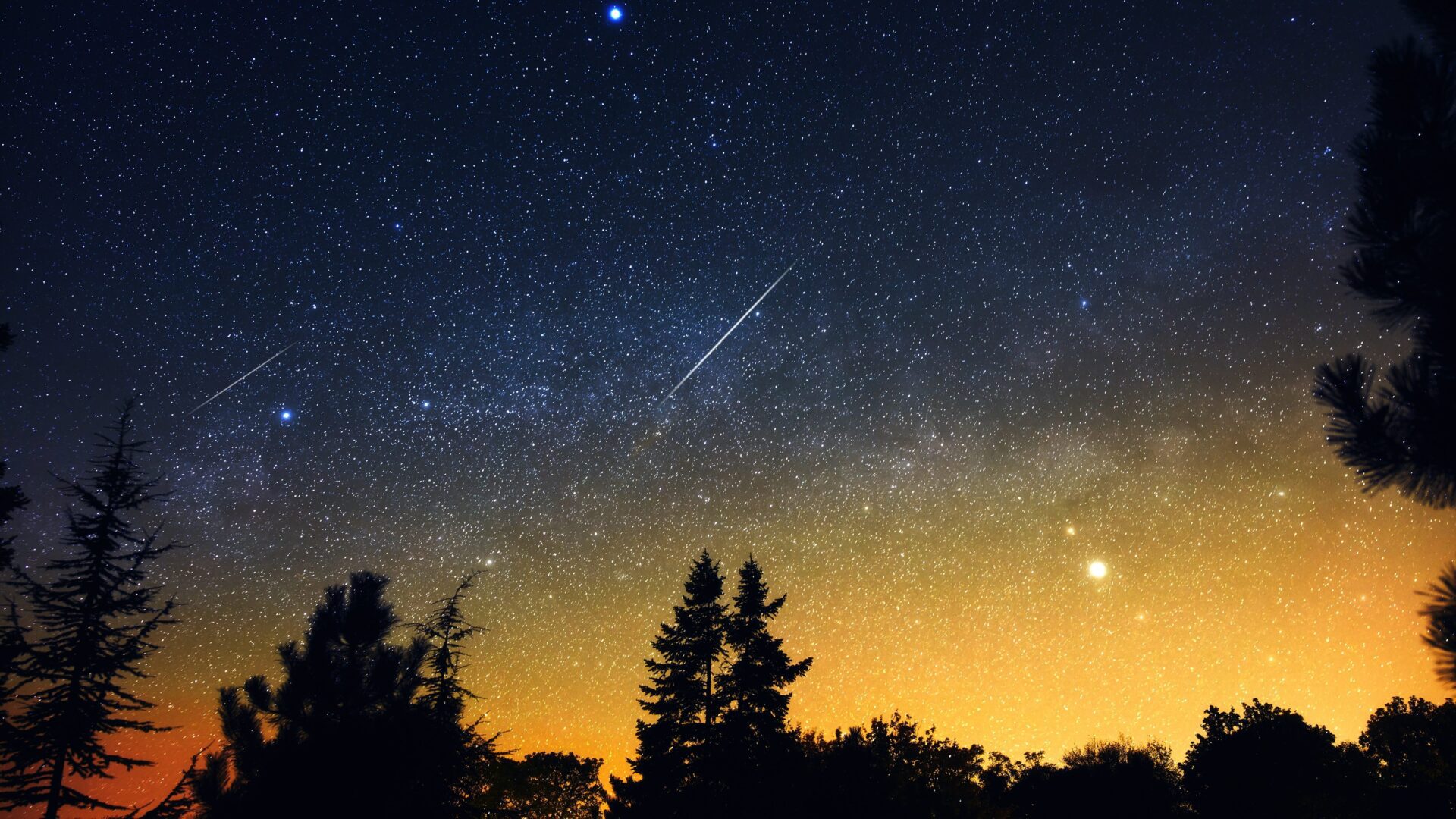
During November, the night sky is graced by the Leonid meteor shower, one of the most interesting and striking phenomena observable from Earth. Now you have a unique opportunity to enjoy this spectacle. What is the origin of this shower and why is it so fascinating?
When does it appear
The Leonid meteor shower appears every year between 6 and 30 November, but reaches its peak activity during 17-18 November. During this period, the Earth passes through a stream of dust and small particles left behind by comet 55P/Tempel-Tuttle moving around the Sun. This space debris interacts with our atmosphere to form leonids, as the falling meteors are called. They tend to be bright and often colourful, and are not normally found in abundance.
Leonids are often described as fireballs that can last longer than the average meteor streak. This occurs because of the larger particles of the comet from which they originate. Because of this, they appear much brighter and look as if they have a long coloured tail.
The origin of the swarm
Comet fragments enter the atmosphere in which our planet is located at speeds of up to 70 kilometres per second. They then evaporate, causing flashes of light that we call meteors. The Leonids are thus considered to be among the fastest meteors. They find their radiant, the point from which the meteors appear to stream, in the constellation Leo near the star Algieba. The name Leonid is thus derived from the word leo.
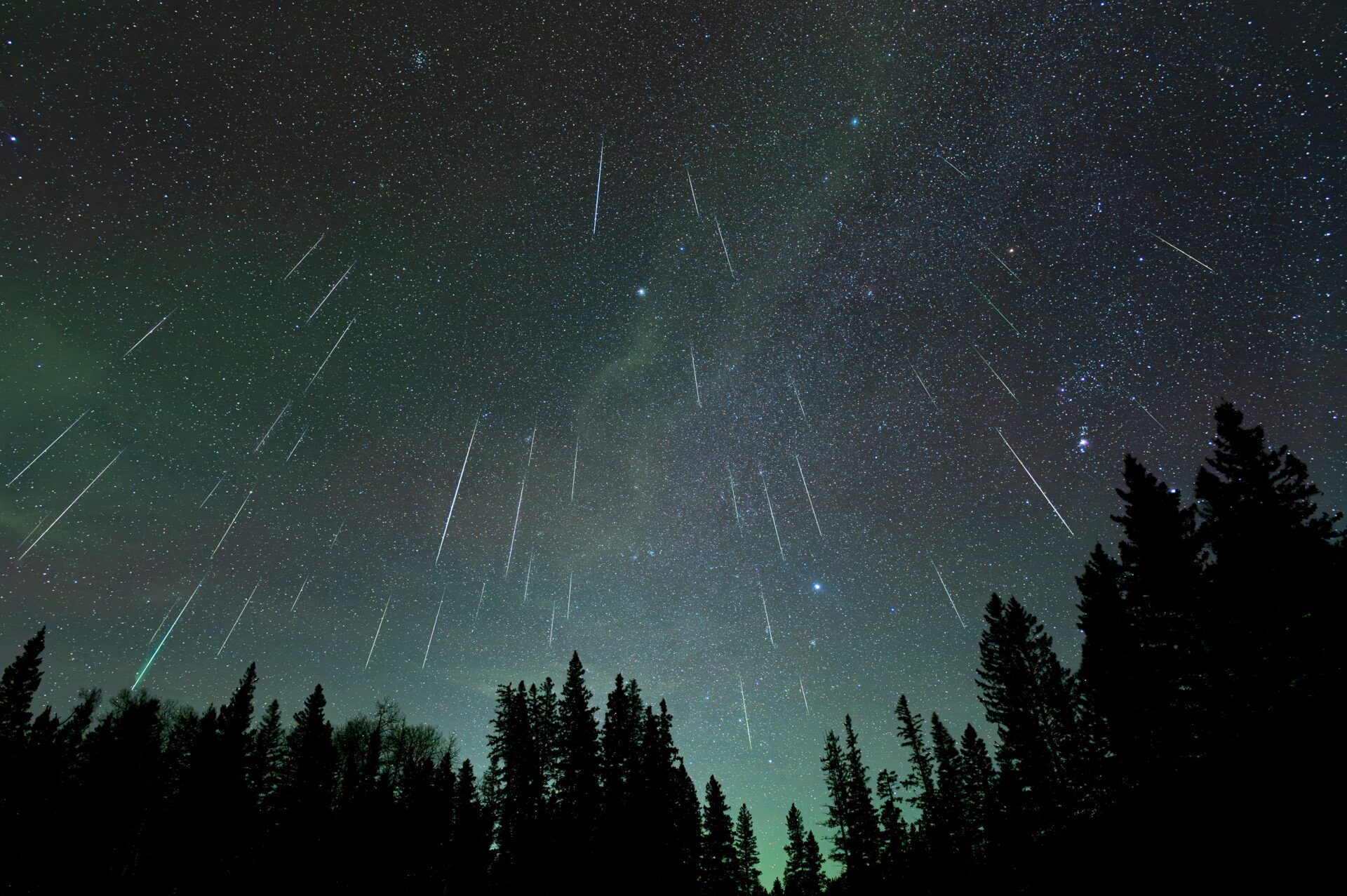 ━━ Every 33 years, meteor storms occur, during which hundreds to thousands of meteors can be seen.
( Source: Craig Taylor Photography / Shutterstock )
Unforgettable meteor storms
A comet orbits the Sun about once every 33 years, each time adding to the stream of dense cometary dust through which the Earth passes. During this time, it is possible to see hundreds to thousands of meteors per hour, depending on the observer’s location. In fact, the Leonid meteor shower causes severe meteor storms, which were observed in 1799, 1833, 1866, 1966 and 1999-2001.
A particularly strong storm was recorded in 1833, during which about 100,000 meteors per hour could be observed. However, the truly spectacular storm was on 17 November 1966, when thousands of meteors fell per minute over a 15-minute stretch.
How to observe them
The Leonids are ideal to observe from about midnight. They can be seen with the naked eye, so there is no need to prepare binoculars or a telescope. Find a spot away from lamplight, preferably a location somewhere in the countryside where nothing will interfere with your view. Once your eyes get used to the darkness, it will be easy to observe the swarm.


 Šárka Cvrkalová

 L. Novak



 O. Müller
