

Airplanes are now a common part of transport. They have revolutionised the industry by enabling rapid movement between countries or continents. However, it is not just about taking off. It is the work of millions of people, international cooperation, infrastructure, technology and safety rules. To commemorate the role of this mode of transport, International Civil Aviation Day is celebrated on 7 December.
Historical roots
The origins of International Civil Aviation Day date back to the 1940s. This was when the Convention on International Civil Aviation was signed in Chicago on 7 December 1944, a very important document that served as an agreement to unify the rules of the airspace. Along with it, the ICAO (International Civil Aviation Organization) was established to coordinate aviation. At first, the day was commemorated within the organisation, but since 1996 the UN has made it an official international holiday.
A reminder that flying is a public service
Each year, the celebration of this day is reminded that the aim of this day is to strengthen public awareness of the importance of civil aviation, to promote the social and economic development of States and to ensure safety and sustainability. It also highlights the myriad professions that have emerged in the aviation sector. Be it pilots, flight attendants, technicians, aircraft manufacturers, engineers, controllers, safety analysts, rescue teams and many more. Equally, the idea that flying is a public service to all mankind needs to be reaffirmed.
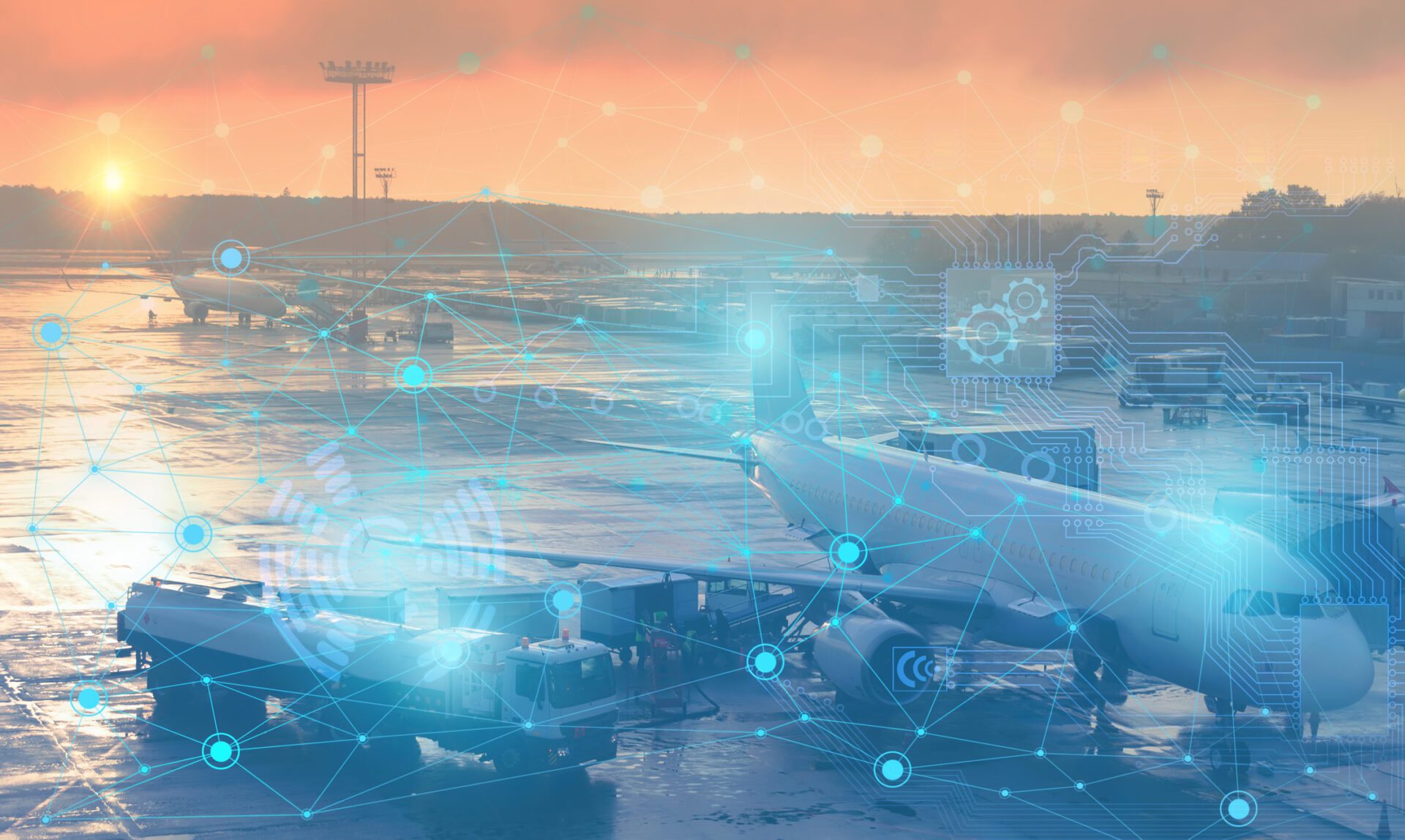 ━━ Air transport is a complex web of work for many people.
( Source: Igor Borisenko / iStockphoto )
Civil aviation as an engine of global cooperation
The ability to travel by air brings people into other cultures and connects them globally. In addition, relationships can be formed between people half a globe apart, as well as business partnerships or young people studying abroad. What is possible for us today used to seem like a fantasy. Just get on a plane and within a few hours you are thousands of miles away. This is also linked to the massive promotion of tourism and the economy. Some countries are even dependent on tourism.
Transport planes do not only carry people, but also products. Whether it’s food, electronics, medicine, clothing, and anything that serves your consumption and utility. They also serve as a very fast means of transportation in case of an emergency. If a natural disaster strikes, it is only thanks to aircraft that medicine and food, rescue workers, evacuate civilians and the injured can be transported very quickly.
Challenges of today
Although airplanes are considered the fastest mode of transport, they also have their downsides. First of all, they contribute to the carbon footprint, but tackling this is the number one priority. ICAO has committed to achieving zero net carbon emissions by 2050. The solution could be cleaner fuels, electric aircraft or optimising flight paths. But airports are becoming overcrowded as passenger numbers continue to rise.


 Šárka Cvrkalová

 L. Novak



 O. Müller
