


Do you normally go to bed with wet hair? Whether it’s on purpose or you simply don’t have time to dry it, there are several reasons not to. Although sleeping with wet hair doesn’t sound like a tragedy, if you stick to this habit for a long time, you can cause unpleasant problems for your hair.
Hair breaks easily
The biggest problem is the destruction of the hair structure. This is because when hair is wet, it is more strained and much more prone to breakage. Individual hair fibres are made up of cells and proteins that affect their elasticity, i.e. how much they can stretch. It is reported that each hair can stretch up to 30% of its original length without damage.
In addition, they rub against the pillow during sleep, tangling and matting, leading to weakening and deterioration. If you want to comb your hair well and have it smooth in the morning, be sure to dry it before bed.
Risk of dandruff and mould
A humid environment is definitely not good for the scalp, as it creates ideal conditions for the growth of bacteria and yeasts that cause dandruff. Inflammation, irritation, redness or uncomfortable itching may also occur. At the same time, the pillow itself is a breeding ground for bacteria, so be sure to change it regularly. Prevention is essential. If you keep the habit of sleeping with wet hair regularly, these problems will appear very quickly.
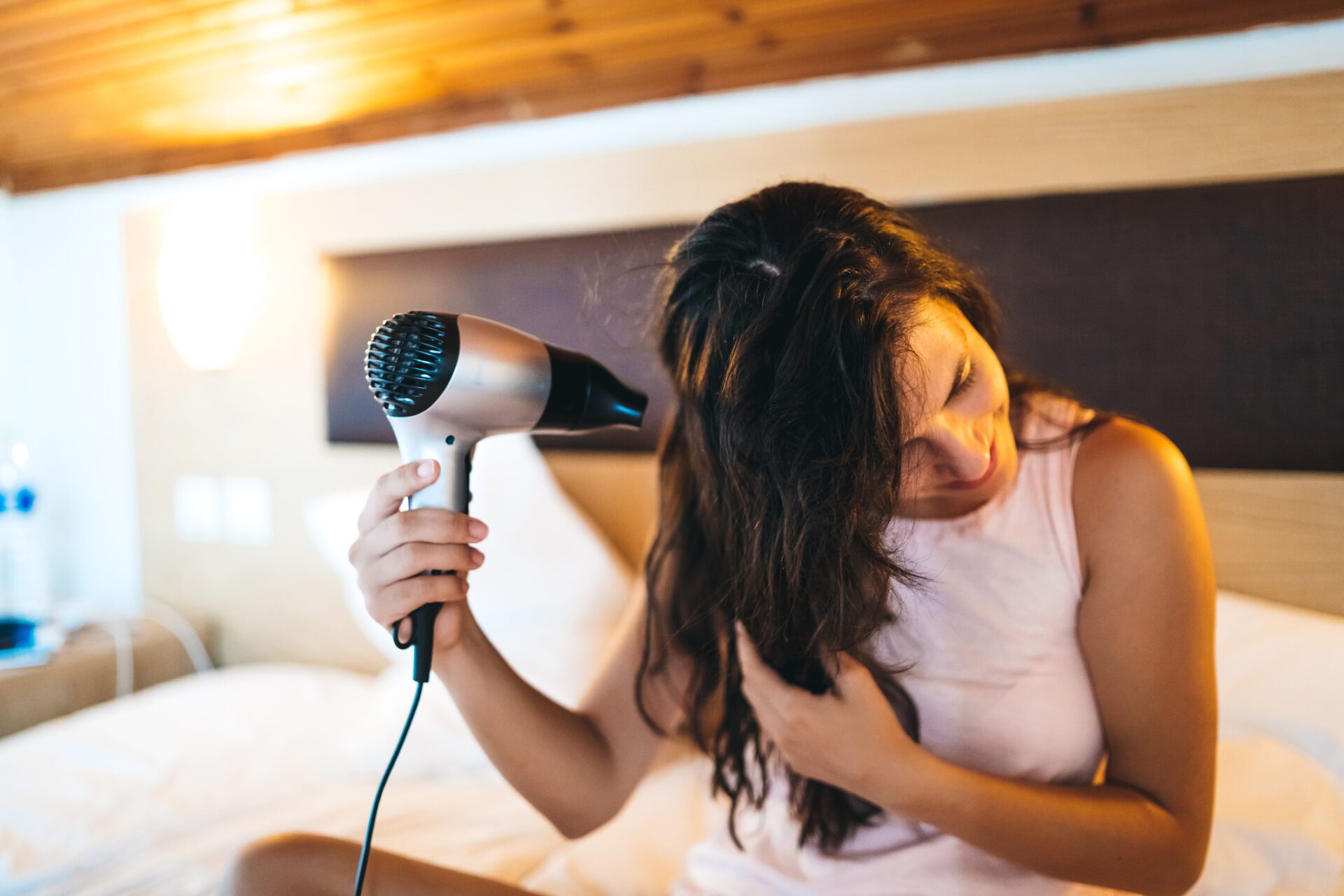 ━━ Dry your hair at least a little before going to bed.
( Source: urbazon / iStockphoto )
The origin of acne
A moist pillow that breeds bacteria can also potentially cause acne. This is because shampoo and conditioner residue that you transfer to the pillow sticks to your hair. This clogs the pores and causes inflammation. Pimples appear especially on the forehead and around the hairline.
What to do if you sleep with wet hair
However, if you don’t want to give up sleeping with wet hair, at least try to take a few steps as a precaution. First of all, apply coconut oil to your hair, which can prevent breakage. This is because the oil reduces the amount of water absorbed, making the hair less prone to damage. Also, don’t forget to use conditioner, which helps seal the hair cuticle. Don’t leave your hair too wet, try to dry it as much as possible. The less water in the hair, the less risk of damage. Ideally, use a silk pillowcase for sleeping and change the cover at least once a week.
Summary
Sleeping with wet hair may not sound like a big problem, but it can become one very quickly. This habit is not dangerous, but it can lead to breakage and damage to the hair fibre, as well as creating ideal conditions for bacteria to breed. If you want to keep your hair healthy, dry it at least partially before going to bed.


 Šárka Cvrkalová

 L. Novak



 O. Müller
