

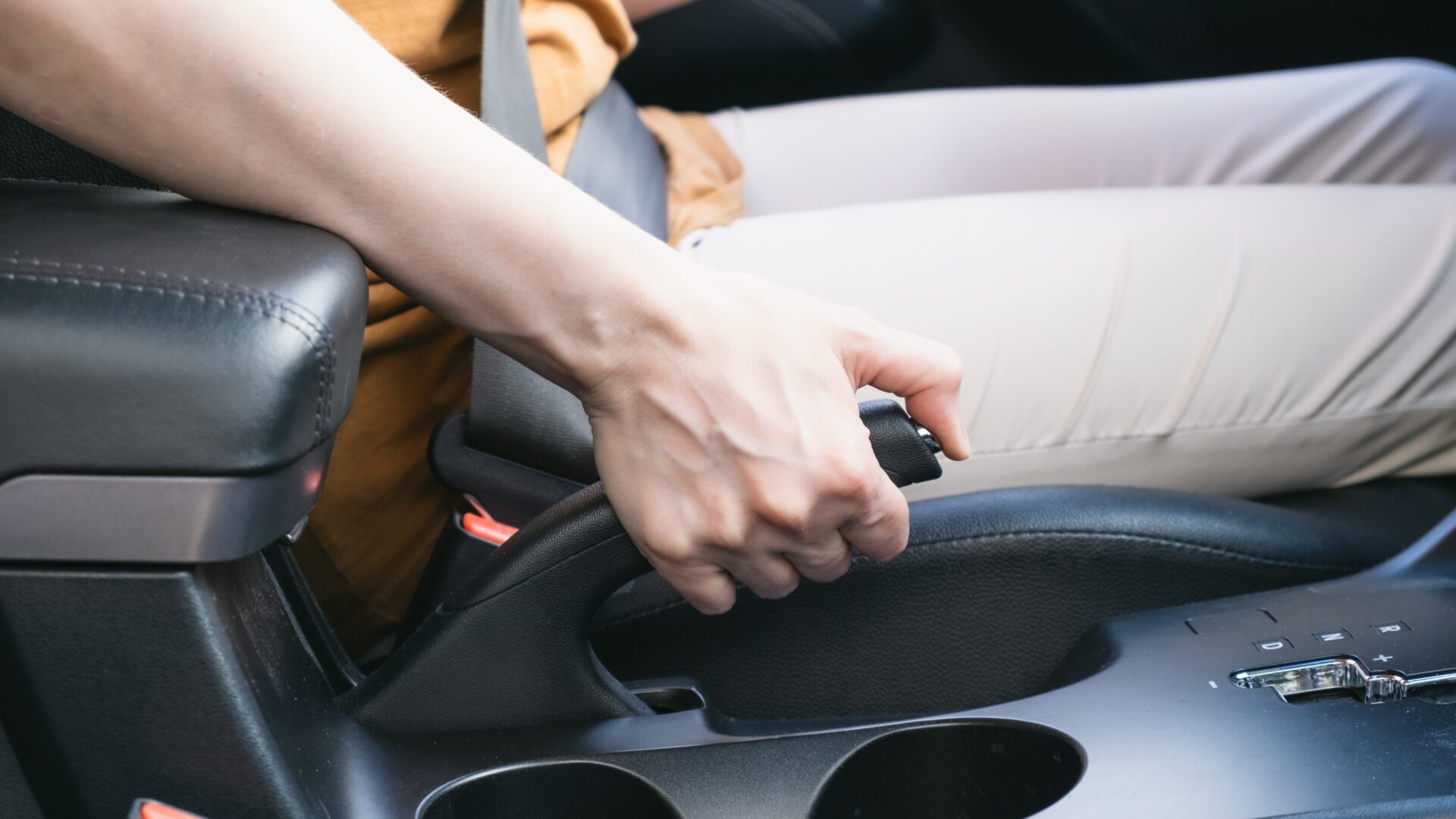
Handbrake, hand lever, parking brake. Whatever you call it, you know it’s a very important part of the car. It’s designed to hold a stationary car in place, but it’s certainly not designed to stop quickly and steadily. While some cars with an electronic parking brake can slow down, it is still only a last resort and the stopping distance of the car is much longer. Although handbrake failures make up only a small fraction of accidents, they tend to be very serious.
The classic parking brake works on the principle of a mechanical cable that pulls the rear brakes. Its purpose is simply to secure a stationary vehicle in place. An electronic parking brake is operated by a button and often has an emergency braking function. However, even according to the car manufacturers, this is really only a last resort, and even this brake is primarily intended to secure a stationary car.
A hand brake is definitely not enough to stop
Approval regulations distinguish between the service brake and the parking brake. Service brakes are those that stop the vehicle while it is moving. They operate on all wheels and have a very quick effect. The handbrake is not sufficient to stop the vehicle for several reasons.
- The rear wheels are less overloaded, which means the weight is transferred to the front.
- The pedal is handled during braking by power steering, ABS and brake force distribution. However, the handbrake cannot do this.
- There is a risk of losing control when using the handbrake. The rear wheels lock up and the car skids.
What does the data show?
There are a number of cases where the handbrake has played a role in accidents. Brake failure is not the most common cause, but when it does occur, it carries a lot of weight. Police statistics from the UK show that poor handbrake use is involved in up to a hundred accidents a year. In the long term, this is a unit of one per cent of all collisions, but with serious consequences.
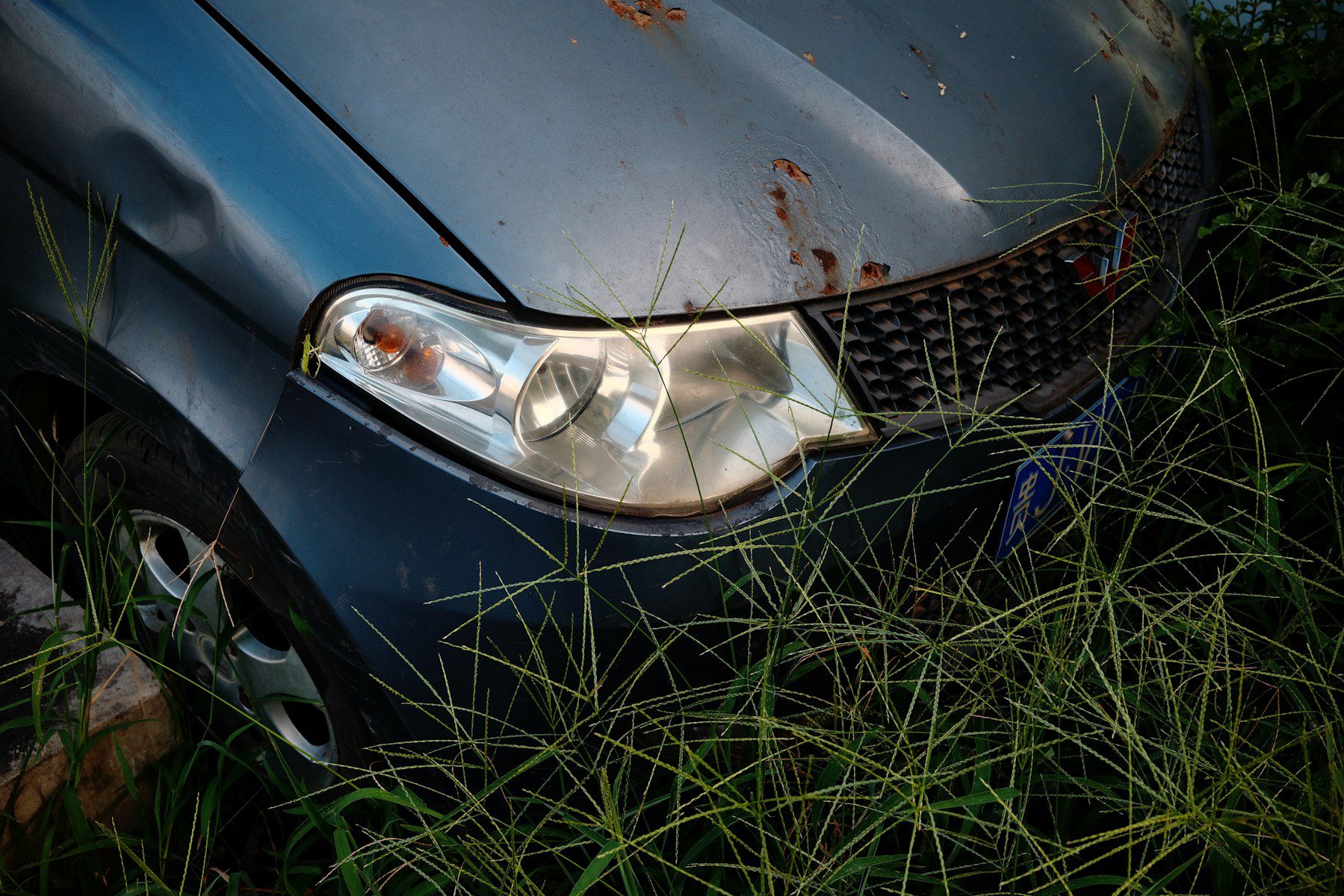 ━━ If you rely only on the handbrake, your car may not fare well.
( Source: Bruce Kun / Unsplash+ )
But the handbrake is often not enough to protect a parked vehicle. It is not the only reliable means of preventing the car from moving. The handbrake has its limits, which is why it is always recommended to use the gear (for a manual), the “P” mode (for an automatic).
It is also important to think about the possibility of using a wedge under the wheels, especially if you park the car on a hill. The cable of a conventional handbrake will pull out over time and, if not adjusted correctly, will not hold the car on a slope. It can easily slide off and cause serious damage not only to the vehicle itself, but also to property or even endanger human life.
What do you need to think about?
The parking brake usually only acts on the rear axle. On slippery or steep surfaces, the wheels can slip. Similarly, you need to be aware of the effects of heat and weather on a parked vehicle. In winter, brake shoes or pads can become frozen. In hot weather, on the other hand, their effects may be partially released.
It is important to have your car checked regularly. Of course, during vehicle inspections, technicians examine the hand brakes, among other things. But if you ever get the slightest feeling that something is wrong with your brakes, deal with the situation immediately before problems arise. And of course, remember that although the handbrake is a very important part of the vehicle, you must not simply rely on it alone.



 L. Novak



 O. Müller

 A. Urban