

I’m a village kid, so Easter was always something I celebrated to the fullest. From the preparations themselves, i.e. roasting the lamb, cleaning the house, but especially dyeing the eggs. I really couldn’t count how many Easter eggs I have created in my lifetime. And the styles in which I have transferred ornaments and colours onto them are also many. And some are not as appreciated as I would like.
Our grandmothers knew how to color eggs in the best way, in my opinion. They created delicate floral designs on the Easter eggs using plants from the garden, creating decorations that literally screamed that Easter was a Christian holiday, but also a celebration of spring, of something new and fresh. “The month in which Easter was celebrated was formerly called Eosturmonath, after the goddess Eostre, associated with the beginning of spring,” says the Milwaukee Independent, verbatim. And I’m a little sad that not many people dye eggs that way anymore.
How to dye eggs according to our grandmothers?
While I haven’t dyed eggs this way in a few years, I plan to return to the old methods this year. I don’t like the results of any of the modern ones as much. And fortunately, I remember exactly how my grandmother and grandfather and I used to dye eggs using flower leaves and onion decoction. It only takes a few things:
- raw eggs,
- onion skins,
- grass leaves,
- an old pair of tights,
- water,
- cooking oil as needed
Simply place the plant leaves on top of the raw egg. This is then wrapped tightly in the tights, and left to cook in water along with the onion skins. Then simply remove the egg and you will be amazed at how beautifully the plants have imprinted themselves on it. How does it work?
Onion skins contain dyes such as flavonoids and anthocyanins, which are common plant pigments. These substances act as natural dyes. They also contain phenolics and tannins, which are commonly used to dye materials (textiles and biological structures). Where the leaf is pressed, the dye barely reaches the surface, hence the imprint on the eggs.
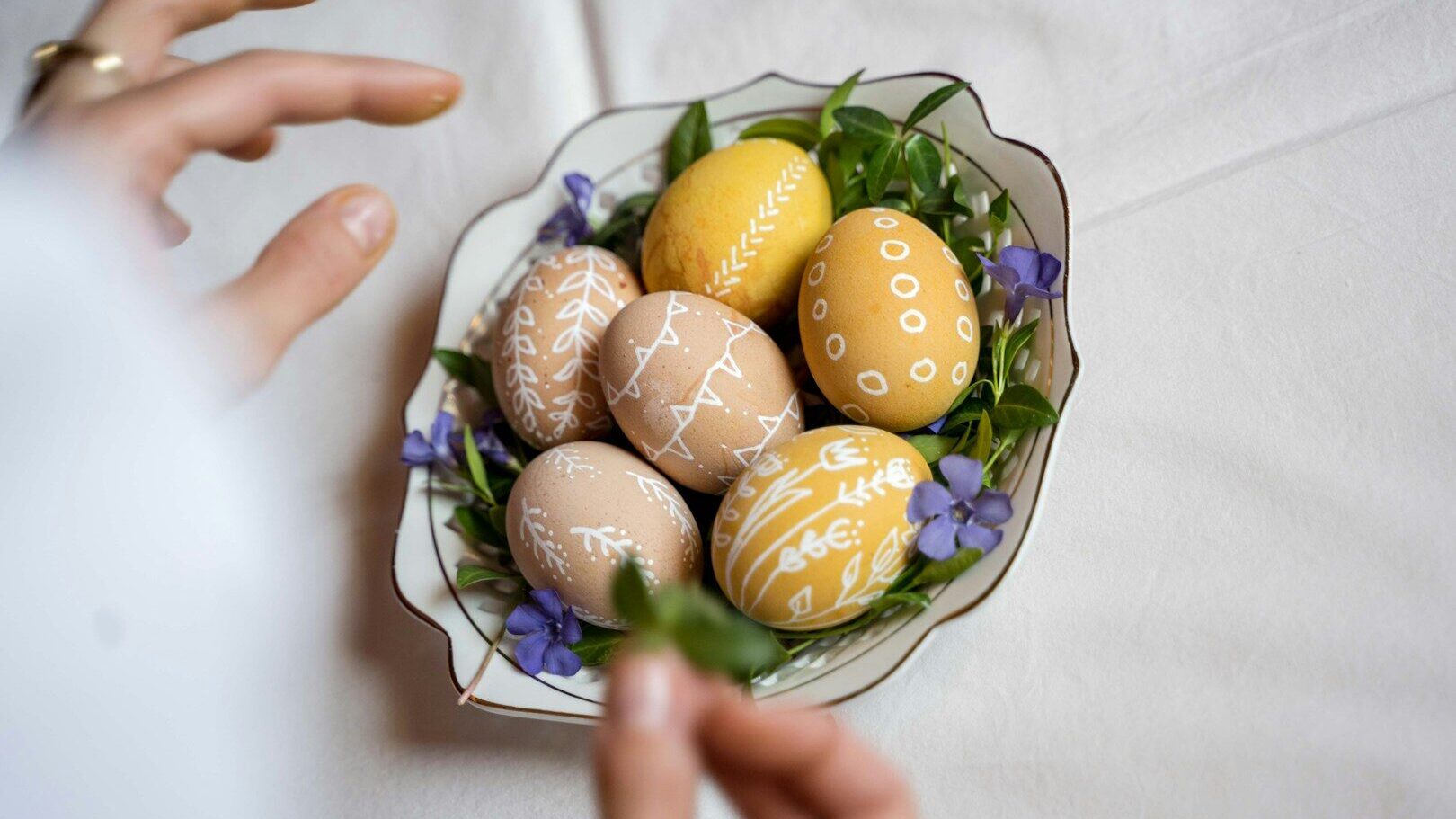
 ━━ Easter eggs are mainly meant to remind us of spring. So floral patterns are definitely not out of place.
( Source: David Trinks / Unsplash+ )
Spring, cute, eco-friendly
There are several things I like about this way of dyeing eggs. The Easter decorations are reminiscent of spring, not only with the light colors that come from using onions, but especially the patterns. And, in a way, the smell. These decorations are cute, very quick to make, and you can get the whole family involved in making them. But the main advantage is also that it is an economically affordable process that is completely ecological.
There is always some chemistry involved when coloring eggs with markers or special dyes. While this may make the Easter eggs more to your liking and some children may have more fun, the truth is that you can’t think of a more natural way to decorate your house and garden for Easter.



 L. Novak



 O. Müller

 A. Urban