

The human body often knows in advance that some unpleasant disease will soon manifest itself. But it just doesn’t let us know, so we are not prepared, sometimes we even suffer from the disease already, but for a long time we may not even know that we are not completely healthy. Is there any way to detect dangerous diseases in advance? You probably realize that if the answer were not yes, we would not ask. But it’s quite complicated.
Polysomnography(comprehensive sleep measurement in the laboratory) is a field that has been around for many years. But thanks to artificial intelligence, a lot has changed in the last few months. Recent research has shown that in a single night, a person’s risk of more than 100 different diseases can be estimated. And AI is a big part of that.
SleepFM
A research team from Stanford Medicine, together with a team of engineers, created an artificial intelligence that has been named SleepFM. Over the past few months, research has been underway, taking more than 580,000 hours in total. During these, the sleep of more than 65,000 people was recorded. Based on the data collected, the researchers were able to detect with high accuracy the future risk of many diseases. These include:
- Parkinson’s disease
- Dementia
- Hypertension
- Heart attacks
- Breast cancer
- Prostate cancer
In addition, SleepFM was also able to predict the risk of death. This was even in patients who participated in the research knowing that they were perfectly healthy and at no risk. How does the model work? Web Science Daily explains that the AI model analyzes uncoordinated signals from the brain and body during sleep. This is because these mismatches are often linked to later illness, which is otherwise very difficult to detect this far in advance.
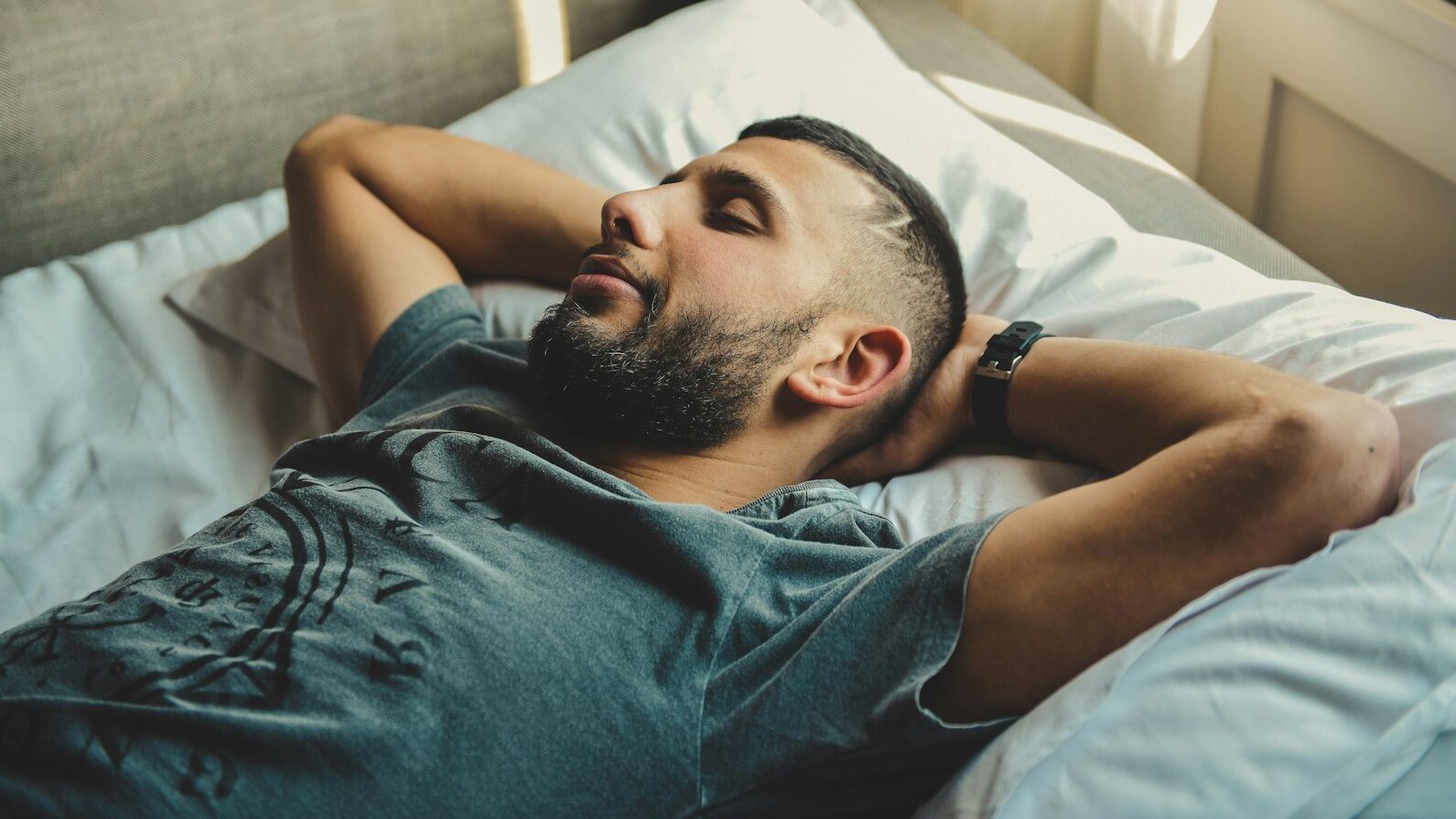
 ━━ Thanks to artificial intelligence, scientists are now able to perform experiments on sleeping humans that could lead to significant changes in healthcare.
( Source: Vladislav Muslakov / Unsplash+ )
An important message for the future of healthcare
The research is relatively new and more data obviously needs to be collected. But scientists already know that this is a breakthrough for the future of healthcare. “SleepFM is learning the language of sleep. And our success lies in the fact that we were able to reconcile different data streams to create a unified picture of human health,” says James Zou, co-author of the entire study.
His colleague Emmanuel Mignot adds that a huge number of signals are always generated during sleep, but it is very difficult to read anything from them. The current AI model can already do a lot, but it’s possible that future assistants will be developed that are even more accurate. So maybe one day it will actually be true that sleep heals – or at least provides information about what needs to be healed.



 L. Novak



 O. Müller

 A. Urban