

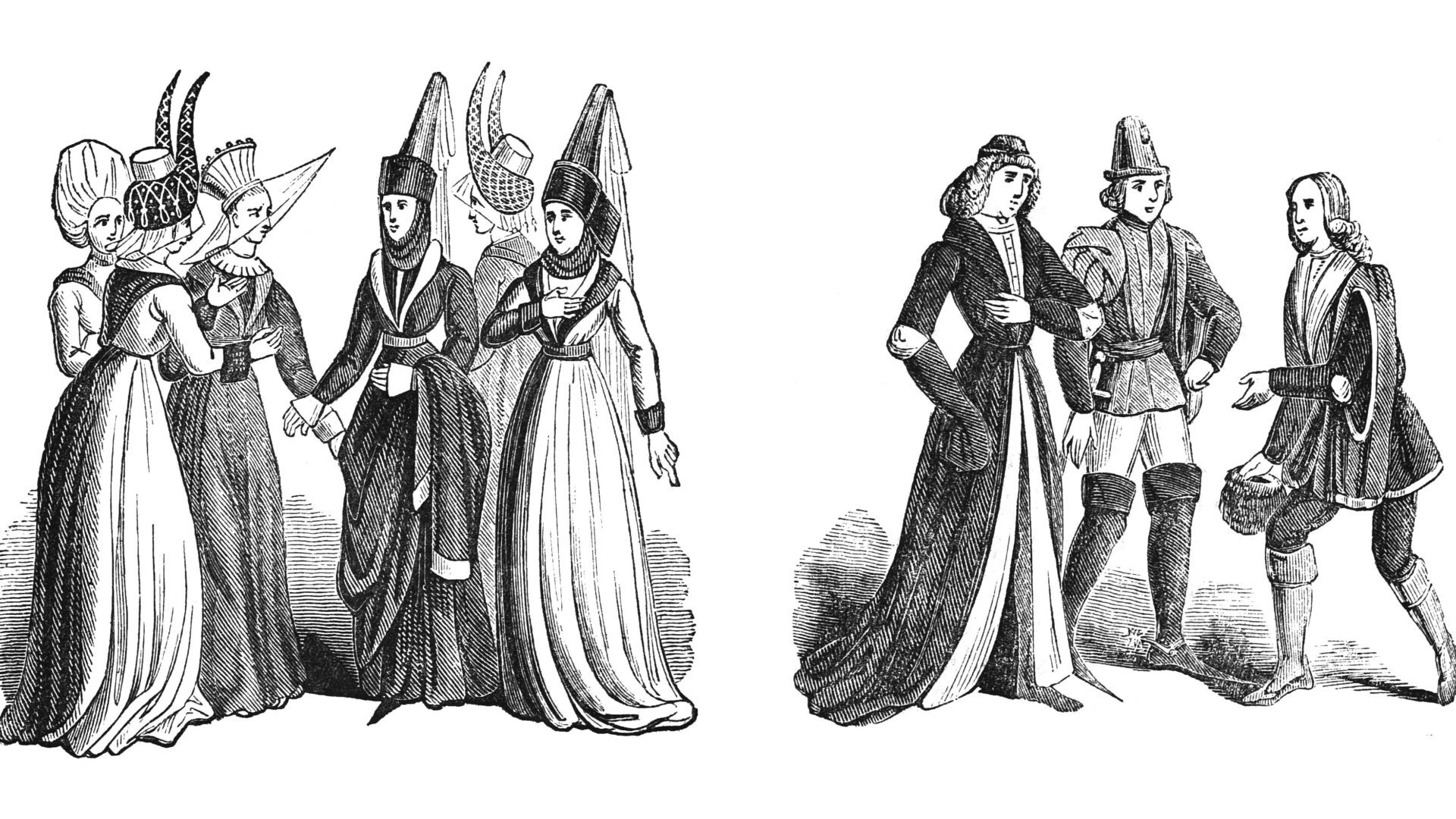
Looking back in history, life expectancy has varied. People in the Middle Ages didn’t live long. At least, that is the common idea that history teachers and textbooks give us. What if the reality was different? What if the numbers presented are misleading? Let’s talk about why this might be a widespread myth.
Whenever I imagine life in the Middle Ages, my mind projects images of poverty, hunger, people infected by plague, and many lives that ended at the point of the sword. Such conditions simply could not be conducive to old age. But this vision is not as black and white as it seems.
We often tell ourselves that age is just a number, but for many individuals it was not very high. What was common, however, is no longer the case. Let us realize that we cannot compare historical epochs and the present. In the past, there was no access to medical care, diseases spread for which there was no cure or vaccination, and many people died as a result of wars. Nowadays, health care is at a high level and there are far fewer threatening factors. Surviving the Middle Ages was actually about luck. While today we worry about how to get as many activities done as possible and how to present ourselves on social media, life used to be about how to get through the day without antibiotics and a finger glued to the phone screen.
When I visited England and looked at monuments or old cemeteries, I thought about the engraved birth and death dates. Admittedly, many of them pointed to the short life of the deceased. In many cases they were young children or young people. I happened to be chatting with a local resident whose hobby was history. When I brought up the idea of the age of life, she immediately disabused me of my misconception. Her family had a family tree that went back to the late Middle Ages, and many ancestors, whether it was Rose, Edmund or Henry, lived to be fifty or sixty.
Reality vs. myth
Let’s show some concrete numbers. According to the National Geographic website, the average life expectancy in Europe is now around 80 years. If we look at the Middle Ages, the numbers are much lower. They are talking about 33 years or so. In ancient times, even the life expectancy dropped to just 25 years. But that doesn’t mean they didn’t live to old age.
I vividly recall this truth being drilled into us in history lessons. Actually, it is not surprising; after considering all the factors mentioned, one cannot come to any other conclusion. But what if I told you that statistics don’t work with all data? In fact, the figures for life expectancy are a little skewed. In fact, people living in the Middle Ages often did not have the opportunity to live to a higher age. The statistics are particularly influenced by high infant mortality and, in general, deaths of children at a young age due to disease, poor hygiene or hunger. In addition, men died in wars and women died in childbirth.
 ━━ In the Middle Ages, many children died.
( Source: Kiselev Andrey Valerevich / Shutterstock )
Let’s ask the question: how to live longer and grow old in the Middle Ages? To put it simply and in an exaggerated way, it was enough to survive childhood. In that case, it was not uncommon to live to, say, 60 or 70. According to Christian Tannhäuser of the Thuringian State Office for Cultural Heritage Management and Archaeology (LDA), the chances of living a full and long life increased if the child surpassed the first year of life.
Many other experts point to the myth of living to a young age. “There is a fundamental difference between life expectancy and life span. People’s life expectancy, as opposed to life expectancy, which is a statistical construct, has not really changed at all, as far as I know,” says historian Walter Scheidel of Stanford University.
Differences in social classes
In TV shows and movies, we can notice differences between the nobility and the subjects. It is social status that needs to be considered when judging life expectancy. The privileged had a much higher chance of living to old age than the commoners. “Living conditions, access to medical therapy, even hygiene itself, were all definitely better for the elites,” says Valentina Gazzaniga, a medical historian. But that doesn’t mean that the rural people were automatically doomed to an early death. According to Cambridge University, bone analyses have shown that medieval people could easily have lived to 60 or 70.
The commonly held idea that people in the past lived to a young age cannot be relied upon. This statement is simplistic and does not correspond to reality at all. History is not as clear-cut as the textbooks tell us. The next time you hear that it was a superhuman feat to live past the age of thirty, feel free to disagree.


 Šárka Cvrkalová

 L. Novak



 O. Müller
