


My daughter is allergic and asthmatic. We made it through this winter without a single illness and now that spring is starting outside, my daughter snores and sometimes coughs after lying down. Is she sick or is it hay fever? I’m asking myself the question and I’m not sure myself. Logically, I figured that hay fever manifests itself mostly during the day. But according to the experts, it’s not.
The symptoms appear in the evening
According to our allergist, it’s possible that my daughter suffers from it when she goes to bed. She says it’s quite common with hay fever. According to her, it is because pollen and other allergens can accumulate in the room during the day. In addition, she says problems can also be caused by eating or sleeping position.
Pollen levels at night
Pollen levels at night can be really high. Pollen rises with the warm air during the day. When it gets colder, it drops back down. In addition, some plants and trees release pollen just in the evening. This is one reason for a stuffy nose or sneezing. In addition, eating chocolate can worsen the symptoms because it contains histamine. And this is a substance that the body produces in response to pollen.
And how to sleep so that the cold doesn’t get worse? It’s good to keep your head higher than the rest of your body. A higher pillow might help. If you suffer from hay fever, it is not advisable to have a flat mattress. If you don’t want a high pillow, get a reclining bed frame.
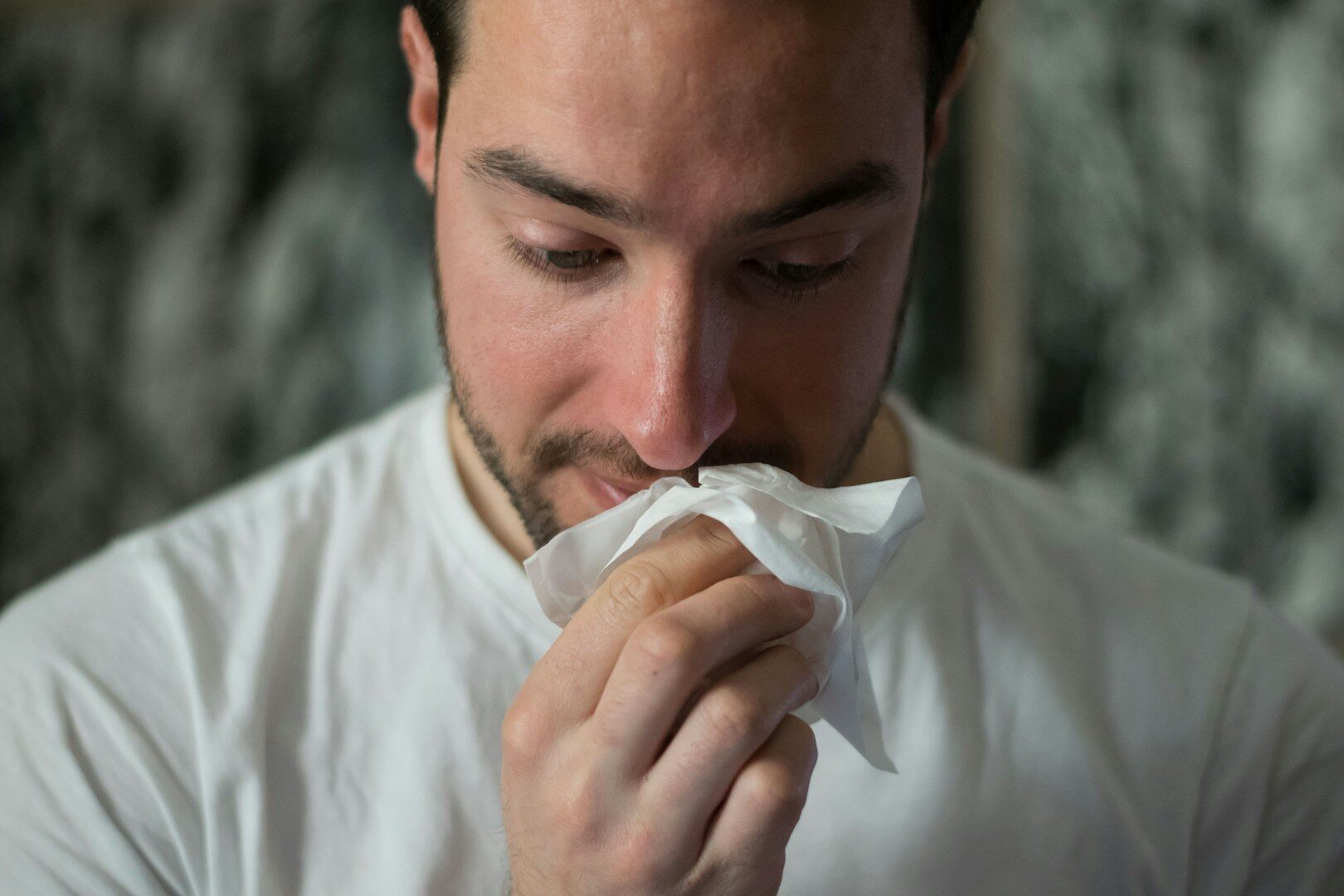 ━━
( Source: Brittany Colette / Unsplash+ )
How to deal with it
Certified Nurse Practitioner Josue Limage has some advice on how to fight nighttime colds. She says it’s a good idea to take a shower before bed and definitely change into clean clothes. It is advisable to use a nasal spray to loosen mucus and encourage drainage. It is a good idea to have a humidifier in the room to alleviate dryness.
Also, remember to have adequate hydration to dilute the mucus. The last piece of advice from the registered nurse is directed toward changing the sheets and bedding frequently. You should wash once a week to remove allergens and bacteria. If you can, do it more often. Honestly, changing your bed more than once a week is challenging. But we’ve found that once a week really is plenty. At least for us.
What else can we do?
It’s a good idea to keep an eye on the pollen forecast, and in the event of high concentrations, it’s best to stay home if you can. It is a good idea to avoid areas where there is a lot of pollen and to keep the windows closed at home for once. In pollen season, it is not wise to air out down comforters either. Also consider buying a pollen filter for your home. And dry your laundry inside.
Yes, laundry dries better outside and of course smells great, but in pollen season it’s a trap. Pollen will get on your clothes and the allergy sufferer will be in trouble. I prefer to dry my clothes in the house at such times, but there is also the option of using a clothes dryer to solve this.
First aid
Sometimes even all the measures mentioned are not enough. Then it’s good to have eye drops and antihistamines ready at home in addition to the aforementioned nasal spray. These can be prescribed by a doctor, but many drugs from this group are freely available in the pharmacy.


 Šárka Cvrkalová




 O. Müller

 A. Urban