

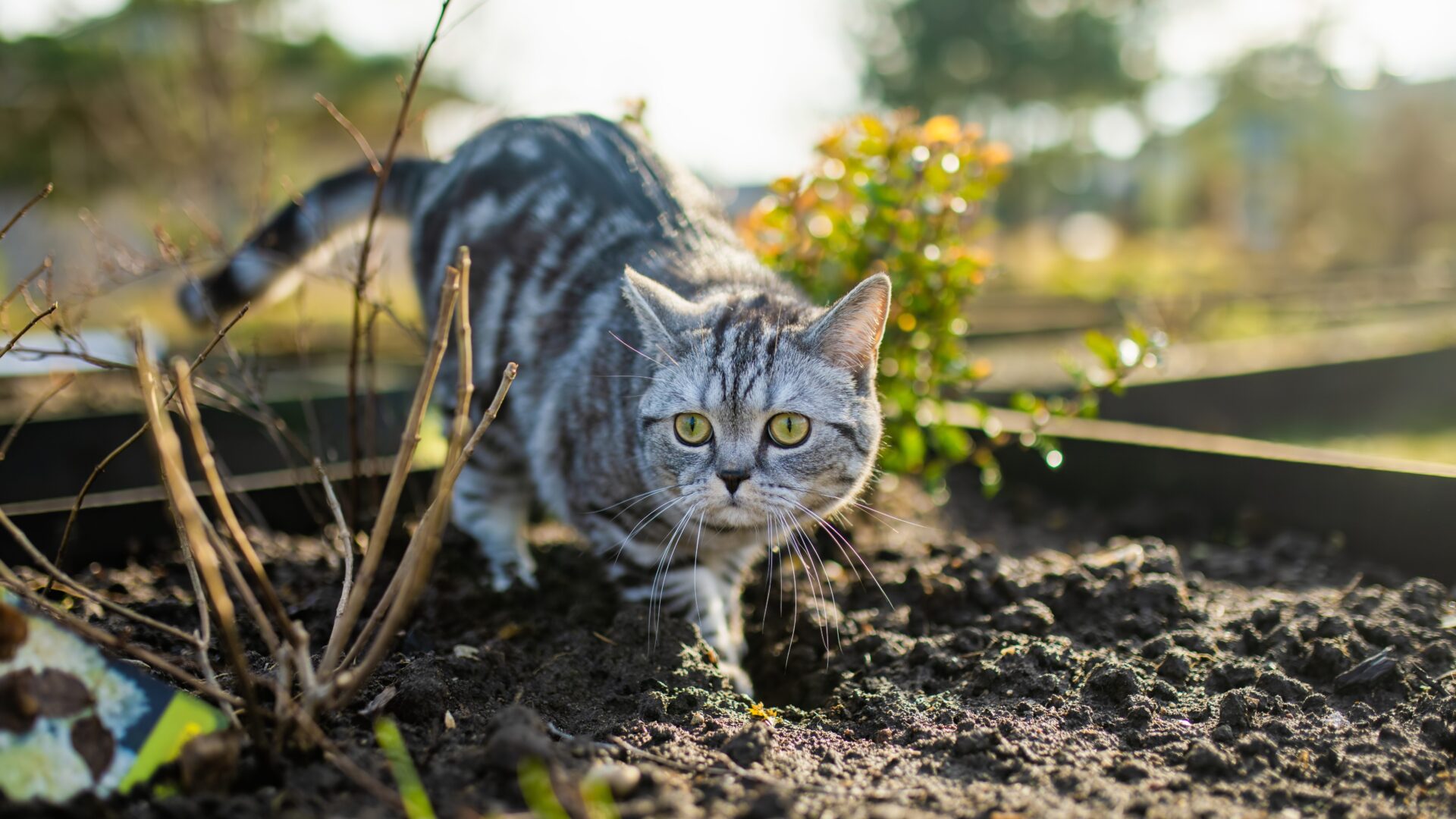
Gardeners are constantly looking for ways to protect their gardens from pests and diseases. I am one of them, so I know how hard it can be to find solutions to problems. Fortunately, thanks to a friend’s recommendation, I have learned a trick that will reliably drive away uninvited visitors from your garden beds. And in February, it is high time to try this method.
While some gardeners have planted bulbs in autumn, others wait until spring to plant them. However, there is a fear that this work will go to waste as the paws of four-legged visitors, especially cats, may appear in the beds. I often watch them happily digging up dirt or doing chores. As I own two cats myself, I try all the harder to protect my flower beds. Almost daily, I would see them excitedly dig a hole among the flowers and vegetables, shiver, and with their eyes closed, blissfully indulge in their relief. And the three toilets located inside the house were as if they didn’t exist. Well, nature calls.
Whether it’s your own cats or someone else’s, it’s natural to want to protect the flowerbeds. Taking care of them takes time and effort, and you certainly don’t want to find cat excrement among the crops you harvest and consume later in the season. Fortunately, there is no need to resort to chemicals that could cause health problems for cats. I’ve uncovered a natural and gentle way to easily deter four-legged furries. Do you like oranges? Definitely don’t throw them away, as you can scatter their peel around your garden.
The orange scent bothers the cat’s snout
When I first heard about the uses of orange peel, I was skeptical. How could a little orange scent deter cats? The explanation is very simple, it has to do with their sensitive sense of smell. Cats have a very well-developed sense of smell, this is a well-known fact, but many people are probably unaware that citrus scents are unpleasant to them. The equation here is simple. If something smells fresh and citrusy, instinct tells cats that they should go a different route. As Joey Lusvardi, a certified cat behavior consultant , points out, citrus scents are too strong for cats and can cause irritation.
 ━━ Orange peel acts as a repellent for cats.
( Source: New Africa / Shutterstock )
However, this method has its limitations. The smell is intense while the orange peel is fresh, so change it regularly. However, lavender, peppermint or coffee grounds have a similar effect. Experts recommend planting these plants in the garden as they act as permanent and natural repellents.
If you decide to scatter orange peel around your garden, don’t do it hastily. When I first started with this method, I stuck to the less is more rule. Although it sounds corny, in this case it really isn’t idle talk. Only place it in selected areas where cats are most likely to be. The important thing is that they are only driven away, not put at health risk. Also make sure the oranges are fresh, organic and untreated with pesticides. This will prevent the release of chemicals into the soil.
Does the method really work?
Do you tell yourself that when your neighbours see you throwing orange peel around your garden, you will be considered crazy? It’s worth the risk, as I can confirm that cats will indeed start avoiding the beds. I remember the first moments when the cats would sniff the environment around them and lift their noses in an attempt to identify the smell. Once they realised it was the smell of oranges, they would cautiously avoid the place and next time they would rather walk in an arc.


 Šárka Cvrkalová

 L. Novak



 O. Müller
