

Sometimes I wonder if my family has any mouse ancestors. Because we can all literally go crazy for cheese. When we buy any product of this kind, it disappears from the fridge very quickly. While I sometimes wonder who ate the snack I was looking forward to, I rarely have to deal with storage issues. If the cheese is on sale, we don’t hesitate to buy so much that it stays in the fridge for some time. And that’s why I’m glad I know how to store these foods so they retain their flavor and taste.
The biggest sin a person can commit, in my judgment, is to wrap open cheese in food wrap. My family used to do it too, but now they know how much I rage when I see something like that. It’s still a fairly common practice among friends, though. Having said that, it’s clear that cheese needs to breathe, so wrapping it so that air can’t access it is a mistake.
Plastic boxes are not the way to go
Cheese contains bacteria and moulds that need oxygen. If you wrap it in plastic wrap or put it in a box with a lid, you stop it from ripening, change the microflora in the food and often create a musty smell and bitter taste. In addition, moisture is retained on the surface of the cheese, which makes the food slimy and soon begins to mould.
Without access to air, anaerobic bacteria thrive, which then produce unpleasant odours, accelerate spoilage and can cause a bloated or pungent taste. It is not only the foil but also the plastic box that is responsible for the cheese becoming soft when it should not, losing its aroma and tasting plastic. If one of my friends serves me a poorly stored cheese, I can tell the difference immediately, even if the dish may be otherwise fine.
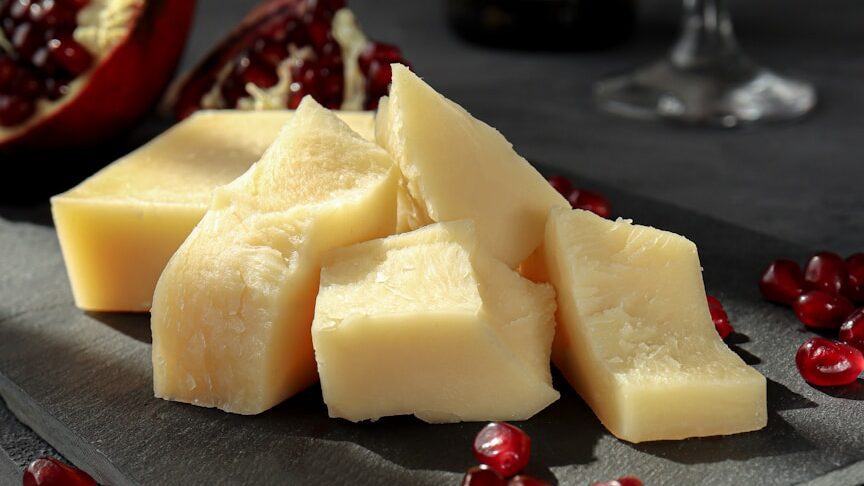
 ━━ Proper storage is very important to ensure that the cheese retains its flavour and stays fresh.
( Source: David Foodphototasty / Unsplash+ )
So how to store cheese properly?
A lot depends on the type of cheese, of course. In general, it should be placed in the fridge and kept at a temperature of about 6-10 °C. Then, when you take it out, it’s a good idea to leave it at room temperature for at least 20 minutes. This will give it an excellent flavour and aroma. But I understand that sometimes you get so excited about this food that it goes straight from the fridge to your mouth.
- Keepsemi-hard cheese in the fridge, ideally in the vegetable drawer. It’s a good idea to keep it in a paper bag that you change every two days. In addition, it should not come into direct contact with other foods as it easily absorbs their odours.
- Processed cheese lasts longest when stored in its original packaging. Once you have melted it, it should be consumed within two days.
- Cream cheese has a high water content; store it at the top of the refrigerator. The temperature there is more stable and usually a little higher. This keeps it creamy and fresh for longer.
I notice many people simply put their cheese in one box and keep it in one place in the fridge. After all, they’re all cheese, why separate them? It’s just that each cheese is a slightly different treasure. And proper storage is really important.



 L. Novak



 O. Müller

 A. Urban