

Each state is represented by state symbols that refer to its history and culture. One of the most important is the flag, which represents the country itself. In Brazil in particular, it is given a deep significance. Thus, every year on 19 November, a recognised holiday called Flag Day is celebrated.
Historical background
For Brazilians, the flag is no ordinary symbol or piece of cloth. It expresses pride and national identity as it points to the country’s history. The period of the Republic in which the flag was created shaped the values, but also the very essence of Brazil. In 1889, a coup took place in which the monarchy was overthrown and a republic was established. The emblem of empire was removed and replaced by a new national flag. Four days after the coup, on 19 November, Flag Day was then officially proclaimed.
The meaning of the flag
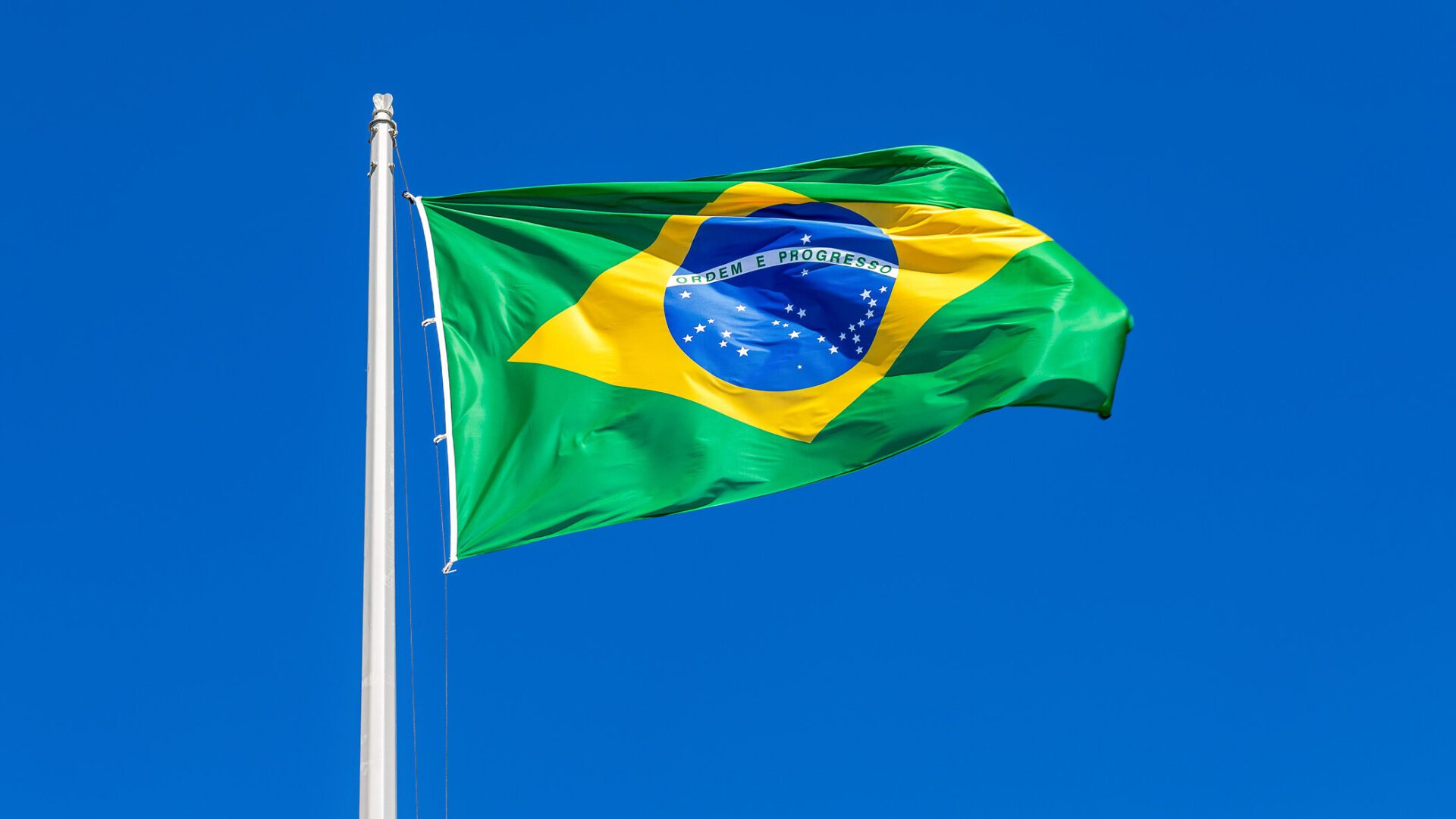
The flag was designed by a foursome of men, Raimundo Teixeira Mendes, Manuel Pereira Reis, Miguel Lemos and Décio Vilares. They were inspired by French positivism. This philosophical movement, founded by August Comte, also influenced the motto on the flag, which reads ‘Ordem e Progresso’ (Order and Progress). Thus, on this day, new republican values were established.
 ━━ The colours on the flag have their own symbolism.
( Source: FG Trade / iStockphoto )
Symbolism of colours
The Brazilian flag is made up of three basic colours that carry a deep symbolism. The predominant colour is green, which symbolises Brazil’s beautiful nature, much of which is made up of rainforest. Yellow then refers to mineral wealth. Finally, the flag is completed by a blue circle with 27 stars representing the states and federal districts of Brazil. The motto then runs down the middle. Since its creation, the flag has been modified only once, in 1992. Six stars were added to represent the newly created states.
How Flag Day is celebrated
Flag Day has not been designated a public holiday in Brazil, but a day of remembrance. People normally work, however, celebrations take place all over the country, poems are recited in schools and flags are raised in town squares during ceremonies. The biggest celebration, however, takes place in the capital Brasília. The law is also strict about how the flag is to be treated: the flag must always be illuminated in the dark, it must not touch the ground and, if it is damaged, it must be ceremonially burnt.


 Šárka Cvrkalová

 L. Novak



 O. Müller
