

After decades of relying almost exclusively on eyeglasses, contact lenses or surgery to correct visual impairments, a whole new alternative is on the horizon. These are eye drops that can significantly improve near vision without the need for glasses. This groundbreaking approach focuses primarily on presbyopia, the age-related loss of the ability to see clearly at close range that affects almost everyone over 40 and affects the daily lives of billions of people around the world.
Many people wear glasses these days. Some people prefer to rely on lenses, but putting them on is again quite impractical. Research suggests that drops can provide a comfortable, non-invasive and effective solution that will change the way we look at vision correction. In the future, this could be a very popular solution to the problem.
Eye drops as an alternative to reading glasses
Current research shows that existing eye drops can replace the traditional solution to presbyopia, which today is reading glasses, for some patients. A retrospective study involving 766 patients with an average age of 55 years showed that drops containing a combination of pilocarpine and diclofenac improved near vision so that patients could read two to three extra lines on a Jaeger board. This serves as a standard test of near vision.
Pilocarpine stimulates the muscles inside the eye responsible for focusing. It also shrinks the pupil, increasing the depth of field of vision. Diclofenac then helps to reduce inflammation and minimize the irritation that pilocarpine can cause. Another important finding during the study was that in the group with the lowest concentration of pilocarpine , 99% of patients achieved optimal improvement in near vision.
A new chapter in presbyopia correction
In 2025,the US Food and Drug Administration granted approval for a new treatment, namely eye drops containing the substance aceclidine. These drops are intended for the treatment of presbyopia and represent the first and so far only approved aceclidine product for the correction of near vision. According to clinical studies, they improve vision within 10 hours even after a single daily dose.
According to the developers and the FDA, this product opens a new option for people who want to reduce their dependence on glasses without undergoing surgery. With long-term use, the most commonly reported side effects were only mild and transient. These included eye irritation, short-term reduction of vision in low light or headaches.
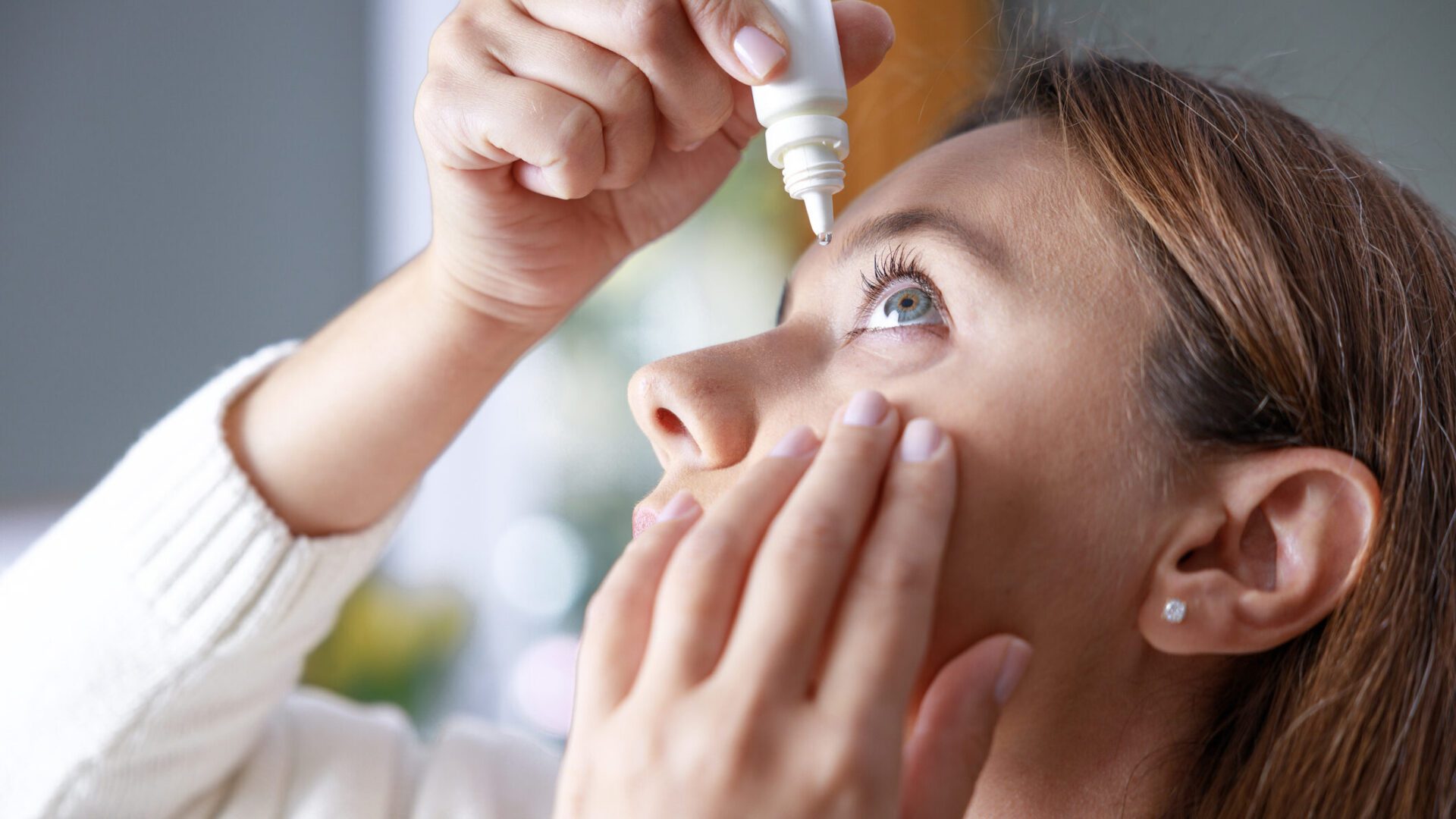
 ━━ Some people like glasses, but others feel uncomfortable wearing them. Even simple drops can solve eye defects.
( Source: Kristijan Arsov / Unsplash+ )
Challenges and future developments
Although the results of studies and approvals of new drugs look promising, experts warn that the development of eye drops as an alternative to glasses is still at a relatively early stage. Most of the available data come from limited studies. Far more and better tests are needed and so this is really only the future for now. But it may not be too far away.
The potential of this approach is therefore huge. Presbyopia is estimated to affect more than 1.8 billion people worldwide, making it one of the most prevalent age-related eye disorders ever. If drops prove to be a safe, affordable and long-term effective alternative, they could significantly improve the quality of life for millions of people, reduce reliance on glasses and offer more convenient options for everyday life.



 L. Novak



 O. Müller

 A. Urban