


I love cured ham. Its specific taste, which is full of saltiness. The possibilities to use it in cold and hot cuisine. It’s a real treat. But what about the white bits? Isn’t ham full of fat after all? Should I be eating it at all? Experts say the floury-looking spots on ham are caused by tyrosine. It’s caused during the aging process. It’s not fat.
The change in protein
“I’m not going to eat that fat,” my friend says when I offer her a ham sandwich. She thinks the white stuff is fat. Only it isn’t. It’s actually a relatively healthy amino acid. What is it, and how do white spots form? During the aging process of ham, the protein changes. Its chains break down, releasing high concentrations of amino acids. It is these that form the little white tyrosine dots that you can see with your own eye above a certain concentration. The individual dots can vary in size and, of course, in shape.
What is tyrosine
It is an amino acid that is the building block of proteins. For example, the human body makes tyrosine from an amino acid called phenylalanine. Otherwise, tyrosine can be ingested just from the diet. Especially from dairy products, meat, fish, eggs, but also from oats, legumes or nuts. Although the body can make it itself, it is not a bad thing to consume it in the diet. For example, in dried ham, which is so delicious.
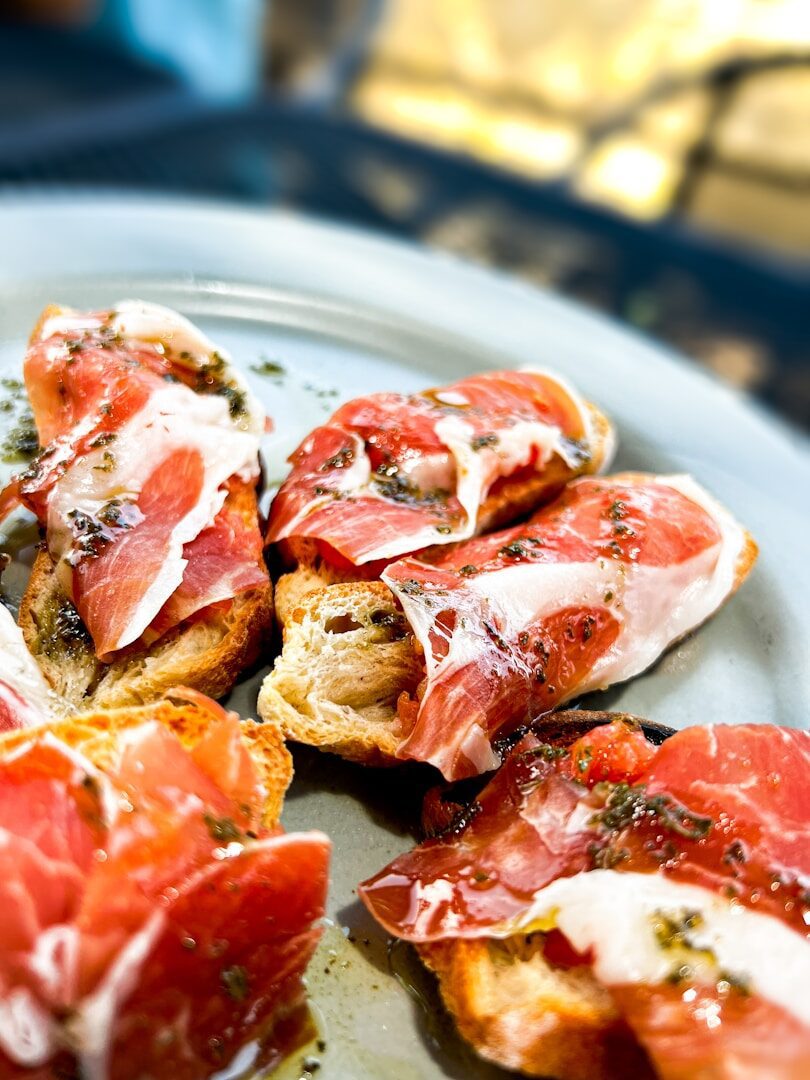 ━━
( Source: Israel Piña / Unsplash+ )
What tyrosine is used for
It is one of the 20 amino acids that help build protein. Despite the fact that the body makes it, its intake from food can also be useful. Tyrosine in your body fights fatigue or depression. It also deals with impaired cognitive function and potentially weight gain. All positive, right?
But it’s not so black and white. Although tyrosine may have a positive effect in fighting depression, it certainly doesn’t have direct antidepressant effects , according to the study. Tyrosine, however, has been shown to increase dopamine levels in the body. The body also needs it to make three other important substances: adrenaline, melanin and thyroid hormones. It’s definitely a substance that has benefits for our health, so why not indulge in it. So don’t be afraid to consume ham containing this substance. There is nothing wrong with it. On the contrary, it can help the human body.
Tyrosine on ham
Let’s go straight back to the cured ham that has white spots on it. Experts explain that tyrosine crystals are a sign of quality. However, studies have not been able to confirm whether cured ham with a high tyrosine content is better than that without. This is because the formation of crystals depends on the maturing time and the temperatures during the maturing process. The number of tyrosine spots is also influenced by the salt content of the ham. The more salt, the fewer spots.
How cured ham is actually made
It has a unique taste and we now know that the white spots on it are not fat, but spots of tyrosine, which is actually good for our bodies. But have you ever wondered how dried ham is actually made? There are two ways of curing ham. Dried ham is cured without the use of water.
The meat is preserved by coating it in salt or other spices. The ham is then stored for many months.This dries it out. The meat actually dehydrates in the air and becomes drier. It can then be smoked to intensify the flavour. Usually, cured ham is served raw, but it can also be used in cooked dishes.


 Šárka Cvrkalová




 O. Müller

 A. Urban