

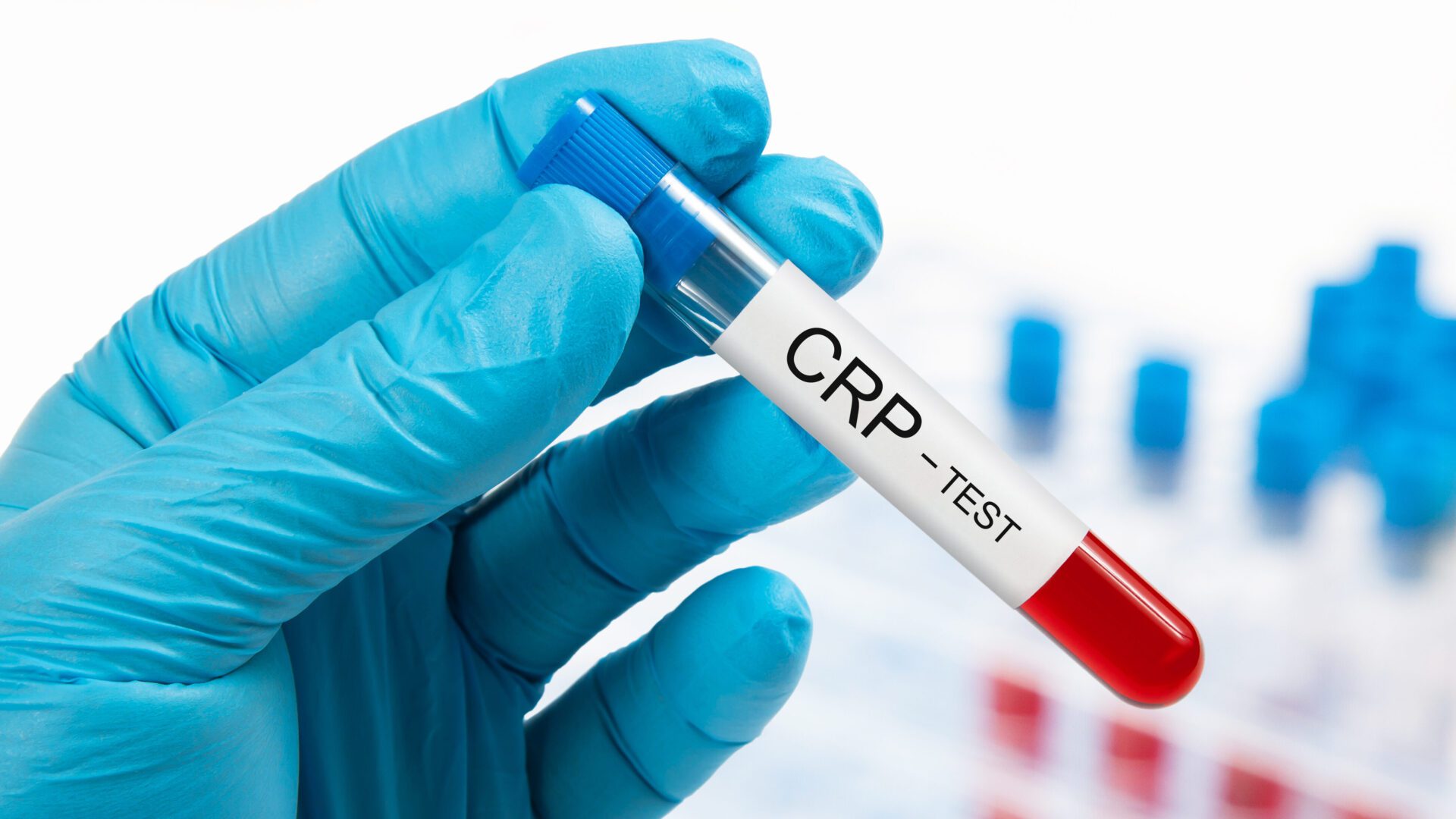
Did they do a CRP? I heard this question many times after I returned from my GP’s office. The traditional test, in which a nurse pricks your finger with a small needle to draw a drop of blood onto a special piece of paper, is not uncommon. But what is it for? And what do the numbers that come out of the test actually mean?
When is the CRP done?
Doctors usually do this test when you come down with a problem such as fever or chills, or if you are suffering from rapid breathing or a fast heartbeat, or if you are suffering from nausea or vomiting. CRP tests are also used to monitor treatment for infection. The test can be done by virtually any trained healthcare professional and there is no need for any preparation.
How the CRP test works
You will probably sit in a chair during the test. A healthcare professional will stick a small needle into your vein and take a blood sample. Once he or she has enough blood to test, they will remove the needle and tape the injection site so that it doesn’t bleed. The whole collection is usually painless and only takes a few minutes.
High CRP levels
If high levels of CRP, or C-reactive protein, come out in the test, it indicates that you have inflammation in your body. However, this can stem from a variety of conditions. It could be an infection, of course, but it could equally indicate an autoimmune disorder or cardiovascular disease. However, the test alone will not reveal the cause. For that, further tests are needed. CRP is just one piece of the puzzle.
And why do CRP levels actually rise during inflammation? It’s because when tissue in the body is damaged, the affected cells release substances that carry signaling cells. These then signal the liver to produce increased amounts of C-reactive protein. The proteins then travel through the bloodstream to the affected tissue and ensure that the immune system fights the pathogens. They also eliminate diseased cells and toxins. CRPs are therefore the rescuers inside our body.
 ━━
( Source: National Cancer Institute / Unsplash+ )
Common causes of high CRP
Very often, CRP becomes elevated due to an infection. However, in addition, it can be elevated due to an inflammatory disease of the rheumatic group or by a chronic inflammatory bowel disease such as Crohn’s disease. Some surgery or a serious cancer disease may also be the cause.
Normal CRP levels
We are still talking about what the causes of high CRP are and how it can manifest in the body. However, we still haven’t talked about specific numbers. Laboratories have different reference ranges for normal C-reactive protein levels. However, a level of less than 0.9 milligrams per deciliter is generally considered normal.
It is also good to know that a slight increase in CRP can be caused by a variety of things, not just disease. These include cigarette smoking, the common cold, but also depression, for example. Obese individuals, people suffering from periodontitis or pregnant women can also have higher CRP. Recent injuries or insomnia can also increase CRP. Women and older people have naturally higher CRP levels.
What the numbers say
A slight increase between 1.0 and 10 ml/dcl may indicate pancreatitis, bronchitis or heart attack. If the CRP level is higher than 10 it may indicate an acute bacterial infection, viral infection, systemic vasculitis or serious illness. If the CRP is higher than 50 mg/dcl it is generally a serious increase associated with acute infections.


 Šárka Cvrkalová




 O. Müller

 A. Urban