

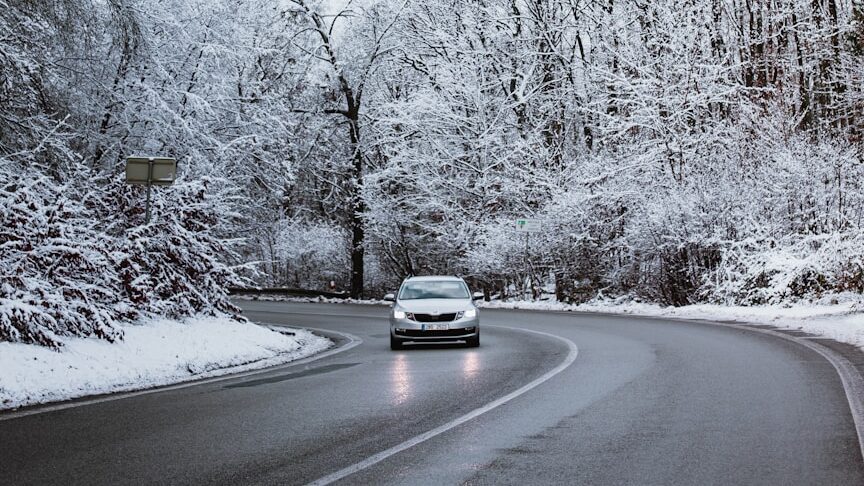
I don’t often drive the car myself, but I drive as a passenger almost every day. In winter, car journeys are comfortable, but on the other hand, I feel that I do not feel as safe on an icy road in a snowy landscape as I do during other seasons. And it is true that many things need to be watched in winter. For example, the braking distance on ice can change significantly from normal braking distance.
When I’m driving with one of my friends on an icy road, I’m usually glad that they respect my fears and keep a large distance from the cars in front of us. It’s just that the drivers behind us often don’t. They obey the rules of the road, but I still feel that if anything were to happen, braking wouldn’t be as easy as people usually think. What does physics say about the whole situation?
High risk of winter accidents
Of course, it’s clear that nobody is going to do physics calculations behind the wheel. But before you get in the car, you should know the distance you need to stop safely if there is any actual danger. A large proportion of drivers expect the car to stop within a few metres. In winter, skidding accidents increase by up to 30%.
Even experienced drivers are often surprised by the numbers that are shown. My grandfather is a professional driver, but when I asked him if he had an estimate of what the stopping distance of a car is on ice in winter, he had no idea. Then he just opened his mouth in disbelief at my answer. Normally, it’s about 25 metres at 50 km/h. But in winter, it ‘s up to 265 metres.
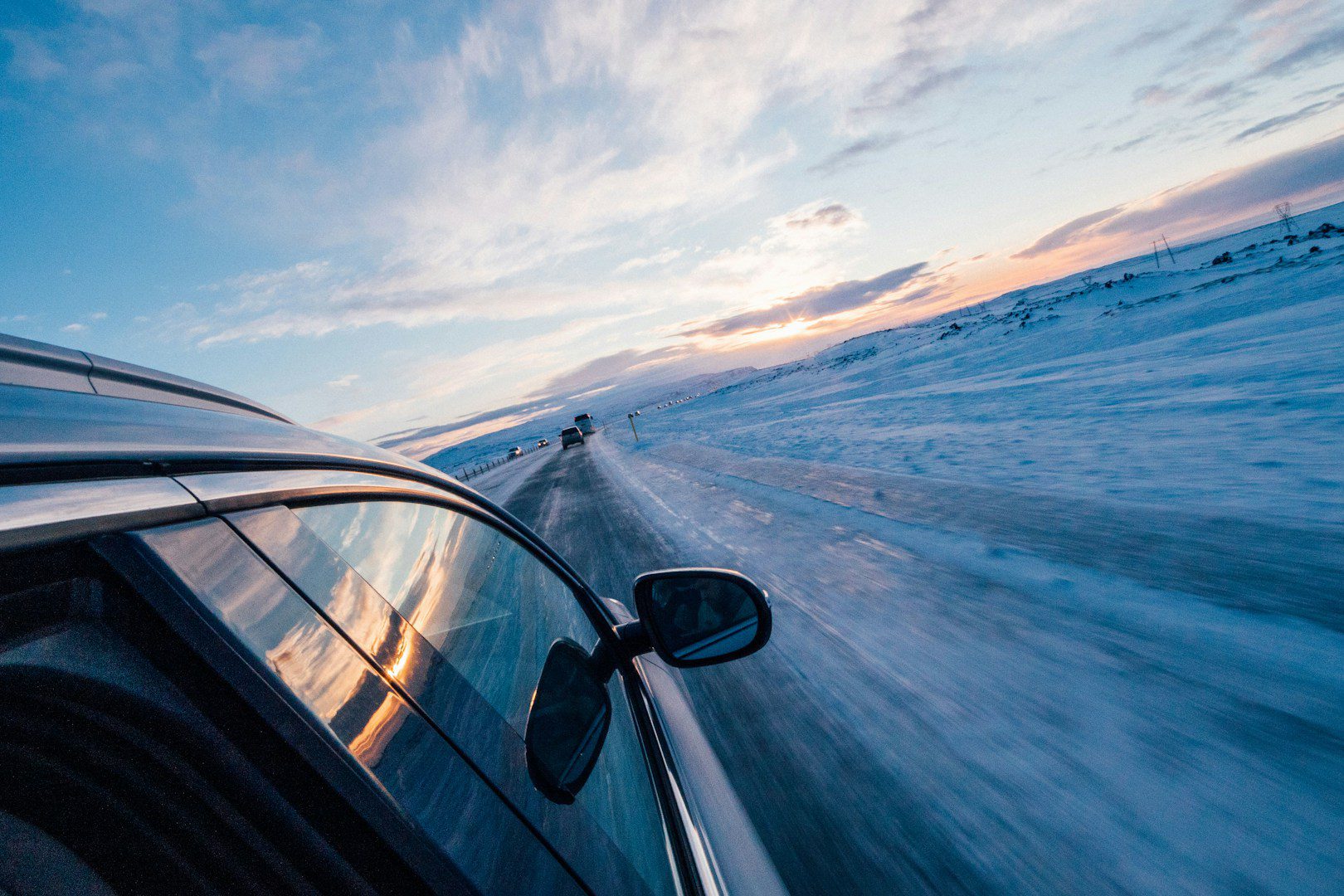 ━━ Do you know how many metres you need to brake safely at 50 km/h? The answer may surprise you.
( Source: Nicolas J Leclercq / Unsplash+ )
Yes, there is a pattern
The data comes from calculations using the following formula: S = V² / (2 * G * F)
What do the specific units mean? V is the velocity in metres per second and F is the coefficient of friction. G is, of course, the acceleration due to gravity, which is 9.81 m/s². The coefficient of friction is crucial for the braking distance. And in winter, it can drop to really low values. While normally the numbers are around 0.8, on snow they are around 0.2 and can drop to 0.05-0.1.
Yes, these calculations make my head spin too. In practice, the formula is used in braking distance calculations in the methodology used in road safety analyses. And no one assumes that drivers will calculate exactly how many metres they need to brake before driving. But it’s important to know that it varies a lot by season and therefore by surface.



 L. Novak



 O. Müller

 A. Urban