

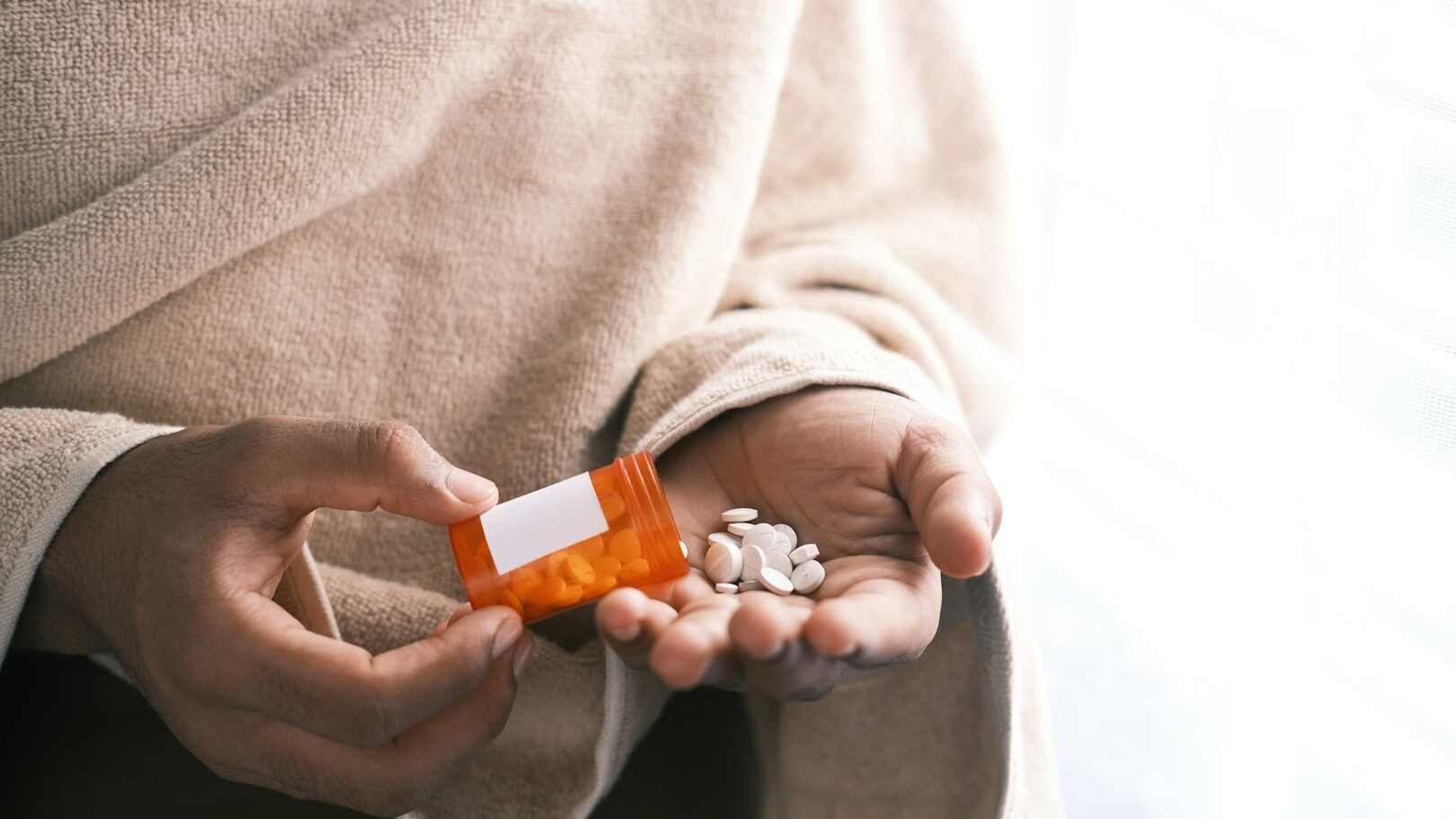
Artificial intelligence is used by people around me almost everywhere. Chat GPT has to answer my friends questions every day that are about 5% smart, but for the most part rather completely nonsensical. Many people use AI at work, for some of the things we see around us we can’t even be sure if they were created by a human or a machine. Therefore, I understand that some people are more likely to be opposed to this new technology. On the other hand, according to some reports, it could save lives in the future.
In my opinion, it is a good servant but a bad master. AI is a tool that you can love, you can hate, but what is clear is that in the future you will mainly have to get used to it. It affects us a lot already and the areas that AI is encroaching on are expanding. Personally, I think it’s a good thing if it can help humanity. And the fact that they are just talking about the possibility of AI being able to one day cure, for example, a disease for which antibiotics are not enough is definitely fascinating.
Antibiotic resistance
No cure is completely perfect. Antibiotics kill bacteria or stop them from multiplying. It’s just that if you don’t take them or take them off too soon, the strongest bacteria will survive, learn resistance and the medicine won’t work next time. This is a major problem worldwide today. Could artificial intelligence be the solution in the future?
The Evo-Φ2147 virus was already in the media some time ago. This was created by artificial intelligence and became the basis for further exploring how AI could help and literally save people’s lives in the future in healthcare. Attempts to treat bacterial diseases with viruses that attack individual bacteria are nothing new. But the question is whether AI can create a virus that can deal with antibiotic-resistant diseases.
“For decades we lived in the age of antibiotics until bacteria, in accordance with evolutionary principles, began to develop resistance to treatment on a massive scale. Antibiotic resistance is one of the biggest public health problems of our time. In this context, phage therapy is making a comeback,” says Professor Krzysztof Pyrć. However, he adds that treating bacterial diseases with viruses is, for now, something that is more likely to happen on a small scale , provided there are no other options.
 ━━ Where do the limits of artificial intelligence end? Will it one day be able to develop new drugs?
( Source: Igor Omilaev / Unsplash+ )
It’s not just about what the AI comes up with
Although it is personally unimaginable to me, artificial intelligence can really push healthcare today far beyond what it used to be. And there is even talk of costs dropping rapidly when AI works on new viruses. Experts point out, however, that AI is only the first step towards actually creating such a virus.
“Designing a virus in a computer will not cure a patient. Production requires a sophisticated laboratory, genome synthesis and biological validation. Moreover, it is then discovered that most of the proposed variants simply do not work,” explains Pyrć. So, while it is true that AI can play a vital role in healthcare, there are still many other factors to think about and designs that AI will create need to be validated and further researched.
On the one hand, it’s fascinating. AI can help us and become a tool to save millions of lives in the future. But as announced at the beginning of this article, AI is a good servant but a bad master. And if one day it really does produce viruses like on a treadmill, there will probably be people among us who will be rather worried about the future of humanity.



 L. Novak



 O. Müller

 A. Urban