

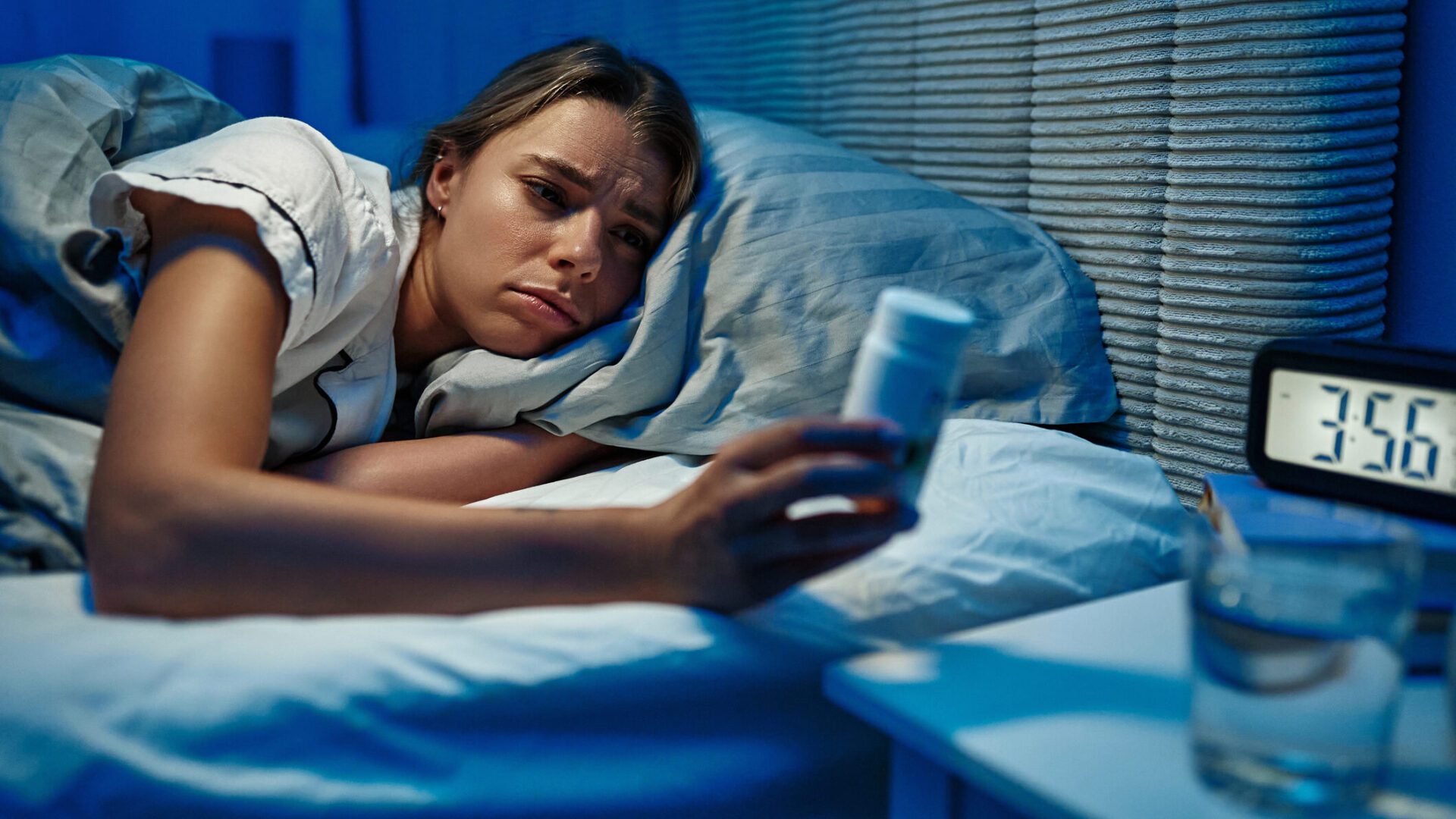
Midnight is such a magical moment. It’s dark around us and mostly quiet. Under the cover of darkness, we notice sounds we don’t notice at other times. And our minds can have negative thoughts. If you try to sleep and can’t, you may get a craving for sweets or a forbidden cigarette.
Would you believe that the human mind simply works differently at night than it does in the daytime? After midnight, dangerous thoughts and negative emotions enter our minds more easily. Our inhibitions disappear. And we often behave very differently than during the day. Some scientists think it’s the circadian rhythm. According to them, the 24-hour cycle of activity affects our behaviour and also our emotions.
During sleep, the function of the dopamine transporter
The dopamine system is involved in a number of processes related to wakefulness. These include the regulation of motor activity, learning, but also sleep and wakefulness. It has previously been shown in rodents that DA uptake in the striatum fluctuates during the light/dark cycle. The least effective uptake occurs in the dark. And this may be risky.
Sleep disorders and suicide
Sleep disturbances are a risk factor for suicidal thoughts or attempted suicide. Insomnia, nightmares and other sleep disorders have been found to contribute to the risk of suicidal behavior. A possible reason for this is that sleep disorders lead to night waking. Night waking is thus a risk.
More than 40 studies have looked at sleep disorders in relation to suicide. They differed in methods and design, but the results were essentially the same in all cases. In general, sleep disorders are associated with a higher risk of suicidal ideation. According to some studies, it is night waking and insomnia that carry some of the risk.
In fact, some research reports that the risk of suicide is three times higher between midnight and 6am compared to any time of day. Suicide at such times can be an escape from pain and loneliness. Why at this time? It is not only because of the state of mind, but also because most people are asleep and there is no one to stop the person from acting.
 ━━
( Source: Yuliya Taba / iStockphoto )
Why wakefulness is risky
But what makes night waking so risky? Why is it so? One possibility is that if people can’t sleep at night, they may consume alcohol or other addictive substances. In addition, night waking may also be associated with reduced social support. And quite possibly also easier access to various gadgets that can serve as weapons.
Another possibility, however, is that insomnia or frightening nightmares contribute to suicidal behaviour by intensifying feelings of anxiety, isolation and hopelessness. And it is also possible that night waking may lead to decreased frontal lobe function. Thus, hypofrontality can lead to reduced problem-solving skills as well as increased impulsive behaviour. And in essence, all of these possibilities can interact.


 Šárka Cvrkalová




 O. Müller

 A. Urban