


Regardless of how you look and feel in your body, excess fat is not good for the body. However, did you know that fat on your hips and your stomach are not the same? In fact, in the case of body fat, its location matters. There is scientific evidence that fat deep in the abdomen is far more dangerous than superficial or subcutaneous fat.
Most of the population has 90% subcutaneous body fat. It’s the fat you find just under the skin. The remaining 10% is what is called intra-abdominal or visceral fat. This is found under the firm abdominal wall, surrounding the liver, intestines and other organs. Although visceral fat is essentially a small amount, it has a big impact on our health. Unfortunately, this is especially true for middle-aged women.
The abdomen is getting bigger
You may have noticed it too. Even though your weight is still the same, your shirts and pants suddenly feel tighter at the waist. How is this possible? It’s simple. It’s just the ratio of fat to body weight that increases , plus the fat is mainly stored in the upper part of your body. This also makes your waist a few centimetres bigger. This is because the intra-abdominal fat is pressing on your abdominal wall.
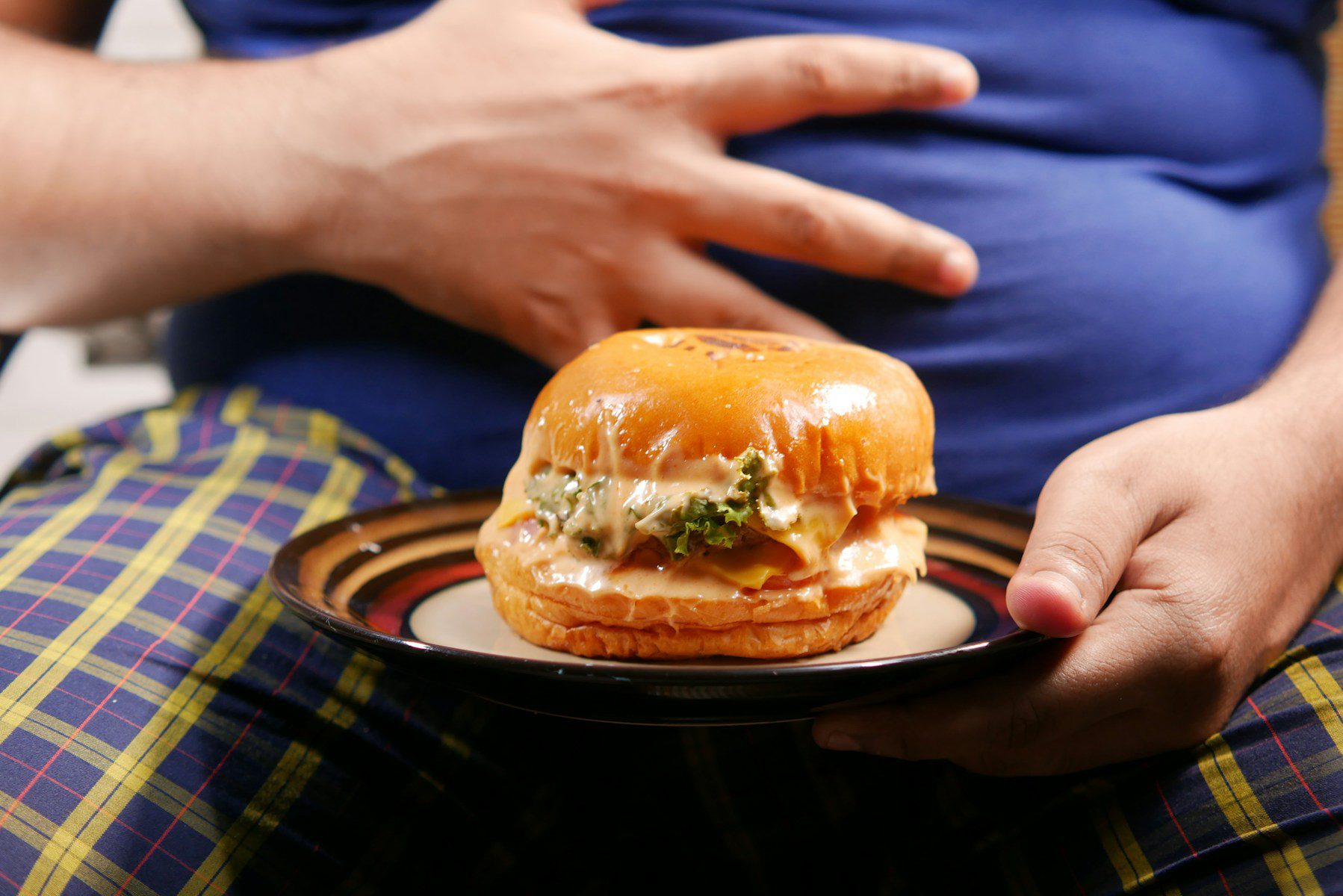 ━━
( Source: Towfiqu barbhuiya / Unsplash+ )
What is visceral fat
It is sometimes also referred to as active fat. Research has shown that it plays a rather dangerous role in affecting the functioning of our hormones. Storing more of this fat is associated with an increased risk of a number of health problems such as type 2 diabetes, cardiovascular disease or certain types of cancer (breast, colorectal) and Alzheimer’s disease.
The amount of visceral fat can be found as the ratio of waist circumference to hip circumference. Measure the narrowest point at the navel and the widest point at the buttocks. When measuring, be honest and do not pull in the abdomen. The proportion should be less than 1 for men and less than 0.8 for women. Otherwise, the fat should be reduced. And this is not only for the sake of appearance, but first and foremost for the sake of health.
How to prevent fat deposition
Diet and exercise are the most effective methods to reduce visceral fat, according to Harvard University. It is therefore advisable to engage in regular exercise. And don’t give up when the results are not immediately visible. You are doing a good thing for your body if you exercise regularly. Likewise, your diet should be healthy and, above all, balanced. Avoid bacon and reduce your portions. Include healthy carbohydrates in your diet and don’t forget fibre.
Alcohol should not be included in your drinking regime. Similarly, drinks with added sugar are not suitable. Both are very likely to end up as visceral fat. Alcohol will be stored in the tire around your waist before you know it. Plus, large amounts of alcohol are bad for the liver. It’s also advisable to make sure you get regular, quality sleep. Try to keep stress levels to a minimum. If you smoke, stop. Cigarettes are harmful to practically the whole body, and in addition, it contributes greatly to the deposition of fat in the abdomen. Can’t quit? At least try to limit the amount.


 Šárka Cvrkalová




 O. Müller

 A. Urban