

Maths is all around us – from family budgets to everyday shopping. Yet for many pupils, it is a bogeyman. What changes are in store for its teaching, and could you still handle a primary school example today?
While we rarely apply our knowledge of historical dates or chemical elements in everyday life, maths is with us at every turn. Whether it’s budgeting, calculating discounts or solving practical problems, we can’t do without it. That is why every primary school pupil must master it, even if many consider it a difficult subject.
New educational objectives
The Ministry of Education decides on the form of teaching through the Framework Curriculum. These are continuously adapted to link mathematics to real life. Model-making, working with family budgets and word problems are coming to the fore. However, these are difficult for pupils because they require not only calculations but also reading comprehension. In addition, teachers point out that children often repeat what they have learned without a deeper understanding.
Challenges for schools and teachers
The revised curricula, which will start in the 2031/2032 school year, will add more content in, for example, combinatorics and statistics. But some schools will introduce them earlier. This is a challenge for teachers, as they will have little time to adapt their plans and learn the new methods. Experts say it is therefore essential to train teachers thoroughly to avoid stress, resistance to change and the risk of burnout.
Test your skills
How are you doing? Could you handle an example from the primary school curriculum? Try it out with the following example.
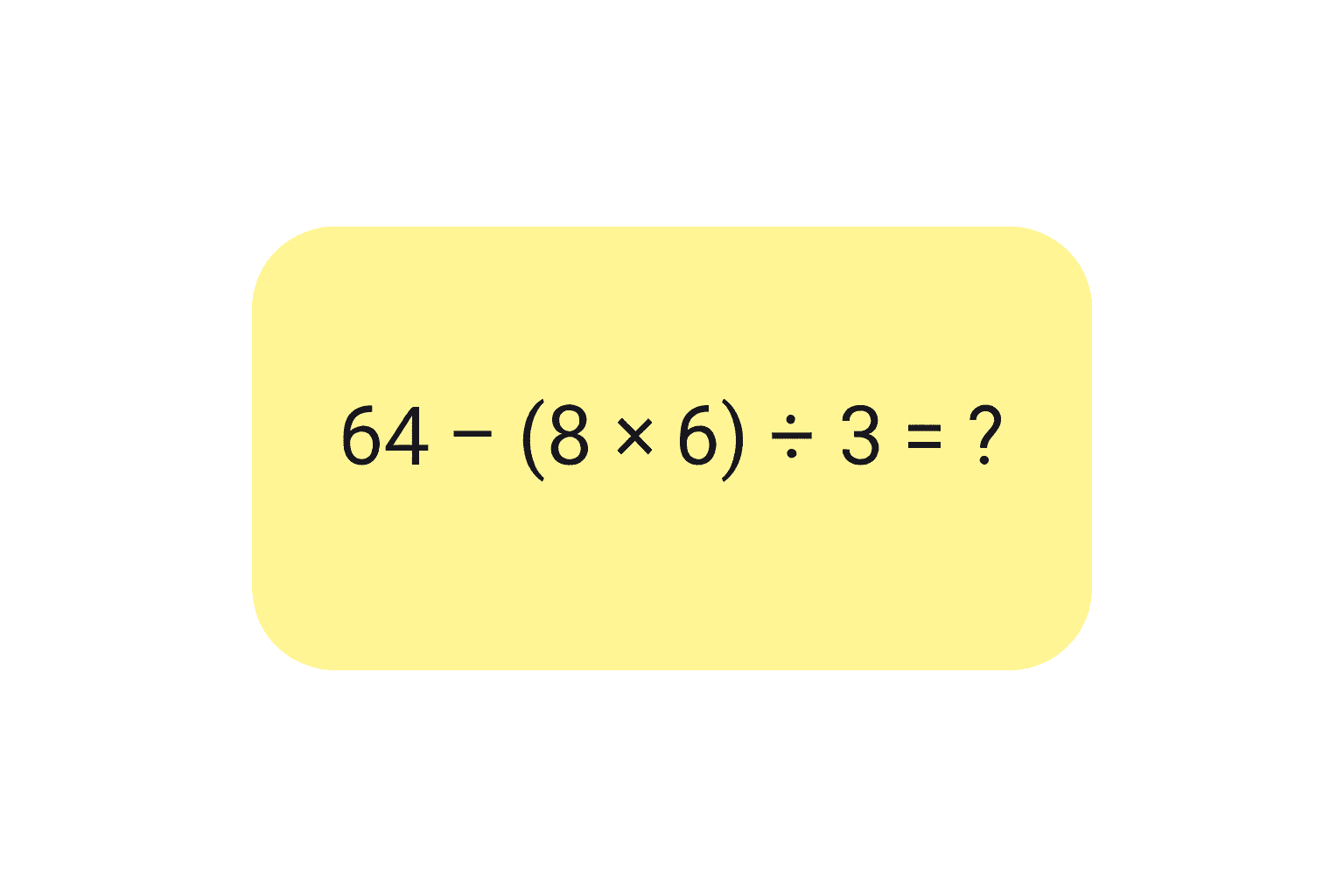 ━━ Calculate this example.
( Source: AI - chatGPT )
Solution procedure: First, multiply 8 × 6 = 48. Then comes the division: 48 ÷ 3 = 16. Finally, subtract: 64 – 16 = 48. The correct result is therefore: 48. This example shows how important it is to know the order of mathematical operations.


 Šárka Cvrkalová

 L. Novak




 A. Urban