

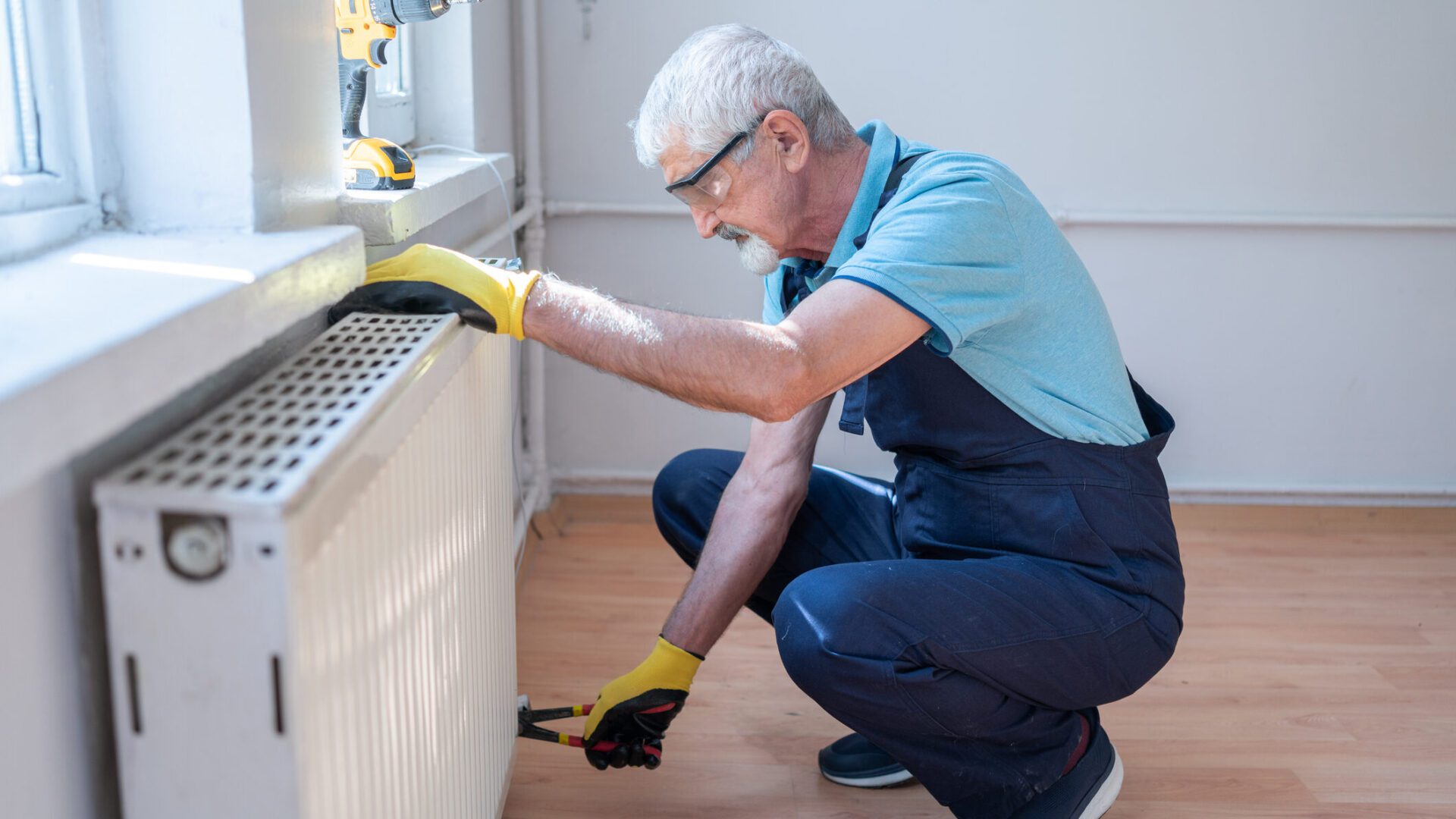
All of us have probably experienced this at some point during the heating season. The radiator heats very little or makes some disturbing noises. No need to panic. You probably won’t need to call a repairman right away. There’s a wonderful button that will take care of the problem. Usually all you have to do is vent the heater. It’ll even help you save a few pennies out of your wallet.
How do you know when it needs to be vented?
It’s very easy, just turn on the heater and wait a while for it to warm up. However, you need to test each radiator. If it’s warm at the top and cold at the bottom, all is well. However, if it’s only hot downstairs and cold upstairs, you’d better turn the heater off and then get to work. A flat screwdriver or special wrench is needed to vent the radiator. It is also advisable to take an old towel and some sort of water container for the job. We’ll cover the venting procedure later.
Why do I need to bleed radiators?
Over time, air can build up inside the heater and this will cause air pockets to become trapped in the radiator. Think of this as a kind of bubble under the surface of the heater. The trapped air then prevents the hot water from circulating. This then creates cold spots on the heater and reduces heating efficiency. Therefore, by venting, you release the trapped air and this allows the water to flow freely and evenly.
How do air pockets form?
Interested in a more technical explanation? Then know that dissolved gases are released from solution as the water heats or cools. Small leaks can also introduce air into the system. The formation of hydrogen inside the heater can then lead to corrosion.
Step by step to venting
Ideally, start with the radiator furthest downstairs from the boiler and move towards the boiler. It is then advisable to move upstairs and repeat the process. This will help to push the air out of the whole system efficiently. It is important to turn off the entire heating system first as a precaution. This will prevent accidental burns or scalding from hot water.
Then you need to find the vent valve, which you can usually find at the top of the radiator. And then get ready for the process itself. It’s a good idea to have a water bowl or at least a towel so that the water has somewhere to go and doesn’t spill into the room. And then you need to find out what type of wrench will work on the radiator. You should hear a hissing sound as the air escapes. When it stops, close the valve by turning the key.
Then after the job is done, you still need to check if the valve shows any signs of leakage. If you notice any leaks, then try tightening the valve. It is important not to overtighten the valve. Once you have finished all the radiators in your house, it’s time to re-pressurise the boiler. This is because the pressure may have dropped due to the venting. Then just turn on the heating and check the radiators to make sure everything is OK.


 Šárka Cvrkalová




 O. Müller

 A. Urban