

The largest vehicle in the world listed in the Guinness Book of World Records is the Seawise Giant supertanker. This ship is now scrapped, but at the time it was 458 metres long. The Eiffel Tower, by comparison, is 324 metres high. As I tried to imagine how huge the vessel was, my brain overheated. And then someone told me that in the future there might be a spaceship that was 58 kilometers long. At that moment, my cerebral threads boiled completely, because even my imagination is short for this.
Its existence is only a theory for now. Yet a spaceship called Chryssalis has caught the attention of scientists in the Project Hyperion Design Competition. It is a design for a project that could one day supposedly transport large numbers of people to the Alpha Centauri system, the closest to our solar system. Walking from one end of the ship to the other would take about 15 hours. So how long would it take for such a long vehicle to travel to another system? Apparently more than 400 years.
A generational spacecraft
The universe is defined as infinite for now. And the journey from one system to another is by no means a short trip. If such a thing is ever possible, the move will take many years and literally cost us several generations of people. Chryssalis is supposed to be a spaceship that is also a place to live. It is a so-called generational spaceship.
What exactly does that mean? Inside the ship, there should be spaces for:
- food production and agriculture,
- animal husbandry and the cultivation of fungi and microorganisms,
- living areas,
- parks, schools and hospitals,
- industrial zones and warehouses
People would then simply live in this “means of transport” without actually perceiving that it was going anywhere. But those who would get on it at the beginning would know for sure that neither they nor their children would reach their destination, but only a generation that would be born in about 400 years.
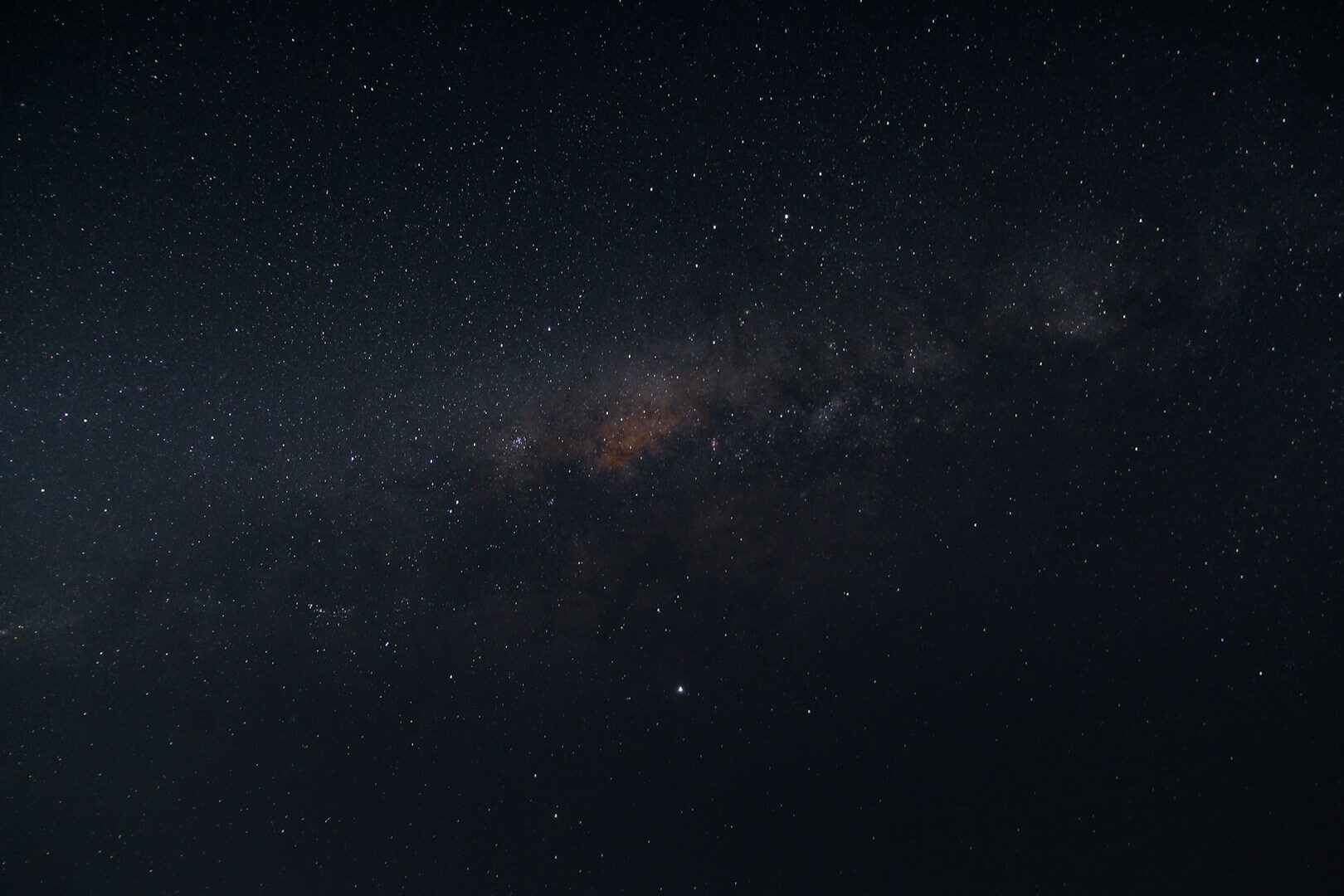 ━━ The universe is vast and its boundaries are unknown to us. That's why even travelling in such a huge spaceship would take generations.
( Source: Soheb Zaidi / Unsplash+ )
A complex project in the pipeline
For the whole project to work at all, parts of the spacecraft would rotate and create artificial gravity for the crew. According to American physicist Gerard K. O’Neill, rotating large space structures is one of the most realistic ways to ensure the long-term survival of humans in space.
This would also ensure that the crew’s health would be maintained for centuries during the journey. In addition, people wishing to take part in the journey at its start would have to start undergoing adaptation courses at a very young age, which could take up to 70 years and would take place in isolated environments, such as scientific bases in Antarctica, which simulate the conditions of long-term confinement.
The Chryssalis project is currently in the theoretical development phase. Although it has a very detailed concept, scientists stress that at the moment everything is very far from technological reality. Humanity does not have the capacity today to build such long space structures, nor the ability to investigate whether the environment where the ship should be sent is actually safe.



 L. Novak



 O. Müller

 A. Urban