

Some mathematical examples look simple at first glance, but they hide a trap. Today’s equations will test how carefully you follow each step of the calculation and whether you’re confused by a tricky detail.
Equations with one unknown are among the basics of algebra, but they can still surprise many. The biggest problem is not the calculation itself, but rather overlooking a detail or jumping to a conclusion. Mathematics requires patience and a systematic approach – those who rush often end up with the wrong result. Today’s example is no exception and may make you think about what you thought you knew well.
What is in store for you today?
The equation in front of you is: 5(2x + 3) – 4x = 8x + 10. You may be thinking that all you have to do is multiply the parentheses, rearrange the terms, and you’re done. But beware, this type of problem hides a surprise. You’ll have to work carefully with each term in the equation, paying attention to the signs and shifts between the sides of the equation.
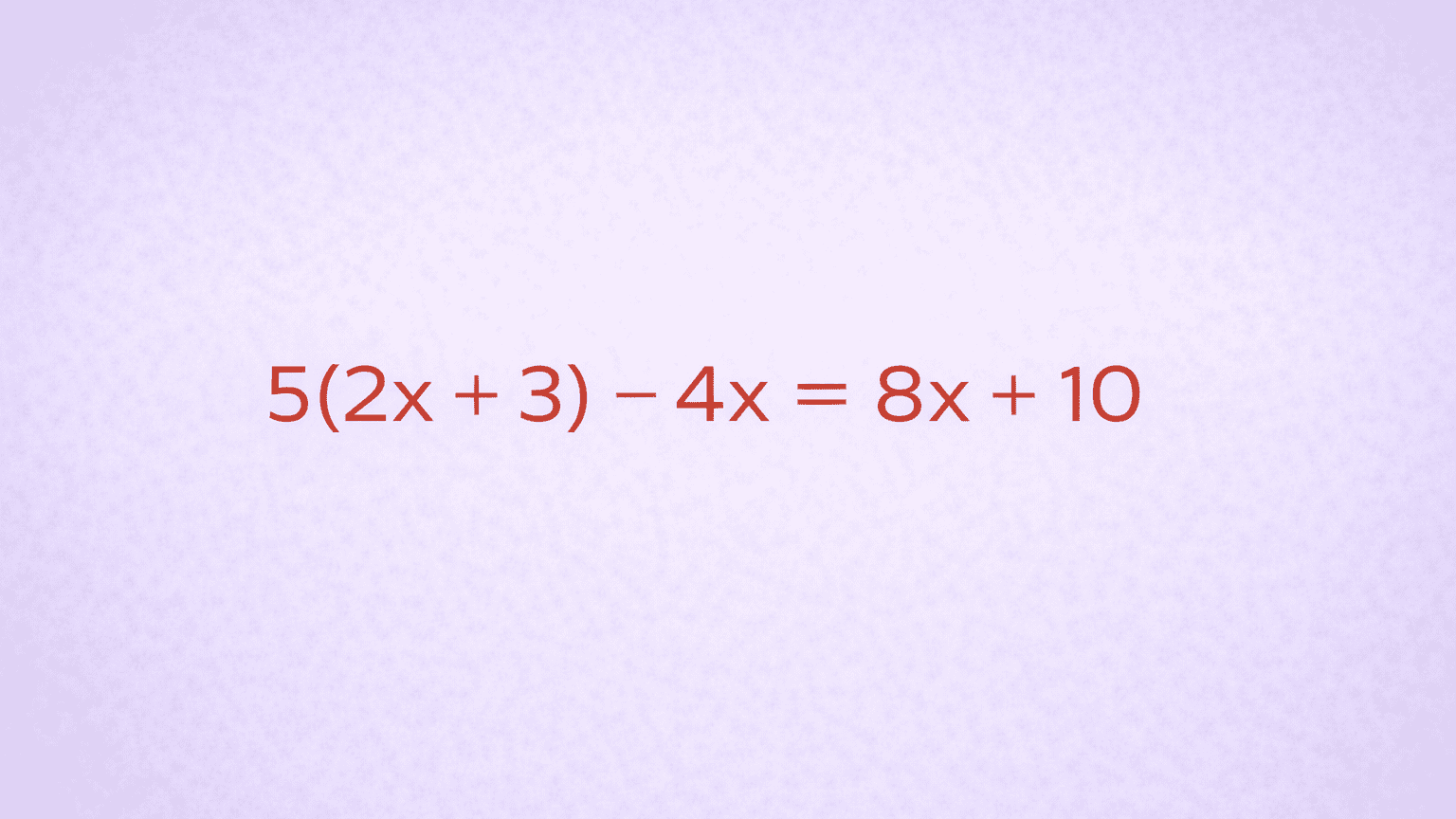 ━━ Calculate the example.
( Source: Shutterstock )
The correct solution
Now you can boast. Did you find the right result? Let’s break it down.
The correct result is x = 5/2 or 2.5 in decimal.
The correct procedure starts by multiplying the parentheses: 5(2x + 3) = 10x + 15. The equation then looks like this: 10x + 15 – 4x = 8x + 10, so 6x + 15 = 8x + 10. The result is therefore x = 5/2, which is 2.5 in decimal. If you arrive at a different number, check the multiplication of the parentheses and the shifts of the terms between the sides.
Did you get it right on your first try? Congratulations! Now it’s time to try the others. Send this example to colleagues or family and see who comes to the correct result without the help of a calculator. Problems like this are great exercise for the brain – they strengthen logical thinking and teach us to work accurately. If you enjoy challenges like this, you’ll find more puzzles and tests on our website that will challenge and entertain you at the same time.


 Šárka Cvrkalová

 L. Novak




 A. Urban